
By Refilwe Mochoari and Thabo Molelekwa for Oxpeckers
South Africa’s green economy is being promoted as a major source of future employment, with an estimated 1.3-million jobs created by 2030, rising to as many as 4.3-million by 2050.
Renewable energy projects have already generated tens of thousands of jobs through the Renewable Energy Independent Power Producer Procurement Programme (REIPPP), positioning the sector at the centre of the country’s Just Energy Transition.
But a closer look at the data reveals a more complex reality: while construction jobs are plentiful, far fewer workers remain employed once projects begin operating.
Data from the REIPPP Office shows that while the programme has created around 70,000 jobs since its inception, only about 6,000 are permanent.
Most employment is concentrated in the construction, manufacturing and installation phases of projects, which typically last between six months and two years.
Once projects become operational, staffing needs drop sharply.
Unlocking Africa’s Green Transition, a report commissioned by FSD Africa, Shell Foundation and Shortlist, and produced by Genesis Analytics in June 2026, argues that not all green jobs are equal.
While utility-scale solar projects generate substantial employment during construction, those opportunities are largely temporary. Employment falls sharply once projects begin operating, whereas sectors such as clean cooking, solar home systems and distributed energy continue creating jobs through ongoing installation, sales, maintenance and servicing.
The report also cautions against measuring the success of the green economy solely through large renewable energy projects. It argues that many of Africa’s future green jobs are likely to come from small businesses and informal enterprises, with between 29-million and 37-million livelihoods expected to emerge by 2050 through community technicians, informal distributors and household energy service providers.
According to the National Union of Mineworkers’ national energy sector coordinator, Khangela Baloyi, this employment pattern has become one of the biggest concerns surrounding South Africa’s renewable energy transition.
“Renewable energy technologies are not job intensive. They generate jobs during the construction phase, but during operation the jobs are minimal,” Baloyi told Oxpeckers during an interview in June 2026.
“Compared to renewable energy, coal technology creates more job opportunities during operation and across the value chain,” he said.
Baloyi said workers employed during construction often struggle to find work once projects are completed, and insufficient attention has been given to retraining and retaining workers affected by the country’s transition away from coal.
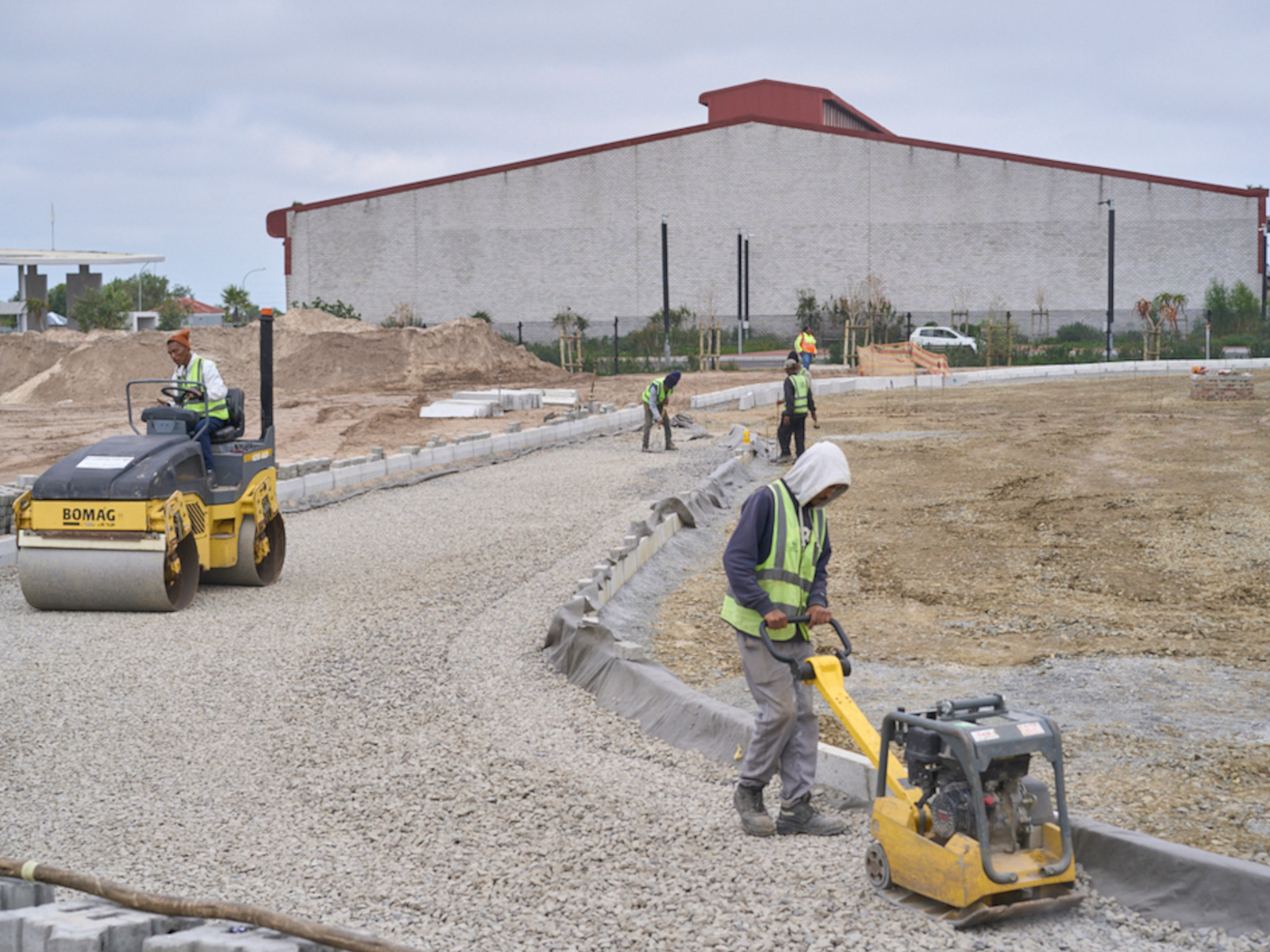
Pictured above: While large renewable energy projects generate plenty of short-term construction jobs, many of Africa’s future green livelihoods are expected to come from small businesses, distributed energy systems and community-based services.
Image source: Barry Christianson/Oxpeckers