
Compiled by Dylan Bettencourt
- IMPALA uses machine learning to warn nurses up to three hours before a child’s condition becomes critical.
- Hospitals using the system recorded fewer child deaths, helping nurses in a country with very few paediatricians.
AI is helping nurses in Malawi spot danger before sick babies and children become critically ill.
Malawi has adopted IMPALA, an AI-powered patient monitoring system used in children’s wards.
The system uses machine learning to predict when a patient’s condition may get worse up to three hours before it becomes critical.
It can also send alerts before a child’s health drops badly, Connecting Africa reported.
IMPALA was developed by GOAL 3, a Dutch social enterprise working in health technology.
It is being used at Mangochi Hospital, Malamulo Hospital and Queen Elizabeth Central Hospital, among others.
During 2023/2024, two hospitals using IMPALA recorded between 40% and 51% fewer deaths than in 2022/2023, before the system was introduced.
Blessings Juma, head of the children’s ward at Mangochi District Hospital, told El Pais that before IMPALA, the hospital could record four deaths in a week to 15 days.
Now, he said, they record one death in the same period.
Malawi has a serious shortage of doctors who treat children.
The Paediatrics and Child Health Association says Malawi has fewer than 40 paediatricians in its health system.
It says the estimated ratio is one paediatrician for every 50,000 child patients.
IMPALA helps fill part of that gap by keeping watch over patients.
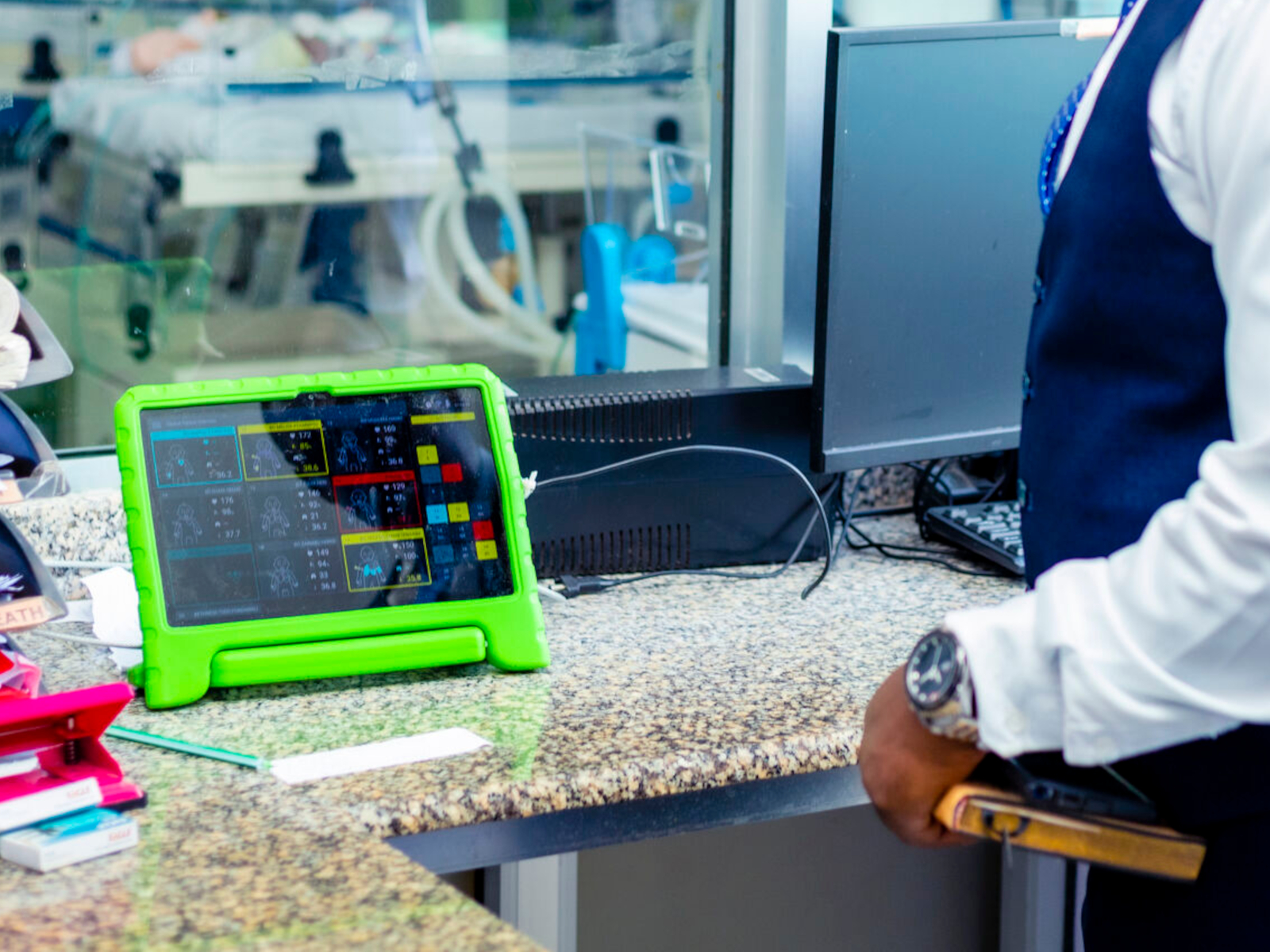
The system has bedside monitors that measure vital signs. It also has a local server that stores data and a tablet app that can show information for up to 30 patients at once.
The monitors and tablet send visual and sound alerts when danger signs appear.
Gift Mhango, a paediatric nurse at Our Lady of Mount Carmel Community Hospital in Kapiri, said nurses can now care for one child while still watching others on the tablet.
“If something is going wrong with a child, you can quickly go and respond,” said Mhango.
Dr Jessica Chikwana, a paediatrician at Zomba Central Hospital, said baby deaths had dropped since IMPALA arrived.
“Prior to the induction of IMPALA, I could often be in handover in the morning and just be given a file saying baby found dead, rest in peace, but I don’t see these things anymore,” said Dr Chikwana.
IMPALA has also been rolled out at hospitals in Rwanda, Kenya and Tanzania.
The system shows how AI can help in places where nurses and doctors are stretched.
It does not replace health workers. It helps them see which child needs urgent help first.
Pictured above: The IMPALA patient monitor.
Image source: Goal 3/LinkedIn