While going on an insect-collecting adventure in the high-altitude wonderland of Lesotho, dipterologists (those who specialise in the study of flies) John Midgley and Burgert Muller didn’t expect their nets would sweep up such a rarity.
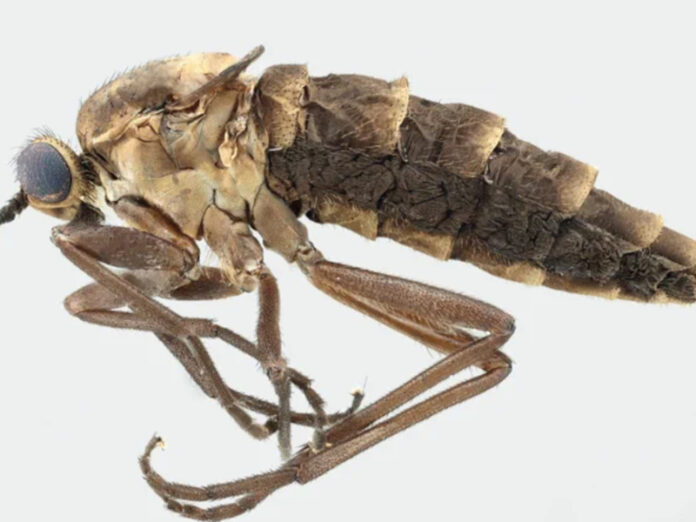
Initially mistaken for a wingless moth, the little critter was a fly with incredibly stunted wings, which means it can’t fly.
As Muller noted, it still had the balancing organs known as halteres, usually associated with flight, yet its wings were far from standard fly specifications, The Guardian reported.
The expedition, under the banner of the ‘Diversity of Pollinating Diptera in South African Biodiversity Hotspots’ project, was packed with discoveries.
They collected a male specimen of Atherimorpha latipennis, a species recognised since 1956, yet its female counterpart had always eluded the scientific community – until now.
Back in the rooms of the KwaZulu-Natal Museum, a deep dive into the anatomical details confirmed that the flightless female was indeed an A. latipennis.
Though the fly had non-functional wings, its mouthparts and antennae were similar to the males. DNA testing was put on hold to preserve the lone specimen.
Martin Hauser, a dipterologist, spoke on the larger evolutionary perspective. Flight’s evolution, though important in the last three billion years, has only evolved four times – for bats, insects, birds and the now extinct pterosaurs.
The absence of flight might stem from weighing the pros and cons. Yes, flying lets you cover more ground (or air) quickly, but it’s also energy-consuming.
With evolution’s quirkiness, one random genetic mutation can send species down different paths.
Midgley emphasises the importance of their discovery. Recognising the flightless nature of female A. latipennis impacts how we expect the flies’ response to environmental changes.
As Hauser put it, every unique discovery is a brick in the colossal house of evolutionary understanding. One brick might seem little, but without them, there’s no foundation to build on.
Pictured above: The flightless fly
Image source: Twitter