By Anita Dangazele
- A University of Pretoria team tested 1,800 samples from 90 recovered cattle and found no foot-and-mouth virus in liver, tripe, tongue or trotters.
- Current rules force abattoirs to discard or specially treat those cuts after slaughter, adding costs that get passed on to the people buying them.
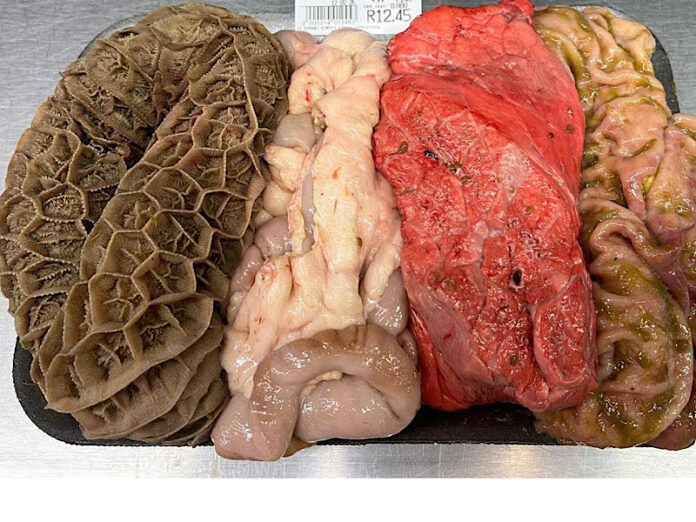
The cuts that struggling families rely on — liver, tripe, tongue, trotters — could become easier to keep on shelves after new research found that rules forcing abattoirs to throw them away may not be necessary.
Researchers from the University of Pretoria tested meat and offal from 90 cattle that had fully recovered from foot-and-mouth disease (FMD), a highly contagious illness that causes blisters on an animal’s mouth and feet. The team took 1,800 samples and tested each one for traces of the virus.
They found nothing. No infectious virus in the liver. No virus in the tripe, tongue, trotters or bone marrow.
That matters because current rules say abattoirs must throw away or specially treat all of those parts when slaughtering cattle from farms where FMD was found. Abattoirs must also remove all bones from the meat before it can be sold — a slow, expensive process. Those extra costs get passed on.
Professor Armanda Bastos, who led the research at UP’s Hans Hoheisen Research Centre, said the rules need to change.
“These results showed it is unnecessary for slaughterhouses to carry out deboning, deglanding, or to dispose of the tongue or offal when fully recovered cattle are sent for slaughter,” she said.
The research also recommends cutting the current two-stage slaughter process down to one. Under the proposal, fully recovered cattle could be slaughtered from 16 days after the last sick animal on a farm either received a vaccine or showed symptoms — whichever came last.
South Africa still has a long way to go before it can be declared free of FMD. Bastos said 80% of the country’s 14 million cattle would need to be vaccinated to get there. A digital system is already being set up to manage how vaccines are ordered and distributed to farms across the country.
Further research will look at specific parts of the head where the virus has been known to linger at low levels in some recovered cattle.
Pictured above: Offal and budget meat cuts on display at a butchery.
Image source: Supplied