
The DA will soon have to decide if it stays in the unity government or walks away as the ANC tightens its grip, writes Zukile Majova in Real Politics.
The DA is reaching a tipping point.
It must decide soon whether to stay in President Cyril Ramaphosa’s Government of National Unity — or walk away before its credibility with voters is destroyed.
The party says it joined the GNU to stop the ANC from forming a so-called doomsday coalition with the Economic Freedom Fighters and the uMkhonto Wesizwe Party.
It wanted to fix the economy, create jobs and help build a cleaner, more capable state.
But now, just a year after saving the ANC from a brutal election loss, the DA finds itself isolated, insulted and powerless inside a government that is shifting back to its old ways.
DA leader Helen Zille says they entered the coalition to rescue the country from corruption. But now her party has to ask: has anything changed?
The ANC continues to deepen its ties with global regimes like Iran, refuses to back down on its legal case against Israel, and won’t budge on its positions about Russia’s war in Ukraine.
All of this is alienating the DA’s international allies — especially the United States, where John Steenhuisen recently told former president Donald Trump that the GNU was created to block people like Julius Malema from getting into power.
But that promise could now be broken.
The ANC is pushing to include the EFF in government. And Malema, who sparked a diplomatic crisis with the US and still sings “Kill the Boer”, may be heading for a Cabinet seat.
Meanwhile, the MK Party led by former president Jacob Zuma — blamed for state capture during the “nine wasted years” — is still lurking.
These are not just red flags for the DA. They are bright, burning sirens.
Ramaphosa knows that aligning with the EFF or MK would crush investor confidence and destroy any hopes of economic recovery. But his party and its alliance partners — especially Cosatu and the South African Communist Party — have made it clear: they do not want to govern with the DA.
The SACP is so furious that it has threatened to contest elections against the ANC in 2026 and every by-election in between.
Ramaphosa is losing control of his party, and fast. If he keeps ignoring the demands to sideline the DA, he could be out long before the ANC’s 2027 elective conference.
That would be a disaster for him — and a golden opportunity for his deputy, Paul Mashatile, to take over.
But Mashatile is not a safe pair of hands.
Law enforcement agencies reportedly have enough on him to force him out of government. If charged with any crime, he’d have to step down from all positions.
This is the same strategy Ramaphosa used to remove Ace Magashule, a key Jacob Zuma ally.
Mashatile now represents the biggest threat to both Ramaphosa’s legacy and the survival of the GNU once Ramaphosa is gone.
To buy himself more time and hold off Mashatile, the president may allow more parties into the GNU.
That’s where things get tricky for the DA.
The DA is now seen as propping up a corrupt and decaying ANC — and that could cost it dearly in the next election.
Many of its conservative supporters already feel betrayed. They see a party going soft on corruption and not fighting hard enough for accountability.
For instance, how is Police Minister Senzo Mchunu still in Cabinet?
KwaZulu-Natal police commissioner Nhlanhle Mkhwanazi recently revealed that Mchunu interfered in police work to protect powerful criminals and politicians.
The minister doesn’t need to be found guilty to be removed. He serves at the president’s pleasure.
So why hasn’t the DA demanded his head?
This is what voters are asking. And these are the moments that make or break a party’s reputation.
The 2026 local elections are not far off. And the picture looks bleak for the ANC.
The party has already lost its majority in every major metro — Cape Town, Port Elizabeth, Durban, Johannesburg, Pretoria and Ekurhuleni — except for Buffalo City in East London.
The number of hung councils has exploded: from 25 in 2016 to over 70 in 2021. That figure could rise to 150 in 2026.
In such a fractured environment, every party will be looking for new partners to stay in power. And the ANC wants to keep its options open — including inviting the EFF into its tent.
If that happens, can the DA really stay in the same house?
That is the question Zille and Steenhuisen must now answer.
Do they still believe they can shift ANC policy? Or are they just being used to give cover to the same corruption they once fought against?
Ramaphosa is playing for time. The DA must decide whether to play along — or walk away before it’s too late.
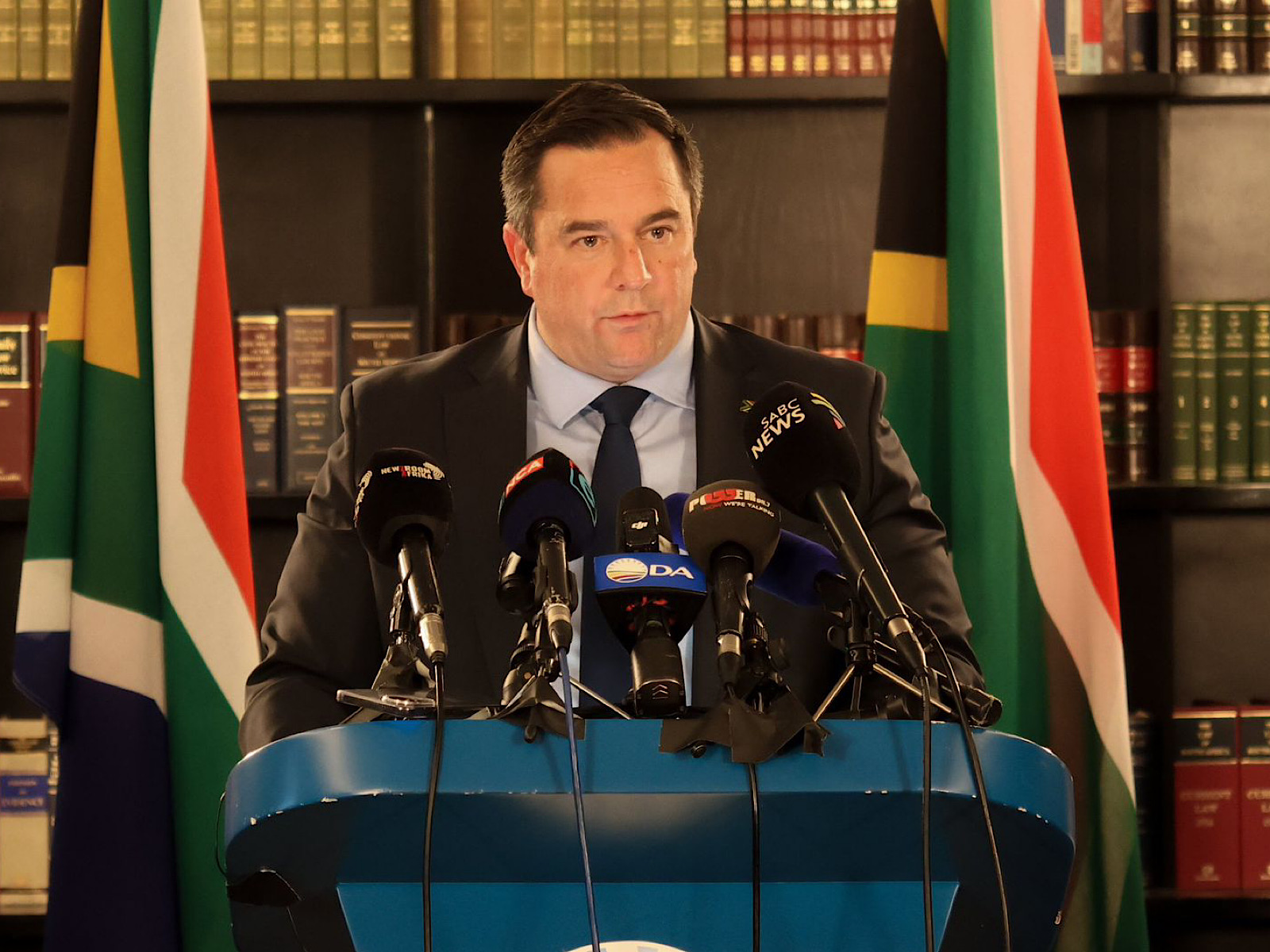
Pictured above: DA leader John Steenhuisen.
Image source: DA