Language has always been a fault line in South Africa. Right now, it is getting people hurt, writes Celani Sikhakhane in Mzansi Royals.
The anti-illegal immigration protests spreading across the country have exposed something that has been sitting underneath the surface for a long time. Tsonga-speaking South Africans are being stopped, questioned and in some cases attacked — not because anyone has checked their documents, but because of how they sound. Their language is being used as proof of foreignness. It is not.
Traditional leaders have said very little about this. That silence is a failure.
These are the same leaders who present themselves as the custodians of South African culture and heritage. If that title means anything, it must mean something when a South African citizen is humiliated in their own country for speaking their mother tongue.
I travelled to the Vhembe district earlier this year. The people I met were warm and generous. But I could not follow a single joke. A woman I had been speaking to for some time told me she only realised I did not understand Tshivenda when she tried to make me laugh and I did not react. That moment stayed with me. Not because it was awkward, but because it reminded me how easy it is to be made to feel like an outsider simply because of language — and how little any of us do about it.
As Ngunis, we have not always been innocent in this. The names we have casually given Tsonga speakers over the years were not terms of respect.
When Minister Khumbudzo Ntshavheni was heckled at a protest in Vosloorus and forced to speak isiZulu, her frustration was understandable.
Her challenge to King Misuzulu kaZwelithini — that she would not speak isiZulu until he spoke Tshivhenda — caused backlash. But underneath the controversy was a real question that nobody answered: why are our traditional leaders not actively teaching their communities to respect the languages of other tribes?
The Bapedi Queen Regent Manyaku Thulare has addressed the Zulu Reed Dance in her own language without incident. Rain Queen Masalanabo Modjadji has attended Zulu national ceremonies and been received with dignity. These moments show what is possible when traditional leaders choose integration over insularity.
The problem is those moments are exceptions, not the rule. In too many rural communities, not speaking the local language still marks you as an outsider. That gap between what traditional leaders could do and what they are doing is where tribalism lives.
The government cannot fix this alone.
Traditional leaders have reach into communities that no minister has. They speak at ceremonies, at gatherings, at occasions that carry real cultural weight. Those are exactly the platforms where multilingualism could be championed — not as a policy, but as a value.
Instead, too many are in court fighting over thrones and resources. That fight can wait. This one cannot.
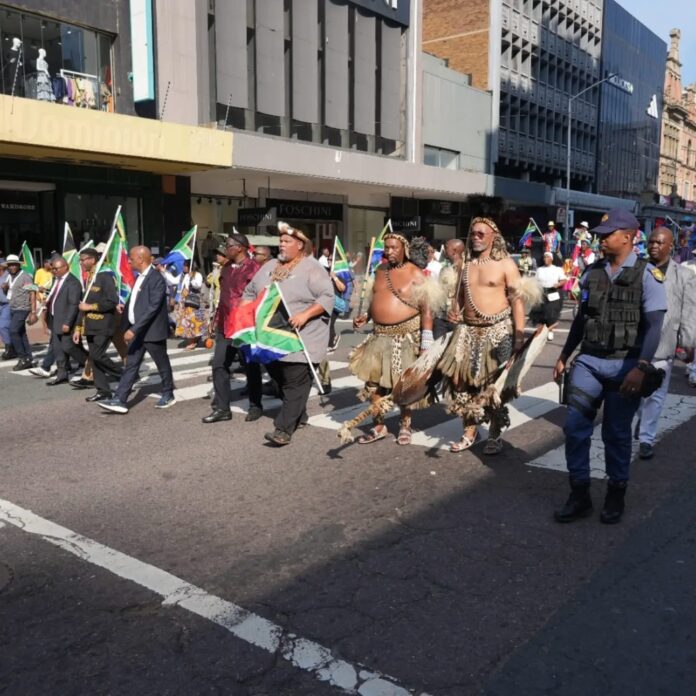
Pictured above: South Africans marched through Durban during Africa Day celebrations — but unity on the streets has not stopped Tsonga-speaking citizens from being targeted at protests for how they sound.
Image source: Supplied