South Africa is days away from a self-imposed deadline. Vigilante groups calling themselves the “March and March” movement have issued a nationwide shutdown notice for 30 June, demanding the removal of undocumented foreigners. Townships have already seen violence. Dozens of countries are flying their citizens home, writes Celani Sikhakhane in Mzansi Royals.
And the two kings whose subjects live closest to this fire are saying nothing in public.
King Mswati III of Eswatini and King Letsie III of Lesotho lead nations whose people have worked and lived in South Africa for generations, long before the Berlin Conference of 1884 drew borders across a continent that did not recognise them. Their governments are watching the crisis closely enough to act. Eswatini’s Minister of Foreign Affairs, Pholile Shakantu, issued an urgent advisory to Emaswati citizens living, working and studying in South Africa, assuring them that consular support is active. Eswatini has also begun helping citizens who want to come home before things get worse.
These are not the actions of governments that feel their people are safe. They are the actions of governments that are worried.
The organised anti-immigrant groups have formally stated that nationals from Eswatini, Lesotho, Namibia and Botswana are not their targets. They cite deep regional ties and geographic proximity. That distinction matters. But it has not stopped fear from spreading, and it has not stopped individual nationals from being caught up in violence that does not follow political lines.
On 9 June, 13 people were killed and 14 others wounded in a mass shooting at the Jumpers Informal Settlement. On 23 June, SAPS arrested three Lesotho nationals at KwaMaiMai Informal Settlement in connection with the attack. One of the three was found with more than 100 rounds of 9mm live ammunition at his home. The trio face charges of murder and attempted murder at the Johannesburg Magistrate’s Court. Police say they are still searching for more suspects.
King Letsie knows what a South African border can do to a Mosotho. In January 2018, he was held at the Maseru Bridge crossing for more than an hour while officials objected to his security detail carrying weapons across the border. His government’s complaints were ignored until Basotho citizens threatened to shut down the Maseru and Ficksburg crossings entirely. South Africa then sent senior officials to intervene. International relations minister Lindiwe Sisulu travelled to Maseru, apologised to the king, the prime minister and the Basotho nation, and presented the monarch with a cow as a gesture of deep regret.
That is the weight South Africa put on the dignity of one Mosotho. King Letsie has since met South African officials in Pretoria to address the current crisis at a diplomatic level. His government is working. But his voice, the kind that reaches communities rather than conference rooms, has not been heard.
King Mswati has also been in the room.
Earlier this year he attended the ninth Southern African Customs Union summit in Cape Town, where talks with President Cyril Ramaphosa centred on cross-border special economic zones, regional value chains and the Nkomazi corridor linking Mpumalanga to the Maputo port. He understands the economic pressures that push people across borders. He is working on the long-term answer. He has not said a word about what is happening right now.
Organisations like the Socio-Economic Rights and Accountability Project have called on King Mswati to use his standing within SADC to convene a summit on the safety of foreign nationals in South Africa. He has not responded.
Monarchs carry a kind of authority that politicians cannot replicate. They speak to communities, not to parliaments. Their words travel through trust built over generations. In a moment when politicians are adding to the noise and formal diplomacy is moving through channels ordinary people cannot see, a king’s voice could do something a press release cannot.
Both kings have earned that standing. Neither has used it.
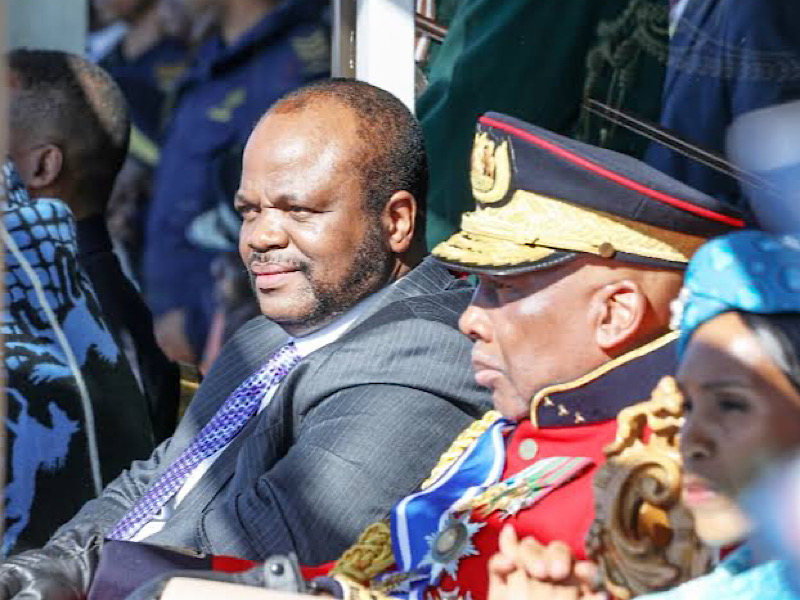
Pictured above: Eswatini King Makhosetive Mswati III and Lesotho King Letsie III.
Image source: Supplied