
- A partnership between community groups and the city has upgraded Galliot Park with fencing, lighting and controlled access to improve safety and use.
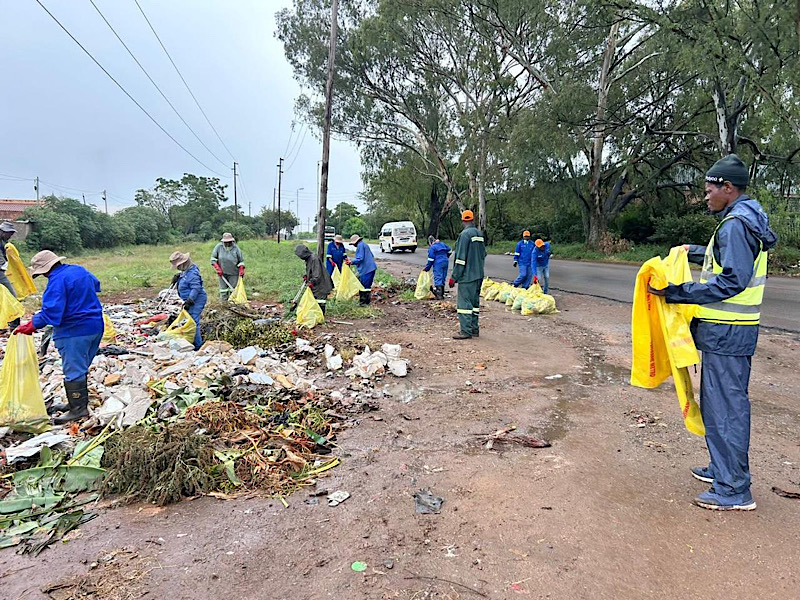
- Volunteer groups in Soweto and nearby areas are cleaning illegal dumping sites but say they need more support like tools and funding.
Communities across Gauteng are taking matters into their own hands as illegal dumping and neglected public spaces continue to grow.
In Johannesburg, Galliot Park in Glenhazel has been upgraded through a joint effort. The official launch took place on Tuesday, 21 April.
The project is a partnership between Johannesburg City Parks and Zoo, the Glenhazel Residents Association and CAP Green.
The park now has new perimeter fencing, controlled access points and solar powered lighting. These changes aim to make the park safer and encourage more people to use it.
CAP Green chief executive Amanda Porter says clean public spaces can help reduce crime.
“Urban decay and public safety are closely linked. Clean, well maintained public spaces reduce opportunistic crime and help restore community confidence,” she said.
Porter says parks also help children grow and stay active. They give families a place to spend time together and build stronger communities.
While some areas are improving through partnerships, others are acting alone.
In Soweto, the Soulbent Project is leading clean up campaigns in streets, schools and open spaces.
The group was started by Mashudu Makhado after seeing how waste was affecting local communities.
“The inspiration came from seeing the growing problem of illegal dumping and environmental neglect in our communities. As residents, we realised that waiting for change was not enough, we had to become the change,” he said.
Makhado says illegal dumping causes serious problems. It blocks drainage systems, attracts pests and can spread disease. It also damages the image of communities and affects how residents feel.
The project has grown, with volunteers joining in Soweto, Honeydew and Atteridgeville.
But Makhado says they still need support. This includes waste bags, tools, storage containers and money to support volunteers.
Pictured above:
Image source: