The origins of masturbation can be traced back to ancient primates that existed tens of millions of years before humans.
This finding by evolutionary biologists, based on the largest dataset ever compiled on the subject, reveals that self-pleasuring behaviour predates humans. It was present in the common ancestor of all monkeys and apes around 40 million years ago, they found.
Dr Matilda Brindle, the lead researcher from University College London, explained that masturbation is an ancient and evolved trait, rather than a behaviour that emerged suddenly in certain species.
To unzip the history of masturbation, the researchers analysed hundreds of publications, questionnaire responses and personal notes from primatologists and zookeepers.
By mapping this information onto primate evolutionary trees, they gained insights into the origins of the behaviour and how often it happened.
While the evolutionary purpose of masturbation remains somewhat unclear, the study shed light on potential factors.
In males, evidence suggests that masturbation increases the chances of impregnating a mate. For low-ranking males, masturbating before sex can heighten arousal, enabling faster insemination and reducing the risk of losing out to competing males.
Additionally, masturbation may help males eliminate older sperm, leaving them with fresher and more competitive sperm for successful reproduction.
The researchers also found a correlation between male masturbation and levels of sexually transmitted infections. It suggested that post-sex masturbation may aid in reducing the risk of diseases by flushing out the genital tract.
However, the evolutionary drivers for female masturbation require further investigation and data. One theory is that female primates engage in masturbation before sex to influence which male impregnates them.
By altering the acidity of the vagina, females may make it more favourable for the sperm of their preferred mate.
Brindle emphasised the importance of recognising masturbation as a natural and common behaviour across the animal kingdom.
She said it surprised her that the topic had received little research attention previously and emphasised that it is part of a healthy repertoire of sexual behaviours.
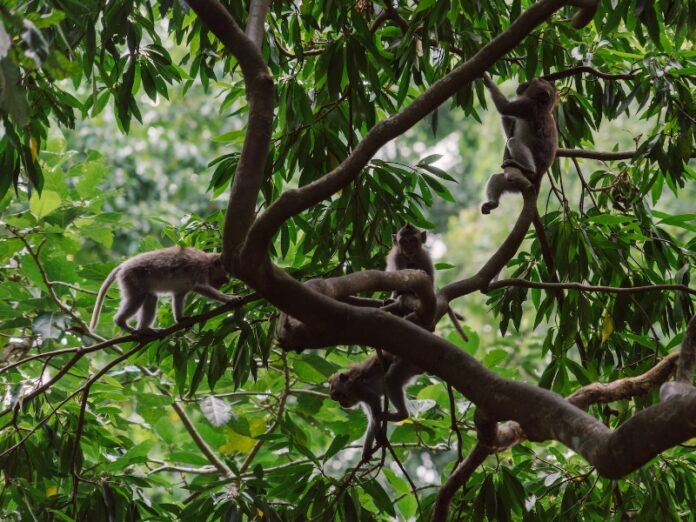
Pictured above: Primates