- Parliament’s police oversight chair Ian Cameron says the murder detection rate at the country’s top 35 high-crime stations fell from 10.12% in 2022/23 to just 7.32% in 2024/25.
- Cameron says the forensic lab completed only 71.39% of registered exhibits against a 90% target, with 175,500 DNA entries exceeding prescribed timelines by year end.
South Africa recorded fewer murders this quarter than last year. But in the communities where people are most likely to be killed, the person who killed them has roughly a one in fourteen chance of ever being identified.
That is the finding Parliament’s police oversight chair Ian Cameron put on record on Friday, alongside the release of the quarterly crime statistics.
At the 35 highest-crime stations in the country, the average murder detection rate dropped from 10.12% in 2022/23 to 7.32% in 2024/25. Cameron obtained the figures through a parliamentary question to Saps. Detection means an identified suspect and a prosecution-ready docket. It is not a conviction. It is the first step toward one.
In 2024/25, 26 of those 35 stations had murder detection rates below 10%. Fourteen were below 5%.
“The communities most exposed to murder are often also the communities least likely to see murderers brought to justice,” Cameron said.
Cameron visited several of those stations in the past two weeks. What he found was not a policing strategy problem. It was a basics problem.
At Philippi East, a station serving more than 250,000 people across more than 15 informal settlements, only a handful of vehicles were operational. At Mfuleni, a large number of visible policing vehicles were off the road. At Nyanga’s Family Violence, Child Protection and Sexual Offences unit, staff were working with limited vehicles and no rape kits. Stellenbosch and Mitchells Plain FCS units also reported shortages of child rape kits. In Worcester, an FCS unit covering ten stations including Laingsburg, 175 kilometres away, had seven vehicles in total, one of them a single-cab unsuitable for transporting victims.
The DNA Board presented it to the Portfolio Committee on Police on the same day. What it showed was a forensic pipeline in serious trouble.
The Forensic Science Laboratory completed only 71.39% of registered exhibits against a 90% target. Only 8.88% of routine DNA case exhibits were finalised within the 35-day target. Only 35.98% of non-routine cases were finalised within the 113-day target. Only 24.03% of DNA intelligence matters were finalised within the 90-day target.
The worst figure was the one carrying a legal deadline. Only 3.5% of buccal samples were finalised within the legally required 30-day period. That means 96.5% were late.
By year end, 175,500 DNA entries had exceeded prescribed timelines. A further 28,321 arrested Schedule 8 offenders were not sampled at all. And 365 convicted offenders were released before their DNA could be taken, leaving no forensic record of people a court had already found guilty.
Cameron said each delay and each missing sample was a potential case-breaker. The effects ran across murder, rape, gender-based violence, serial offending and cold cases.
“When DNA is not collected, not processed, not loaded, or not followed up timeously, the criminal justice system loses one of its most important weapons,” he said.
Without vehicles, detectives cannot reach crime scenes or witnesses. Without rape kits, sexual offence cases cannot be properly processed. Without forensic results, dockets are not built and cases collapse before they reach court.
Cameron said the whole-of-government approach Police Minister Firoz Cachalia introduced at Friday’s release was the correct direction. But he said the real test was not whether the murder count was falling.
“The real test is whether murderers are being found, prosecuted and jailed. At present, the evidence shows that they are not being jailed at anything close to the rate South Africans should expect,” he said.
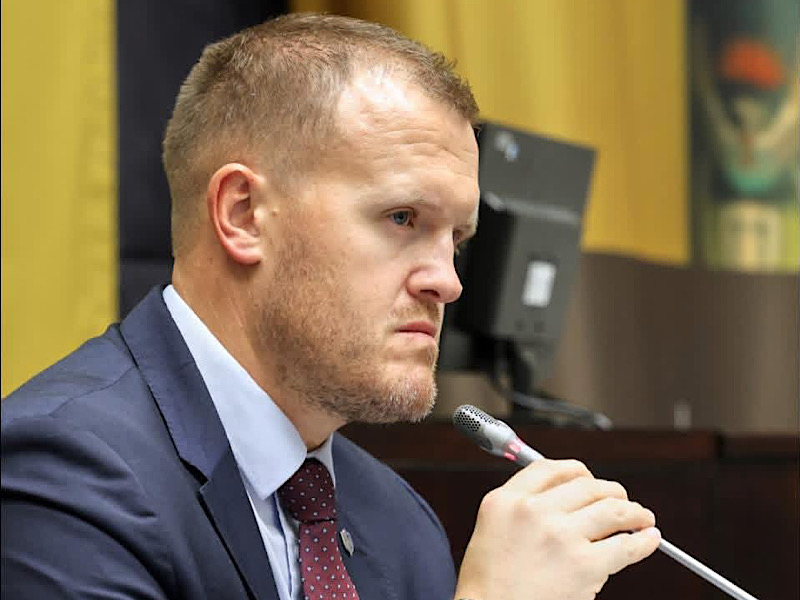
Pictured above: Parliament’s police oversight chair Ian Cameron.
Image source: Ian Cameron/Facebook