By Dylan Bettencourt
- Scientists say the radiation is harmless to rhinos but strong enough to set off alarms in airport scanners and border security systems.
- The project aims to protect South Africa’s shrinking rhino population by making the horns too risky to smuggle or sell.
Rhinos in South Africa are being given a radioactive defence against poachers.
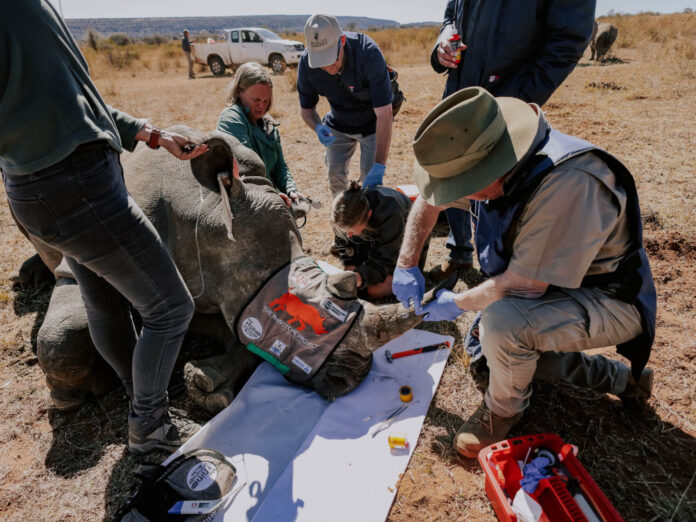
Scientists at the University of the Witwatersrand have started injecting rhino horns with low-level radioactive material. The aim is to stop traffickers from smuggling them out of the country.
The project, called the Rhisotope Project, is being run by the university alongside nuclear energy experts and conservationists.
Five rhinos have already been treated in the first round. The researchers hope to inject many more in the months ahead.
Last year, they tested the idea on about 20 rhinos at a private sanctuary. The results showed that the isotopes could be picked up by radiation detectors at airports and border posts, even inside a full 40-foot shipping container, The Guardian reported.
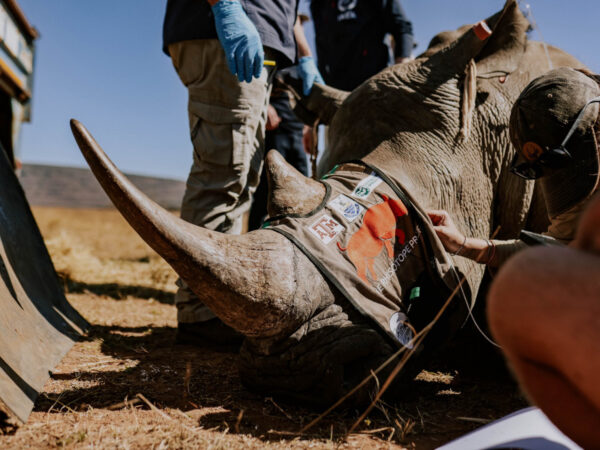
Professor James Larkin, the project’s chief scientific officer, said: “We have demonstrated, beyond scientific doubt, that the process is completely safe for the animal and effective in making the horn detectable.”
He said the radiation levels used in real-world use will be even higher than in the tests, but still safe for the animals.
Rhino horns are in high demand on the black market, especially in parts of Asia where they are wrongly believed to have medical powers.
At the start of the 20th century, there were around 500,000 rhinos in the world. Now, only about 27,000 remain.
South Africa has the biggest population, with around 16,000 rhinos. But every year, about 500 are killed for their horns.
Pictured above: Rhino at a sanctuary during the injection process.
Image source: Rhisotope Project Facebook