By Lucky Vince Pienaar
Recently, the head coach of the Sharks, John Plumtree, said (and it is a matter of record): “You can’t buy a winning team.”
He did not add that the Sharks have done exactly that. Their deal with international businessman Marco Masotti has allowed the Durban-based team to make several expensive purchases such as Siya Kolisi (who has since left), Eben Etzebeth and Bongi Mbonambi, yet their results have been disappointing, to say the least.
None of that has prevented the South African Rugby Union (Saru) from getting into bed with an American investment group, Ackerley Sports Group (ASG) based in Seattle.
The Ackerley family’s involvement in sports started with Barry Ackerley, who bought the basketball teams Seattle Supersonics and Seattle Storm. Later, in 2001, he sold the clubs to Howard Schultz for $200-million.
Ackerley’s sons, twin brothers Ted and Chris Ackerley, got into sports investment and recently became investors in Leeds United Football Club among other ventures.
ASG will invest in a commercial rights corporation, which will hold the current and future revenue-generating assets of the Springboks and Saru. Saru will be the majority share-owner of the corporation with ASG taking what is described as a significant minority interest.
While the Sharks have sold the controlling share to Masotti (at 51%), ASG is investing R1.42-billion ($75-million) for a 20% share in the Boks. Their London-based collaborator, Timothy Kirkwood, assumes responsibility for managing the Springboks’ relationship.
The overarching aim, says ASG, is to enhance sponsorship, broadcasting, content, and match-day revenue streams. Notably, Saru will allocate a large portion of the proceeds towards sustaining amateur rugby in South Africa.
Kirkwood is reported in CashNSport as saying: “The Springboks’ enduring success stands out remarkably, yet, there’s a noticeable gap between their on-field achievements and their business performance.”
In other words, there’s a lot more money to be made than is currently the case and ASG plans on ramping up the promotional angles to generate a lot more revenue.
The truth is, Saru needs the money. With the South African currency what it is, getting top players to play in the country is becoming more and more difficult.
In the immediate future, coach Rassie Erasmus has a tough year ahead, playing both Ireland and the All Blacks. In the long term, he has a World Cup title to defend. All of that takes money.
So Saru finds itself between the devil and the deep blue sea, and guess what? They’re about to open the door to the devil.
Global consortiums are the future of all sports. It should not, and cannot, be avoided. There are things that you don’t do against thunder. But will the culture of the green-and-gold survive an era of the big-bucks-Boks?
The example of the Sharks may not be fair. The Durban-based franchise is badly coached and badly managed.
Let’s hope the World Cup champions don’t fall into the same hole.
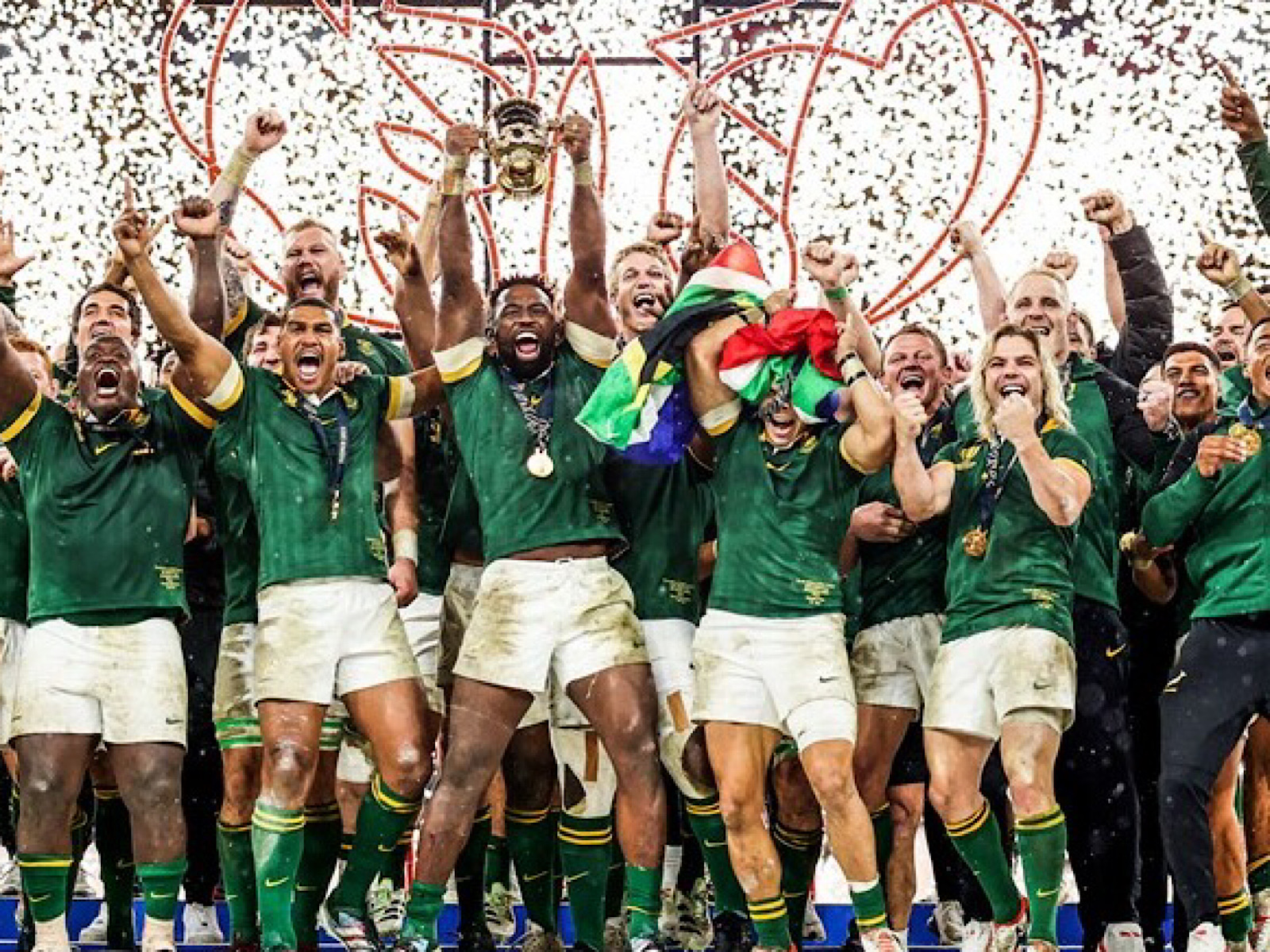
Pictured above: The Springboks’ World Cup glory.
Source: SA Rugby.