
- The lowest-spending households faced 2.9% inflation in August, compared with South Africa’s urban average of 4.4%.
- Food rose slowly, but transport, fuel, electricity and other household costs became much more expensive.
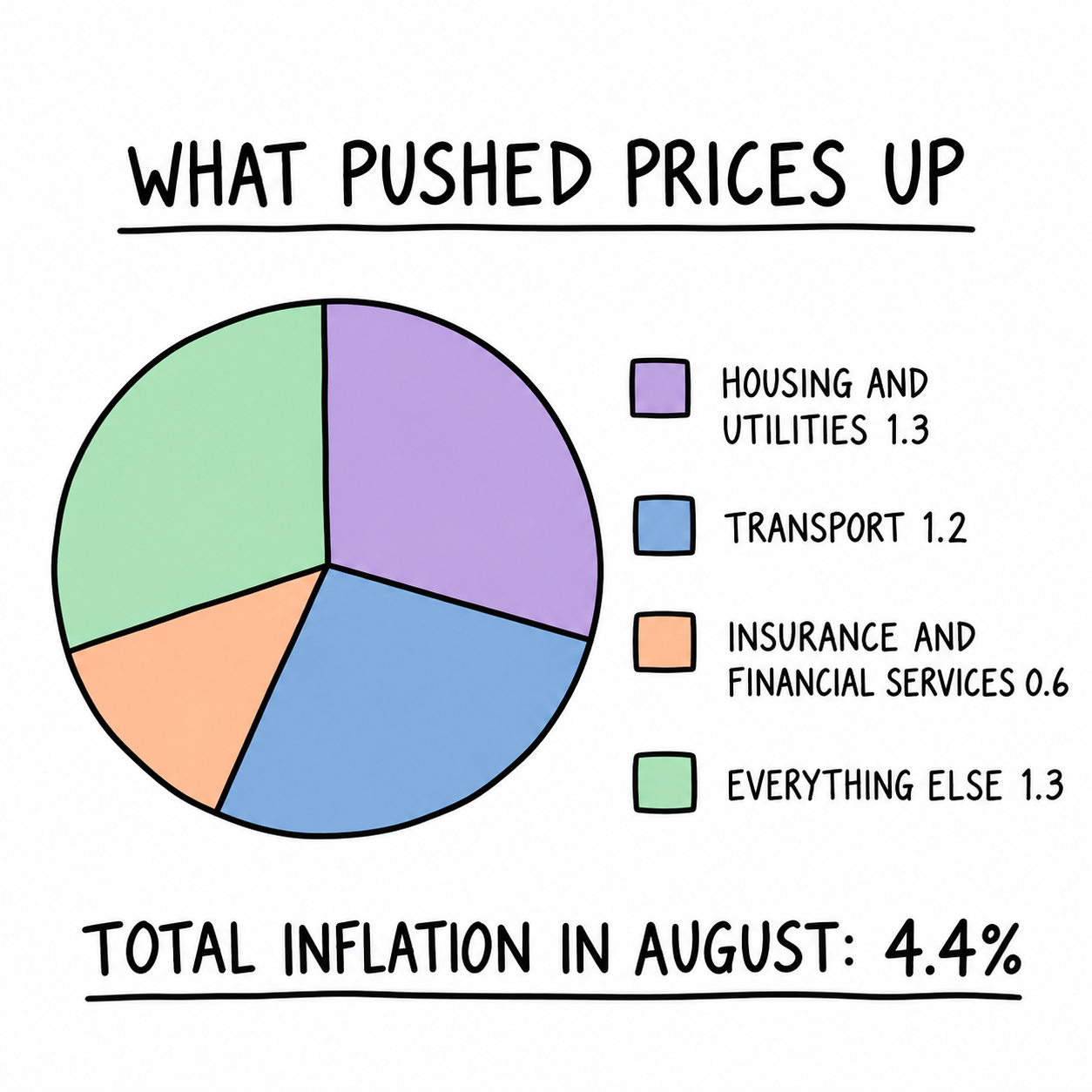
South Africa’s inflation rate was 4.4% in August, but that does not mean everything you buy became 4.4% more expensive.
It also does not mean every household felt the same increase.
Stats SA divides households into groups based on how much they spend.
The lowest-spending 10% of households faced inflation of just 2.9%. For the highest-spending 10%, it was 4.6%.
The average for urban South Africa was 4.4%.
Why the difference?
People spend their money on different things.
Food and non-alcoholic drinks were only 1.1% more expensive than a year ago. Food alone increased by just 0.7%.
But some other everyday costs rose much faster.
Transport was up 8.8%.
Passenger transport services increased by 11.6%, while fuel was 20% more expensive than a year earlier.
Housing and utilities rose by 5.2%. Electricity, gas and other fuels increased by 7.4%.
So a household spending a lot on taxis, petrol or electricity could feel a much bigger squeeze than one spending more of its money on food.
Pictured above: A man packing groceries.
Image source: Pexels