
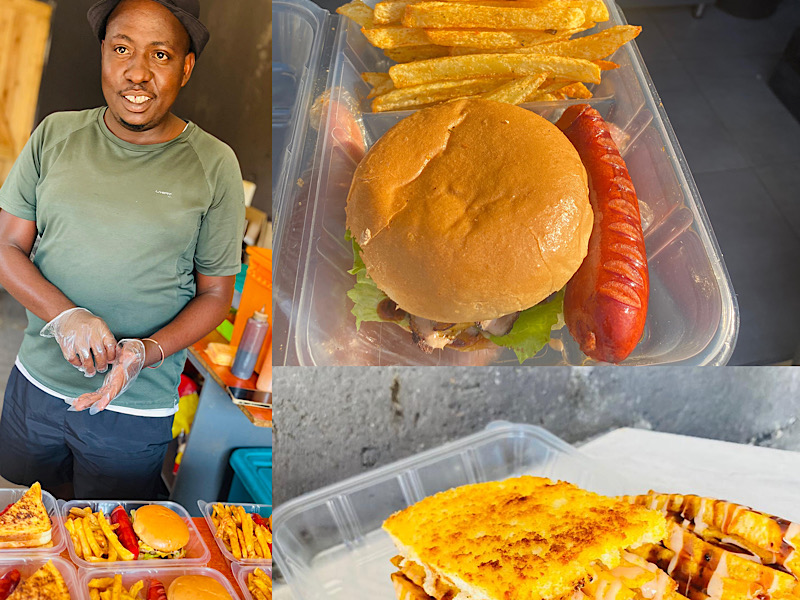
- Tshepo Zitha, 26, from Tzaneen started his kota business eRussia in 2019 with no money and almost no customers on day one.
- When Tshepo ran out of stock, Ali and Malid gave it to him on credit. He paid them back when he could. He still buys from them today.
Tshepo Zitha had a bad first day. He was 19 years old, fresh out of school in Dan Village in Tzaneen, Limpopo, and the kota stand he had taken over from his sister was not moving. The money he made could not cover the next round of stock. He did not know how he was going to keep going.
His parents could not afford to send him to university after he passed matric in 2018. The kota business was the plan. And on day one, the plan was not working.
What kept him going was Ali and Malid, Somali shop owners who operated next to him in the area. When Tshepo had no money for stock, they gave it to him anyway. He would pay them back once he had saved enough. No contract. No guarantees. Just a relationship built on watching him show up every day.
“They helped me to keep going,” Tshepo said.
This is not the story most South Africans hear about foreign shop owners and locals. In April and May 2026, vigilante group March and March organised demonstrations against foreign nationals in Johannesburg, Pretoria and Durban, with attacks on foreign-owned shops.
Tshepo says what he has with Ali and Malid is specific to the trust between them, not something he thinks happens everywhere. In his area, he says, locals and foreign shop owners generally get along. He still buys from Ali and Malid from time to time, even now that he can afford not to.
Seven years on, Tshepo’s business, which he named eRussia after a concept of fearlessness he and his friends held onto growing up, has expanded well beyond that first bad day. He learned from other kota owners, built a social media presence, and when sales were slow he sold door to door and cut prices rather than lose the day.
He now delivers by bicycle in the neighbourhood and by car in town, for a fee. The car came from his own savings. It was the first bought by anyone in his family.
“My parents could not believe their eyes when I came back with a car,” he said.
He also sells dagwoods and supplements the business with snacks and drinks. December and school holidays are his strongest months, when varsity students return home. He says he has no plans to go back to studying. The business provides for him and his unemployed parents.
Pictured above: Tshepo Zitha outside his kota and burger business eRussia in Tzaneen, Limpopo.
Image source:Supplied