
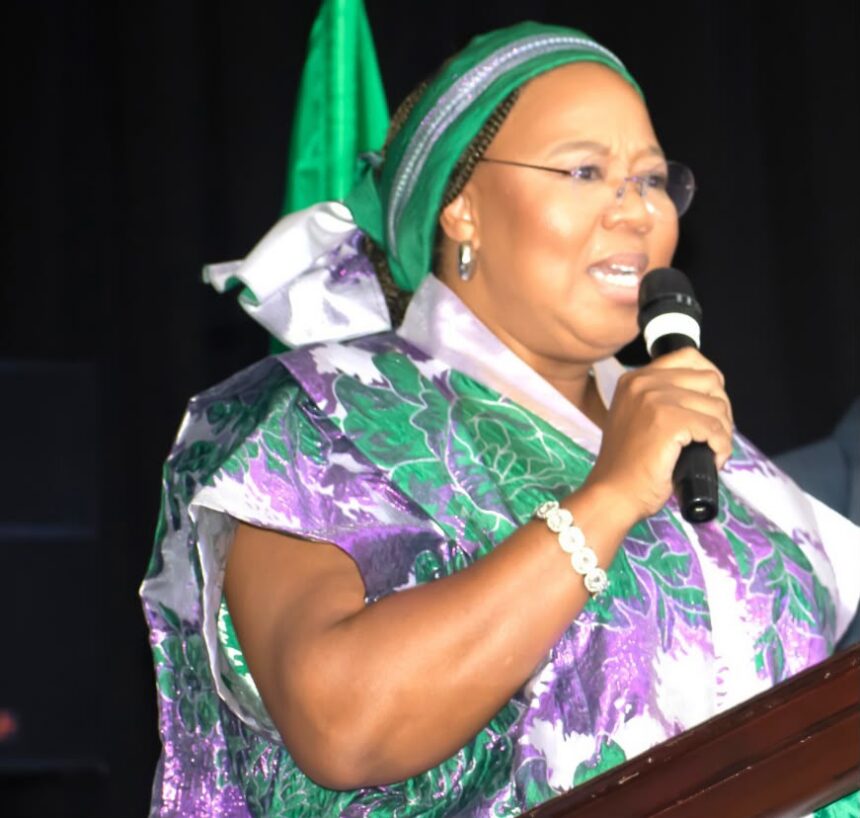
- Azania Movement leader Nolubabalo Mcinga warns that Donald Trump’s decision to end South Africa’s special trade benefits could threaten rural jobs.
- South Africa is set to lose duty-free access for certain goods entering the American market from 1 January 2027, putting exporters under pressure.
Farmworkers and rural families could face job losses after United States President Donald Trump announced plans to end South Africa’s special trade benefits.
Azania Movement leader Dr Nolubabalo Mcinga warned on Sunday that the decision could hurt farmers, businesses and communities that depend on exports to America.
The warning comes days after the 2026 local government elections, which saw the African National Congress lose support.
Mcinga said the election results and Trump’s trade decision should serve as a warning to South Africa’s political leaders.
The United States announced on 2 November that South Africa would lose its benefits under the African Growth and Opportunity Act from 1 January 2027.
The agreement allows certain South African products to enter the American market without import duties.
Without these benefits, exporters could face extra costs when selling their goods in America.
Mcinga warned that the changes could put pressure on farmers, agricultural workers and rural communities.
She said South Africa must protect people whose livelihoods depend on trade with the United States.
But she also believes the country should stop depending too heavily on decisions made by foreign governments.
“It also exposed how vulnerable we can become when we depend too heavily on the decisions of a powerful foreign government,” said Mcinga.
She questioned why South Africa should depend on another country for access to markets and economic opportunities.
The South African government has also raised concerns about the decision.
Trade Minister Parks Tau said the government would work with affected industries to protect jobs and find other markets for South African goods.
The government said the loss of trade benefits would not mean South African products were banned from America.
Instead, affected goods could face normal import duties and other tariffs.
Mcinga said South Africa should use the setback to strengthen its own economy.
“America is an important trading partner, but it is not the only market in the world,” she said.
She believes the country should invest more in farming, food production and businesses owned by local communities.
Mcinga said Black South Africans had a long history of farming before colonialism took away their land and economic independence.
She called for traditional leaders to play a bigger role in helping communities develop farming businesses.
She said municipalities should work with traditional authorities, farmers and local businesses to improve irrigation, storage facilities and food processing.
These projects would need reliable water, electricity and roads.
Mcinga said they could also help young people become business owners instead of depending on political promises.
“Imagine young people becoming owners of productive enterprises rather than being permanently dependent on political promises,” she said.
She also criticised the country’s political leadership following the local government elections.
“The growing support for parties on the political right should make us reflect deeply,” said Mcinga.
She argued that poor service delivery, corruption and unemployment had damaged public confidence in political leaders.
Mcinga said political freedom must bring real economic opportunities, especially for people living in rural areas.
For farmers and workers who depend on exports, the immediate concern is what happens when the American trade benefits end.
Mcinga believes South Africa must protect those jobs while building new markets and supporting local businesses.