
By Nkhensani Mthombeni
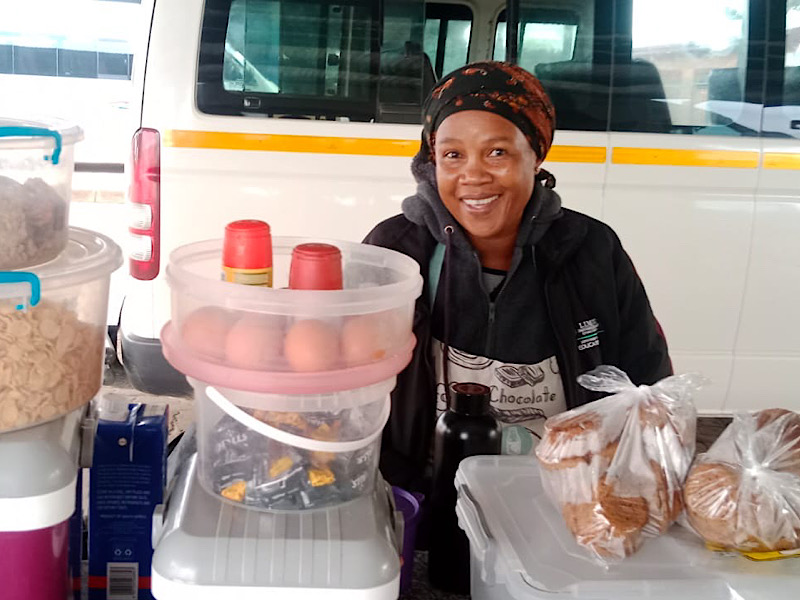
- Sakhile Mhlongo sells scones, sandwiches, cereals, coffee and tea at Nkowankowa Taxi Rank outside Tzaneen, spotting a gap no one else at the rank had filled.
- The average household food basket costs R5,502 a month nationally. Mhlongo makes between R200 and R500 a day, with no guarantee which it will be.
Sakhile Mhlongo wakes up every morning and goes to work for herself. She has done it for years. Nobody hired her. Nobody promoted her. She spotted a gap at the Nkowankowa Taxi Rank outside Tzaneen — everyone selling pap and vleis, nobody selling breakfast — and she filled it.
Scones, sandwiches, cereals, coffee and tea. On a good day she takes home R500. On a slow day it is between R200 and R250. She never knows which it will be.
That income raised four children, now aged between 23 and 37. All of them are employed.
“My kids grew up knowing that they are raised by a hustling mother, who uses her hands to make money. My business has given me a voice as a single parent. I don’t have to depend on a man for survival,” she said.
Mhlongo, now 55, sharpened her skills through baking classes and entrepreneurship training at the Small Enterprise Development and Finance Agency. Her dream is to own a coffee shop one day.
The national household food basket costs R5,502.42 a month in June 2026, according to the Pietermaritzburg Economic Justice and Dignity Group. Mervyn Abrahams, Programme Coordinator at PMBEJD, said informal traders earning irregular incomes face a brutal choice when food prices rise.
“They are forced to borrow and get more into debt, or cut back on the amount and quality of food, which in the long run is detrimental to their health. Informal traders are also forced to increase their prices, which affects their target market negatively — usually people who cannot afford normal retail prices,” Abrahams said.
In Limpopo, 43,000 jobs were lost in the first quarter of 2026, according to Stats SA. The unemployment rate in the province stands at 31.7%, with black African women the most affected at 40.5%. The General Household Survey 2024 found that 42.4% of South African households are headed by women.
Leo Gama, spokesperson for the Limpopo Economic Development Agency, said informal traders are the backbone of the provincial economy.
Traders in the Tzaneen area can visit the LEDA Nkowankowa branch at 01 Bankuna Road or call 015 303 1731 for business support and registration assistance.
Pictured above: Sakhile Mhlongo at her breakfast stall at Nkowankowa Taxi Rank outside Tzaneen.
Image source: Nkhensani Mthombeni