

By Anita Dangazele
- The mother’s retail salary no longer covers groceries for the whole month as prices keep rising without matching pay increases.
- The shop owner gives her credit even when she cannot pay her bill and her children can collect food themselves.
A Gqeberha mother of four knows exactly where to go when her groceries run out before month end.
The woman works in retail. Her salary used to cover food for the whole month. Not anymore.
Prices keep rising. Her pay does not.
She gets credit from a spaza shop near her home.
“My friend lets us take on credit, we then pay at the end of the month. However, in some months when I’m unable to pay my bill, he still gives me food on credit,” she said.
The shop owner has been in the area for years. He knows she will not disappear.
“He is very understanding of the situation in our township and has built relationships with many customers. I am really grateful for him,” she said.
Basics like cooking oil, sugar, washing powder, bath soap, vegetables and bread often run out halfway through the month.
When that happens, her children go to the shop on their own.
“We’ve developed a business relationship so close that my children can just go and take things even if I’m not there. I don’t have to worry about things like bread when my kids come home from school,” she said.
Research by Accenture Africa found there are more than 150,000 spaza shops across South Africa. About 80% of the population visits spaza shops daily.
These shops account for around 40% of the country’s total yearly food spending. The sector is worth R178-billion. That is bigger than Shoprite’s R149.55-billion market value.
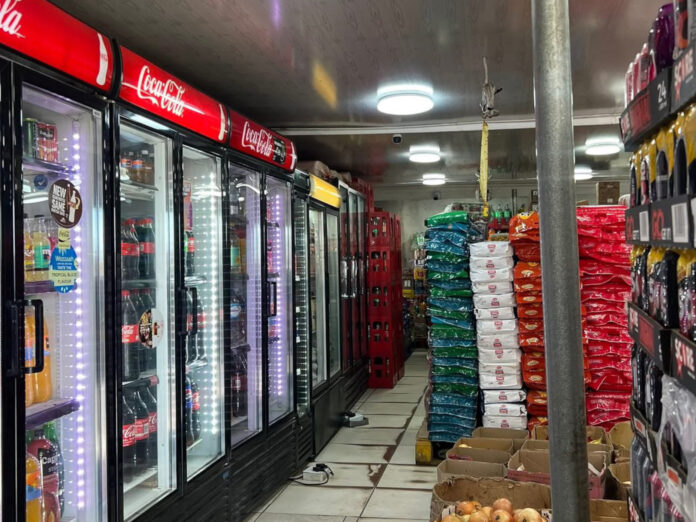
Pictured above: A local spaza shop.
Image source: Supplied


