
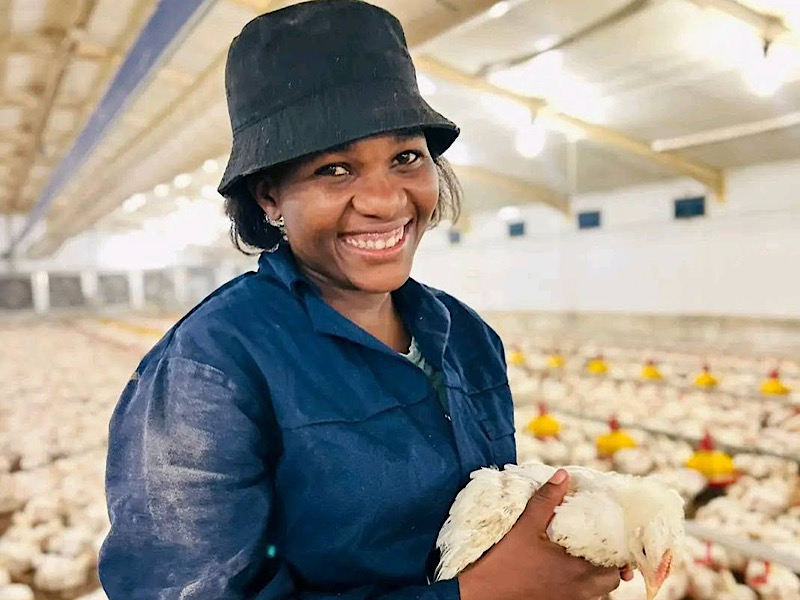
- Camilla Ndlovu’s Oak Farm came second in the Best Commercial Producer category at Polokwane’s 2026 Young Entrepreneur Awards on Thursday.
- As a contract grower, Ndlovu cannot raise her chicken prices, so she cuts costs and waste to stay profitable instead.
Camilla Ndlovu never inherited a farm. She went to the Land Bank first to find out what she needed for funding, researched farming, filed the paperwork, and looked for a farm to buy. The Land Bank funded her business.
A year on, her broiler farm, Oak Farm, employs 8 permanent and 5 temporary workers. The farm supplies Bush Valley Chickens and now produces 140,000 birds a cycle.
On Thursday, Oak Farm came second in the Best Commercial Producer category at the Department of Agriculture’s 2026 Young Entrepreneur Awards in Polokwane.
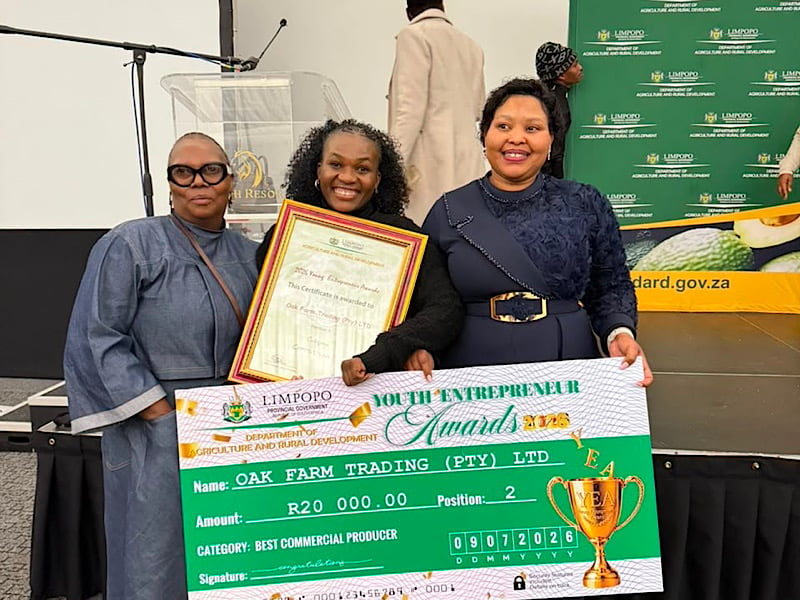
Ndlovu, 35, grows chickens under contract for Bush Valley Chickens.
“As a contract grower, I don’t determine the selling price of the chickens, so I can’t simply increase my prices to recover those costs,” she said.
“Instead, we have to become more efficient, reduce wastage, improve production performance, and manage every expense carefully to remain profitable.”
She watches production closely, sticks to strict biosecurity, cuts unnecessary spending, and makes decisions based on data. She is also building other income streams to avoid depending only on chickens.
Ndlovu wants young people to see farming as a career, not just fieldwork.
“Agriculture offers opportunities in farming, technology, engineering, logistics, finance, marketing, and agri-business,” she said.
“Young people often think agriculture is just working in the fields, but it’s actually a business with endless opportunities to innovate, create jobs, and build wealth while feeding the nation.”
She said government programmes have helped young farmers, but funding takes too long to reach them, and many young people do not know these programmes exist.
“Greater awareness, mentorship, and faster implementation would help more young farmers succeed,” she said.
Her advice to those without money to start: get training, volunteer on farms, build relationships in the industry, write a business plan, and keep applying for opportunities.
Pictured above: Camilla Ndlovu with one of her chicks.
Image source: Supplied