
Elephant Eye: Sousa Jamba says that now the remarkable Angolan Queen Njinga is becoming famous on Netflix she deserves a decent memorial
Like most Angolans, I have long been fascinated with Queen Njinga Mbandi, the Queen of the Matamba Kingdom, who in the 17th century put up a fierce resistance against the Portuguese colonialists.
It is, however, very hard to tell fiction from the truth. This is why Njinga has fascinated so many people.
There is currently a Netflix docudrama based on her life produced by Jada Pinckett Smith. Some Angolans are up in arms saying the dramatisations have little to do with the reality on the ground, as if they knew what it was really like four centuries ago.
But Angolans also complained when in 2013 a Brazilian production company made a television series based on the great queen.
Lesleana Pereira, who was crowned Miss Angola in 2007, played Njinga and there were complaints that her Brazilian weave was anachronistic. They argued that there were no factories at the time to produce wigs.
Also, it was noted, Miss Angola 2007 was an example of the wonders of Brazilian plastic surgeons. This was not a queen who instilled fear in her subjects and foes the way the real life Njinga is claimed to have done.
Years earlier, there was a huge statue of Queen Njinga in the heart of Luanda, sculpted by Korean experts; the result was a sexy Njinga with child-bearing hips and a posterior that made many men gaze at her for hours!
In 2019, I spent days reading about Queen Njinga, mainly from works of Portuguese historians who were also fascinated by her and who did not hesitate to help build this image of a relentless, shrewd queen who took on the Portuguese.
I wanted to see where Queen Njinga was buried.
The drive from Malange to Queen Njinga’s grave lasted eight hours; we drove through impoverished villages without decent schools or medical posts. We went past rivers where I would see a group of young men digging by the banks for diamonds. Finally, I got to Muculu Wa Ngola village.
Queen Njinga is buried in a large orchard surrounded by a stone wall. To get in, I had to take my shoes off: only men who had borne children could go near the grave. If a man who had had no children cheated and went next to the grave he would become impotent. Several men who were with me chose not to advance.
The orchard smelt of rotten fruits — avocados, mangos, pineapples and lemons fell off the trees and were allowed to rot. The queen and her people in the other world needed to eat!
Queen Njinga’s grave was covered by a short roof covered in grass. There were a few metal items (one looked like a bell) which only designated members could touch. I felt sad that one of Angola’s outstanding heroines had such a humble tomb. Members of the royal family told me that there had been several promises of having a decent tomb built that never materialised.
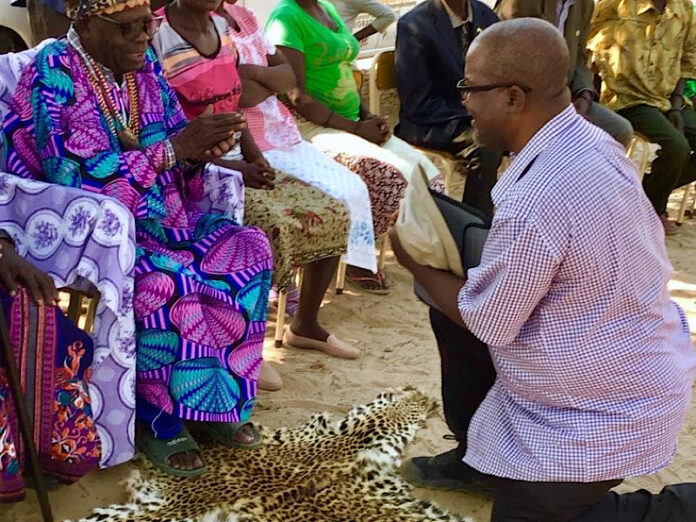
On that visit, I spent my last night at the court of King Buba Nvula Dala Mana, a direct descendant of Queen Njinga. The royal family lived in an enclosed area. The king who was in his eighties had 10 wives; the youngest was in her early twenties. The King had several children who, he insisted, all looked like him!
That night members of the court told me stories of what life was like in colonial days. In Malange, there was a large company, Cotonang, which produced cotton. Angolans were made to work in the fields and paid a pittance in return. Unsurprisingly, that region saw several rebellions.
The king told me that people had rebelled because they had the spirit of Njinga Mbandi in them. At night, I also heard children sitting by the fireside listening to stories in Kimbundu — the language Njinga Mbandi would have used. In this region, Njinga was a mother, a towering figure among the ancestors.
I hope that the heightened interest in Njinga will result in not only a decent road built to the location where she is buried, but that a decent memorial should be built for her, and a serious discussion be held about what she represents in Angola.
Pictured above: Sousa Jamba pays homage to the court of King Buba Nvula Dala Mana
Source: Sousa Jamba