
By Zukile Majova
Political Editor
Performance agreements between the president and his ministers is a gimmick that was first introduced to SA by former president Jacob Zuma.
No one expected Zuma to remain true to his words.
And no one was surprised when he kept his comrades in his cabinet even when they were accused of poor performance and corruption.
Zuma has been the public face of ANC and state corruption for at least two decades. The state capture report is a shocking chronicle of the state being ransacked and looted during the nine wasted years of Zuma’s reign.
There was therefore no expectation that a man of such low morals would fight corruption and underperformance in government.
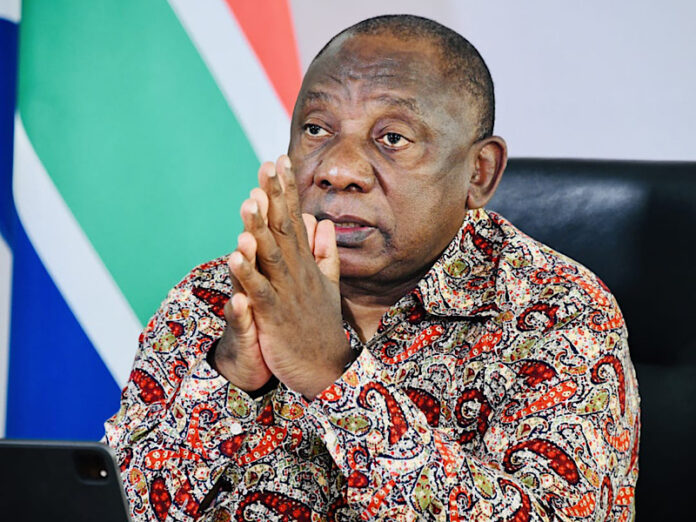
But when Cyril Ramaphosa, the man personally chosen by Nelson Mandela as a future president of the country, said he was signing performance agreements with his ministers, there was a chance that he could keep his word.
Ramaphosa was head of the ANC delegation negotiating South Africa’s peaceful transition from apartheid to a democracy in the early 1990s.
He was the convenor of the Constitutional Assembly crafting the country’s constitution, which is hailed the world over as one of the best cornerstones of a democracy.
So when Ramaphosa promised the nation a new dawn, the nation had a renewed hope.
In his 2020 State of the Nation Address, he said: “To strengthen the capacity of the state and increase accountability, I will be signing performance agreements with all ministers before the end of this month.”
He went on to say: “These agreements, which are based on the targets contained in the Medium-Term Strategic Framework, will be made public so that the people of South Africa can hold those who they elected into office to account.”
But this week, the Ramaphosa government changed its tune and said the performance assessments of ministers will not be made public.
On the eve of an election, there is fear that the poor performance of ministers would be used by opposition parties to score political points.
The DA, which plans to do exactly that, said it would “approach the courts to obtain the performance assessments of South Africa’s national cabinet ministers if President Cyril Ramaphosa withholds them from the public”.
Ramaphosa’s spokesperson Vincent Magwenya said the DA was trying “to make a political statement”.
“We don’t have an issue of accountability by the executive being absent from the public domain, no it is not.
“What you have with these performance assessments are discussions between an employer and his employees in terms of assessing progress on the priorities that have been outlined.”
What is clear for all to see is that the power of an office can change a man. And Ramaphosa is not the same person we have known all these years.