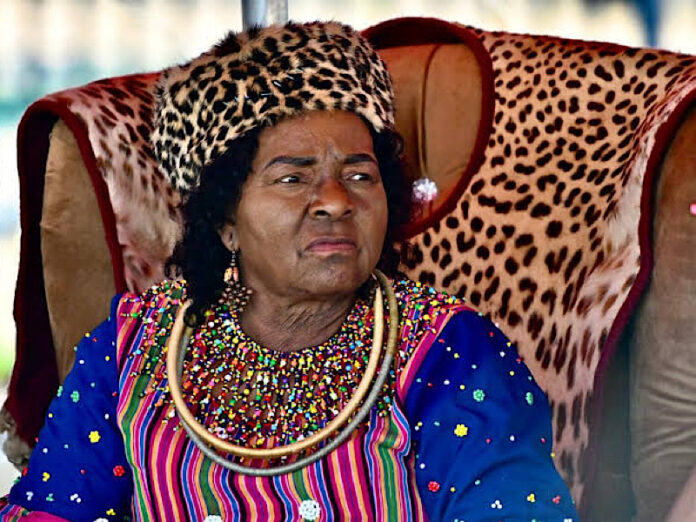
Hosi Phylia Tinyiko Lwandlamuni Nwamitwa II’s rise to the throne is one of the most powerful stories of resistance against patriarchy in South African traditional leadership, writes Celani Sikhakhane in Royal Mzansi column.
For more than four decades she fought to claim the throne of the Valoyi people in Tzaneen, Limpopo.
Her struggle began after the death of her father, Hosi Fofoza, in 1968.
Because he had no son, tradition shaped by apartheid era rules said his firstborn daughter could not inherit the throne. Under the male primogeniture system, leadership passed only to men.
But Nwamitwa refused to accept this.
She challenged the system in a long legal fight that became one of the most important traditional leadership cases in the country.
Her case reached the Constitutional Court, which delivered a historic ruling on 4 June 2008.
The court confirmed that Nwamitwa was the rightful senior traditional leader of the Valoyi. Judges said the Constitution restores the dignity and status of women as equal citizens.
The decision overturned the interpretation of customary succession that had excluded women.
It also showed that tradition can develop in line with the Constitution and the values of equality and human dignity.
Through this victory, Nwamitwa did more than inherit a throne.
Her fight helped reshape how traditional leadership is understood in South Africa. It opened the door for women to claim leadership roles that had long been closed to them.
Many people later compared her courage to great African women leaders such as Queen Nzinga of Angola and Princess Mkabayi of the Zulu nation.
After becoming queen in 2008, Hosi Nwamitwa II ruled with humility and dignity.
She faced criticism and insults from some members of royal circles, but she continued to lead her community with patience.
She became known as a mediator, educator and community builder.
During her reign she worked with government, business, churches and community groups to support development, education and social unity.
Her leadership connected traditional authority with the modern constitutional state.
South African Parliament said her life showed that traditional leadership and constitutional democracy can work together to serve the people.
Hosi Nwamitwa II died in February this year, leaving behind a legacy that changed the role of women in traditional leadership forever.
Pictured above: Hosi Phylia Tinyiko Lwandlamuni Nwamitwa II.
Image source: South African Presidency.