Residents of Ekurhuleni tried to oust the ANC – and failed anyway, writes Zukile Majova in Real Politics.
The residents of Ward 109 in Ekurhuleni gave the African National Congress a loud and clear message this week: voetsek.
They wanted the ANC out. They slashed its support from 69% to 37%.
And yet, they ended up with an ANC ward councillor anyway.
Mzomuhle Lucas Shabalala is the new councillor — unwanted, uncelebrated, but duly elected.
This is what happens when opposition voters split their votes across too many small parties. The ANC may be bleeding support, but it’s still winning by default.
This latest by-election result should terrify everyone hoping for political change.
The IEC says over 400 parties are likely to contest the next local government elections. If the Etwatwa by-election is anything to go by, most of those parties will fight for the same votes — and lose to the ANC.
ActionSA got 25% of the vote. The Economic Freedom Fighters got 19%. Jacob Zuma’s uMkhonto Wesizwe party got 14%. The rest went to other small parties. The ANC, with just 37%, walked away with the ward.
The by-election happened the same week the ANC held its national general council (NGC) — a supposed mid-term review and working session.
It was meant to look honestly at the party’s dismal record: a shrinking economy, over 2 million jobs lost since the Covid-19 lockdown, and the collapse of ANC majorities across the country.
Since Cyril Ramaphosa replaced Jacob Zuma in 2018, the ANC has fallen from over 62% support to just 40% in the 2024 elections.
It’s a historic collapse. A slow, painful death.
It’s no wonder there’s open rebellion from ANC structures in the Eastern Cape and elsewhere. Even the tripartite alliance is falling apart.
The SA Communist Party has started contesting municipal by-elections on its own. The unions under Cosatu are divided about this move, but the SACP is going ahead.
They say the ANC ignored them when it started negotiating a coalition with the DA to form the government of national unity.
SACP leader Solly Mapaila says they would have preferred a coalition with the EFF and the MK party. Together with the ANC, this alliance would control more than 65% of parliament.
But it would come at a cost: the EFF and MK both want land expropriation without compensation, changes to the Constitution, and other radical policies that would scare off investors and threaten the rule of law.
Ramaphosa — alarmed by Julius Malema’s “Kill the Boer” chants and Zuma’s unpredictable populism — chose a more stable route: a government of national unity with the DA.
It’s a safer bet for the economy and a message of stability to the international community.
The G20 Summit hosted in South Africa was a major win for Ramaphosa. It opened doors for trade and foreign investment at a time when South Africa is under global scrutiny.
Relations with the United States are strained. US President Donald Trump has accused the ANC government of turning a blind eye to so-called “genocide” against white farmers. Ramaphosa needs all the international credibility he can get.
Back home, the NGC should have been focused on fixing the party, confronting corruption and planning for the 2026 local elections.
Instead, it became a four-day rally to defend Ramaphosa from his enemies.
Names of possible replacements are already being thrown around — from former presidents Thabo Mbeki and Kgalema Motlanthe, to Speaker of Parliament Thoko Didiza, mining magnate Patrice Motsepe, and ANC secretary-general Fikile Mbalula.
But the name at the top of the list is Deputy President Paul Mashatile.
Mashatile is the poster child for ANC tenderpreneurs who are tired of Ramaphosa’s belt-tightening. Under Zuma, corruption thrived. It was a gangster’s paradise. Ramaphosa closed the taps — and now his own party wants him gone.
The national debt is now at R6.09 trillion. The country spends R425 billion every year just to service that debt. That’s money not going to service delivery or economic growth.
Mashatile, with a long track record of living large thanks to well-connected business friends, is the ideal candidate for those who want the ANC to go back to “business as usual”.
But Ramaphosa is not without allies. Mbalula and party chairperson Gwede Mantashe ensured the NGC didn’t become a public lynching. These two have survived every ANC era — from Zuma to Ramaphosa — and always land on the winning side.
They are neck-deep in corruption allegations themselves but now lead the party’s clean-up campaign. Ramaphosa tolerates them because they fight his battles — and keep the wolves at bay.
So the NGC ended up as little more than a talk shop.
In his closing speech, Ramaphosa congratulated the ANC for standing firm against Zuma’s MK party. He called on South Africans to “defend and deepen constitutional democracy” and said the party must win back voters by fielding honest and capable candidates.
He said local government was “central to the developmental agenda” and that ANC branches must reconnect with communities.
The problem is, the people of Etwatwa did everything they could to reject the ANC. They chose anyone but the ANC — and still got an ANC councillor.
That is not renewal. That is not transformation. That is not democracy working.
It is a warning. And if the ANC ignores it, 2026 may be its final test.
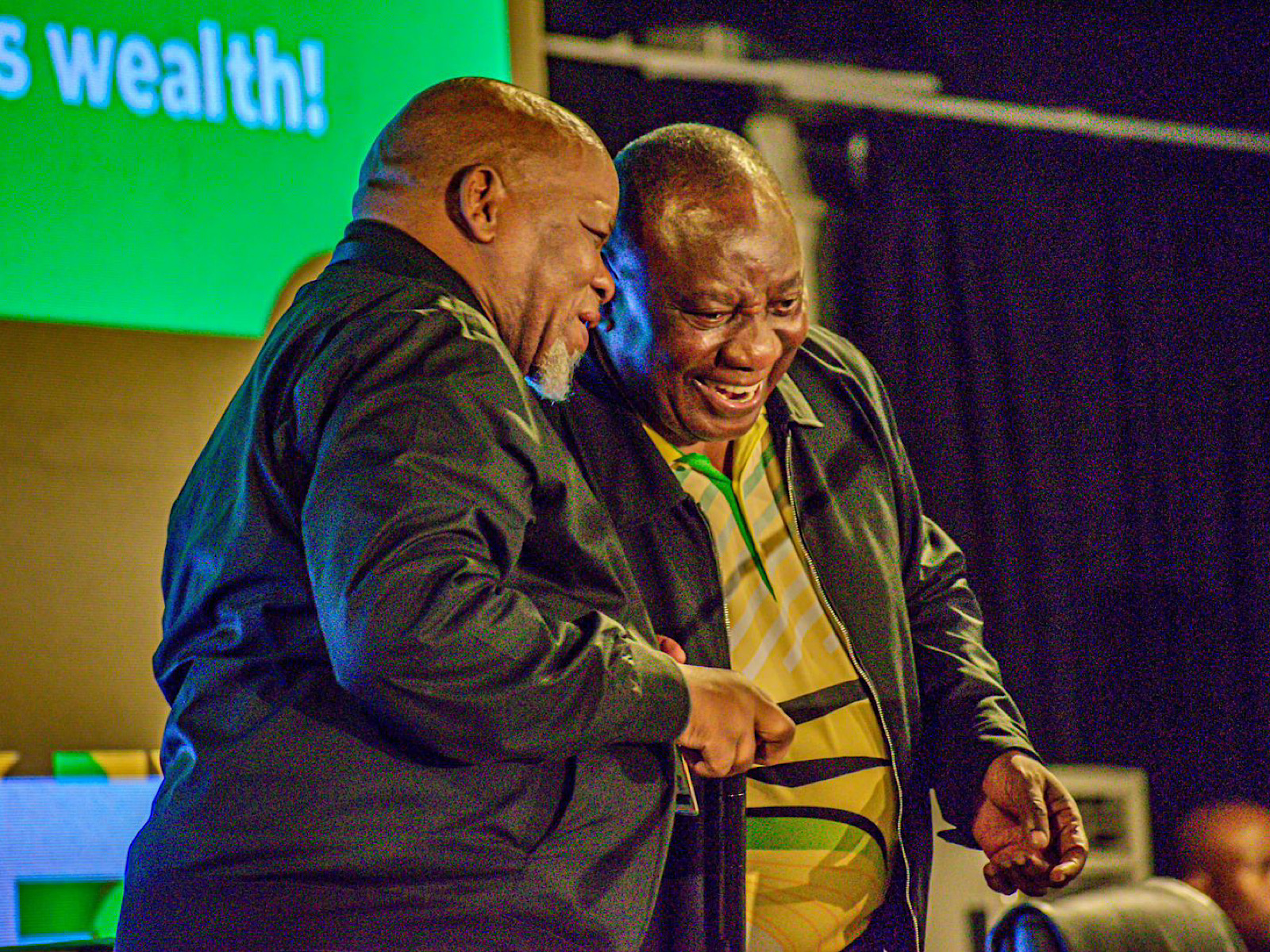
Pictured above: President Cyril Ramaphosa and political ally ANC chairman Gwede Mantashe at the ANC national general council.
Image source: ANC