
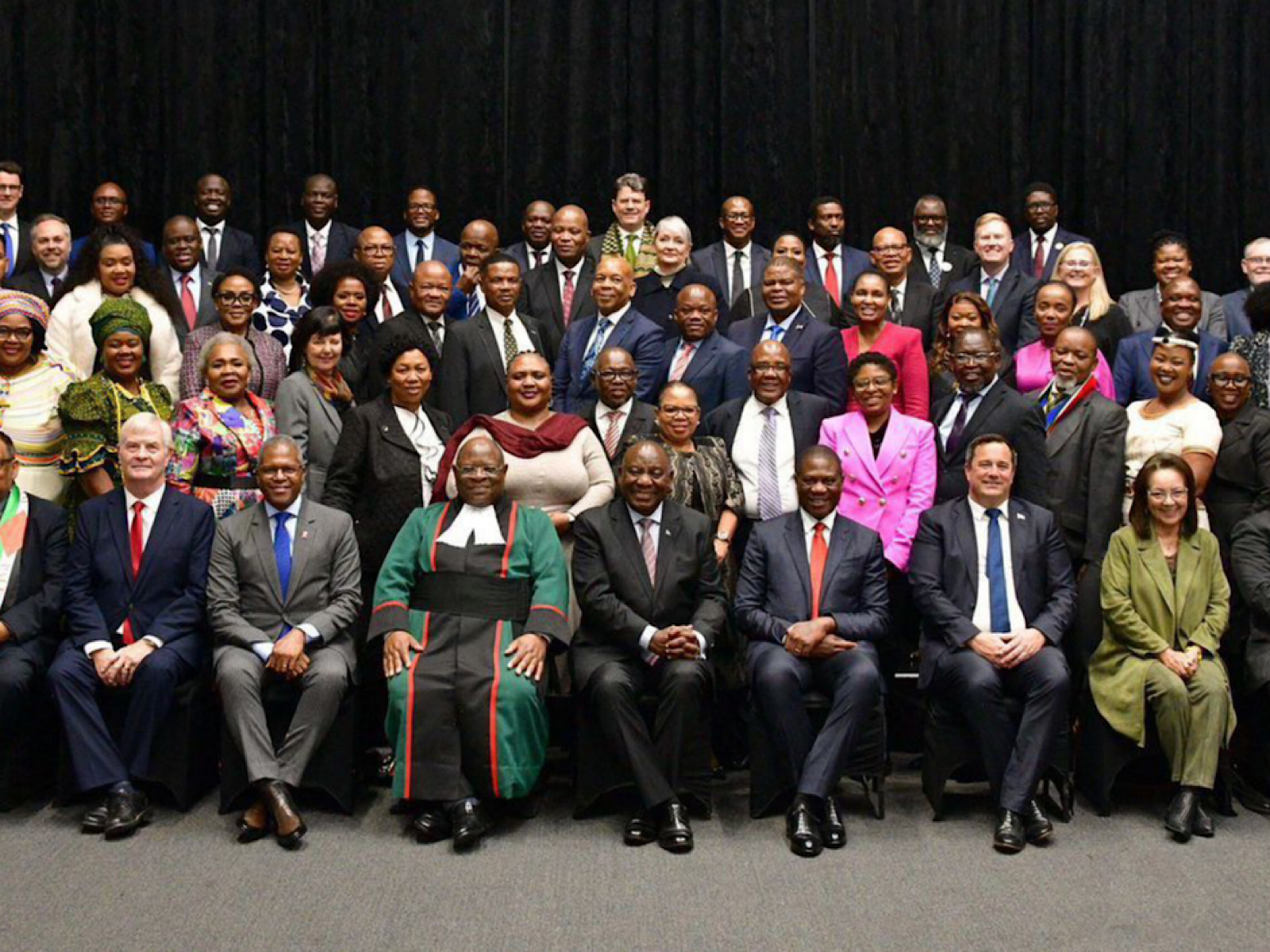
After months of chaos, the Government of National Unity has finally put conflict rules in place to help stop fights from tearing the unity government apart, writes Zukile Majova
Not long ago, DA leader Helen Zille slammed the ANC for failing to make the Government of National Unity work.
Like many South Africans, Zille was frustrated by the GNU’s slow progress in fixing the economy and creating jobs for millions of desperate, unemployed citizens.
The unity government was formed in 2024 with bold promises: to grow the economy, attract investment and stabilise the country. But 15 months later, unemployment remains sky-high and the country is locked in a trade standoff with the United States.
South Africa still doesn’t have an ambassador in Washington. Former ambassador Ebrahim Rasool was kicked out after insulting President Donald Trump. Former deputy finance minister Mcebisi Jonas, who was nominated as a special envoy, was denied a US visa.
Meanwhile, GNU parties have spent more time fighting each other than fixing the country.
They clashed over the National Health Insurance plan, the Basic Education Laws Amendment Bill and proposals for the state to take over privately owned but unused land without compensation.
The budget was delayed twice because GNU members could not agree on whether the Value Added Tax should increase.
The DA even walked out of the so-called national dialogue — a R740-million talkshop meant to gather public views on the future of South Africa. It was sold as a modern-day Codesa or a new Freedom Charter process.
More recently, the Patriotic Alliance threatened to pull out of the GNU if its deputy president Kenny Kunene was not reinstated to the Joburg mayoral committee.
Zille blamed these constant conflicts on the failure to set up a proper conflict-resolution system.
The parties had informally agreed to form a “Clearing House” — a structure for resolving disputes — but it took over a year to get it running.
President Cyril Ramaphosa tasked Deputy President Paul Mashatile with getting the Clearing House going, but there were no regular meetings and no rules were adopted until this month.
A working group presented draft rules in October 2024, but GNU members could not agree on key points — especially around decision-making and deadlocks.
Things got so messy that the GNU Secretariat called in constitutional law expert Professor Jaap de Visser to help iron things out.
The most difficult issues were clauses 18 and 19.3 of the GNU’s statement of intent. Clause 18 says decisions must be made by consensus — but allows for “sufficient consensus” if that fails. Clause 19 spells out how that works: if parties representing at least 60% of seats in Parliament agree, and all parties have had a fair say, the decision can stand.
This week, Mashatile finally announced that the working group had finished its job and that the GNU Clearing House Mechanism had adopted its Terms of Reference.
Here’s what they agreed on:
- The Clearing House will only make recommendations — not decisions.
- Monthly meetings will be held to prevent issues from spiralling out of control.
- Disagreements that cannot be resolved will go to the Political Leaders Forum, not the President.
- A new rule allows parties to “agree to disagree” when there’s no consensus.
- Local and provincial issues will not be handled by the Clearing House.
The members agreed that the GNU’s statement of intent remains the foundation of all decisions and that only the GNU itself or the Political Leaders Forum can make binding decisions.
The new rules are now headed to the Political Leaders Forum for final ratification. Any future changes will be made by amendment — as the document is now considered “a living document”.
It has taken 15 months to reach this point. That’s far too long for a country with over 16 million unemployed people and 28 million who rely on social grants.
Social spending already costs R422 billion a year and will likely rise further once a basic income grant is introduced.
South Africa simply cannot afford a disorganised coalition government.
The stability and unity of the GNU are crucial to solving the country’s problems. Politicians need to stop fighting and start governing.
The 2024 elections made it clear: voters no longer trust one party to fix the country. They forced the ANC to work with others by cutting its majority from over 57% to just 40%.
Now it’s time for those parties to earn that trust — by making the GNU work.
Pictured above: The government of national unity
Source: GCIS