
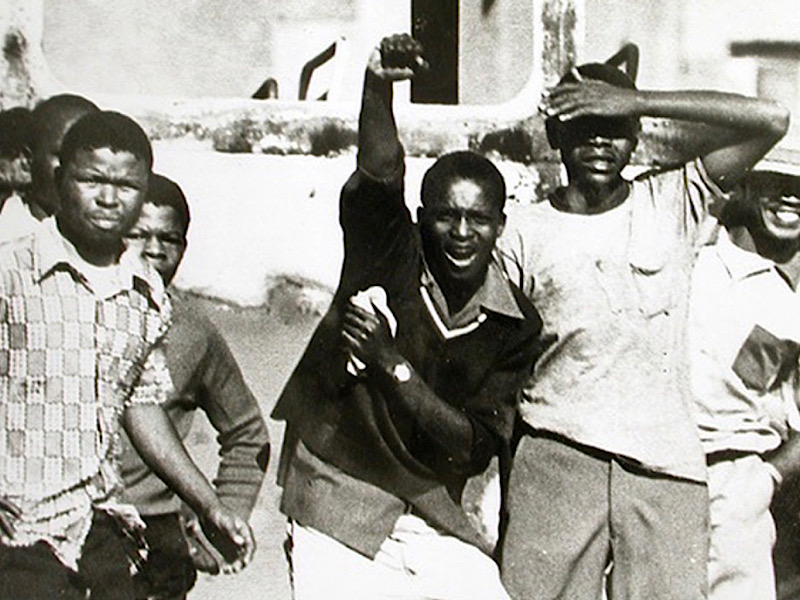
Every year South Africans commemorate June 16 by remembering the courage of the young people who challenged apartheid’s education system in 1976, writes Zukile Majova in Real Politics.
Their struggle was fundamentally about education. They rejected an inferior system designed to limit their opportunities and determine their future before they had even entered adulthood.
Nearly 50 years later and more than 30 years into democracy, perhaps the most important question is this: if the youth of 1976 were marching today, what would they demand?
The answer would probably unite South Africans more than divide them.
They would demand decent schools. They would demand skills. They would demand jobs. They would demand a fair chance to build a life of dignity.
That is why President Cyril Ramaphosa has an important opportunity when he delivers his June 16 message.
He should not allow Youth Day to become another predictable government event filled with old slogans, wreaths and political speeches.
He should use it to challenge South Africans to focus on the next great task facing the nation.
The struggle of 1976 was against political and educational exclusion. The struggle facing today’s youth is economic exclusion.
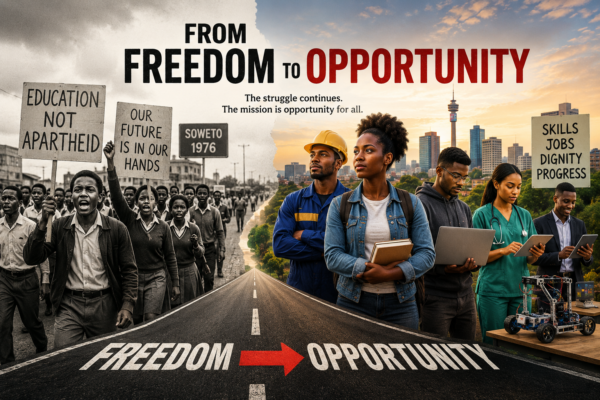
Youth unemployment does not ask whether you are black, white, coloured or Indian. A weak education system does not hurt one political party. A shortage of skills damages the whole economy. A lack of opportunity affects families and communities across the country.
The Soweto uprising helped expose the cruelty of Bantu Education and gave new energy to the fight against apartheid.
Today, Youth Day should focus our attention on a different challenge: building a country that works for its young people.
This year’s Youth Month theme is “Skills for a Changing World – Empowering Youth for Meaningful Economic Participation.”
That theme speaks to an uncomfortable truth. South Africa’s greatest challenge is no longer political liberation. It is economic inclusion.
Ramaphosa has an opportunity to place that challenge at the centre of the national conversation.
For too long, June 16 has been treated mainly as a day of remembrance. There is nothing wrong with remembering Hector Pieterson and the bravery of the Soweto generation. A nation must honour those who paid the highest price for freedom.
But remembrance is not enough.
We spend too much time looking back and too little time asking whether today’s young people are receiving the education, skills and opportunities that the youth of 1976 died for.
Nelson Mandela saw education as the most powerful weapon to change society. Archbishop Desmond Tutu believed education should build human dignity and help create a just and united nation.
Neither leader would have wanted Youth Day to become a day of empty ceremony.
They would have expected South Africans to ask whether our schools are preparing young people to succeed in the modern world.
That question forces us to confront a reality we often avoid.
Public schools remain divided by geography, language, class and history. Apartheid ended in 1994, but children still experience very different educational realities depending on where they live and where they were born.
This is not an attack on individual schools.
It is a reflection of a country that remains deeply unequal.
The generation of 1976 protested against exclusion from quality education. The generation of today faces unequal access to quality education.
That is why education reform must be treated as part of nation-building.
The Basic Education Laws Amendment Act will not solve every problem. No single law can. But if implemented fairly, it should help South Africa move towards a public education system that serves the broader public interest.
Children who learn together are more likely to build a shared future together.
That is why June 16 should become a day when young South Africans campaign together around common causes.
Schools, universities, youth organisations, businesses and government departments should use Youth Day to drive national campaigns around literacy, mathematics, coding, entrepreneurship, school safety, infrastructure and employment.
Imagine if young South Africans from every community marched together for better schools, safer communities and more jobs.
That would honour the spirit of 1976 better than another round of political point-scoring.
There is also another uncomfortable truth.
For many young South Africans, Youth Day has become just another public holiday. Across townships and suburbs, thousands spend the day drinking, partying and gathering on street corners.
There is nothing wrong with celebration. Young people deserve joy.
But June 16 was never meant to be just another day off.
The youth of 1976 marched for a purpose bigger than themselves. They organised around a common cause. They believed they could shape the future of the country.
Today’s youth face different challenges, but the need for purpose remains the same.
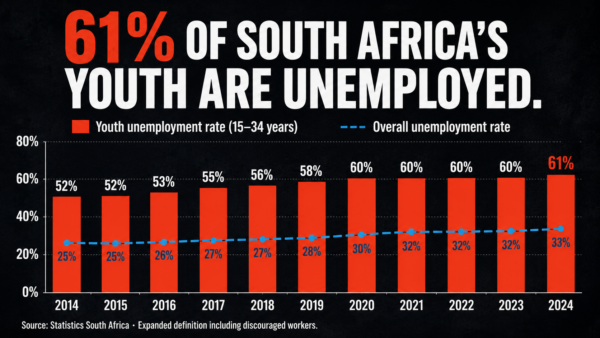
Millions of young South Africans wake up with no job to go to, no training programme to attend and little hope that their lives will change.
A young person with no work, no training and no prospects can easily lose hope. They can be recruited into violent protests that do not serve their interests. They can be manipulated by politicians looking for numbers instead of solutions. They can be pulled into alcohol abuse, drugs and crime.
This is not because young people have failed South Africa.
It is because South Africa has not created enough pathways into opportunity.
The rise of xenophobic violence in some communities should also worry us. Too often, unemployed young people are encouraged to direct their anger at fellow Africans instead of the conditions that create poverty, exclusion and unemployment.
The youth of 1976 fought discrimination and injustice. Their legacy should never be used to justify hatred of others.
South Africa needs to rethink what Youth Day is for.
Ramaphosa can lead that change.
He should challenge the country to turn June 16 into a national day of service, learning, mentoring and community-building.
He should ask businesses to open doors for first-time workers. He should ask schools and universities to connect young people with practical skills. He should encourage communities to work together across race, class and nationality.
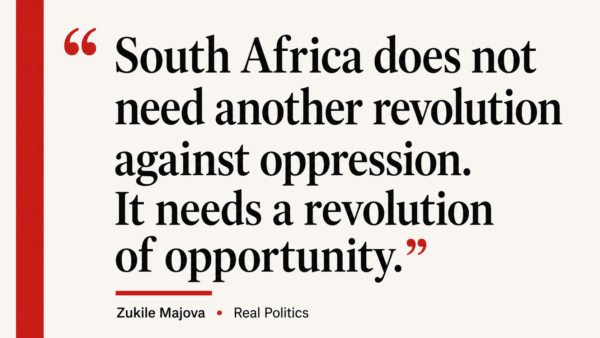
South Africa does not need another revolution against oppression.
It needs a revolution of opportunity.
The youth of 1976 changed the country’s political future.
The task now is to help the youth of today change its economic future.
That would be a Youth Day worthy of their sacrifice.
Pictured above: Youths confront and mock state authorities during the 1976 Soweto Uprising. The photograph captures the intense cross-generational tension and defiance that characterized the student resistance against Bantu Education.
Image source: Sourced via SouthAfrica-Info / Historical Archival Collection. Used under Fair Dealing provisions for educational and historical news reporting.