
The Constitutional Court has done more than revive the Phala Phala scandal. It has redrawn the political battlefield around President Cyril Ramaphosa at a delicate moment, writes Zukile Majova in Real Politics.
Inside the ANC, the ruling has injected new energy into those backing Deputy President Paul Mashatile as the party’s next leader. For them, this is proof that Ramaphosa’s grip is no longer secure.
But beyond factional excitement, the judgment is a powerful statement about how South Africa’s democracy works when tested.
The court found that Parliament acted unlawfully and irrationally when it blocked further action on the Independent Panel report into the Phala Phala matter. In effect, ANC MPs used their majority to shut down a process that should have been allowed to run its course.
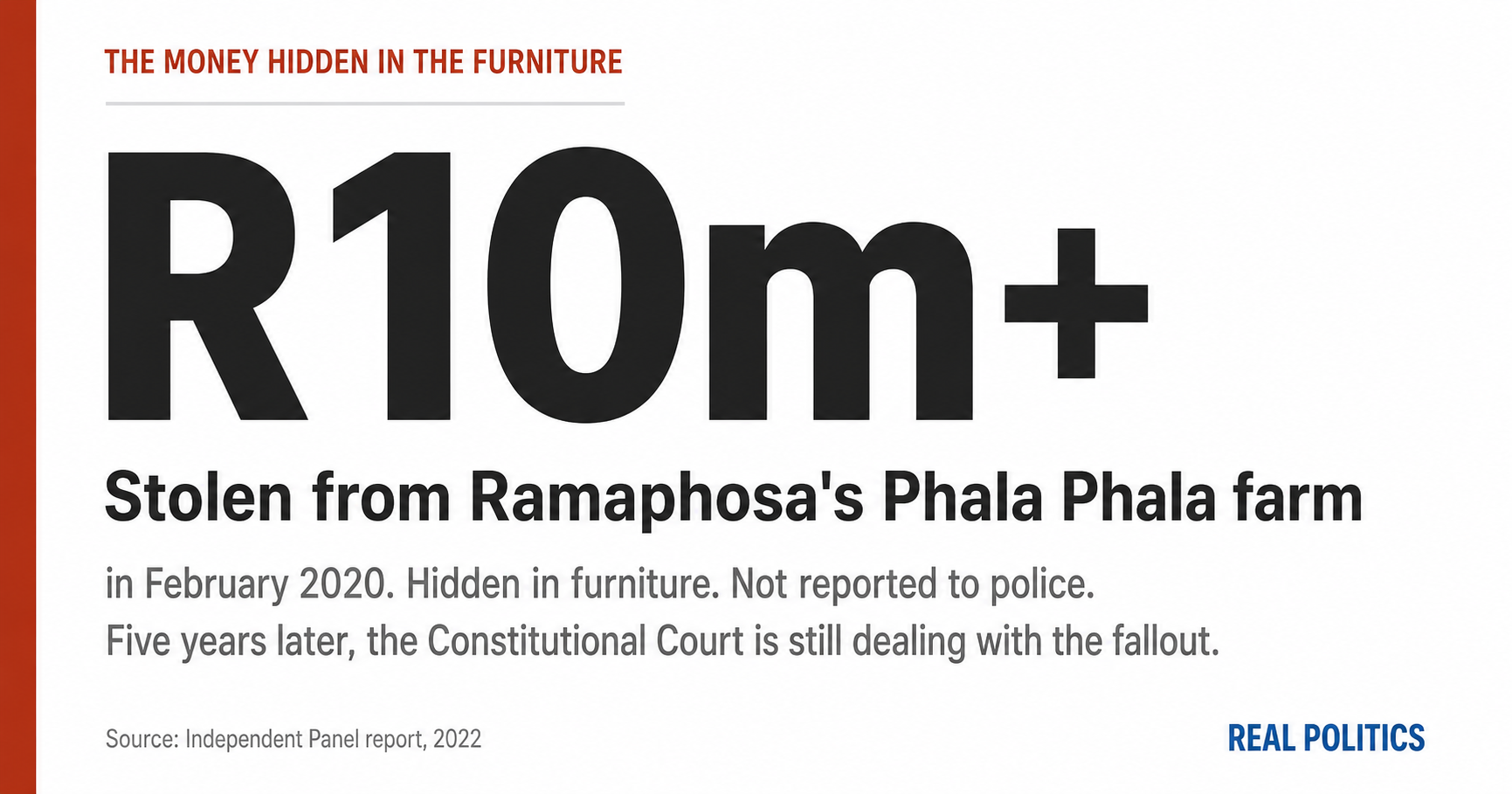
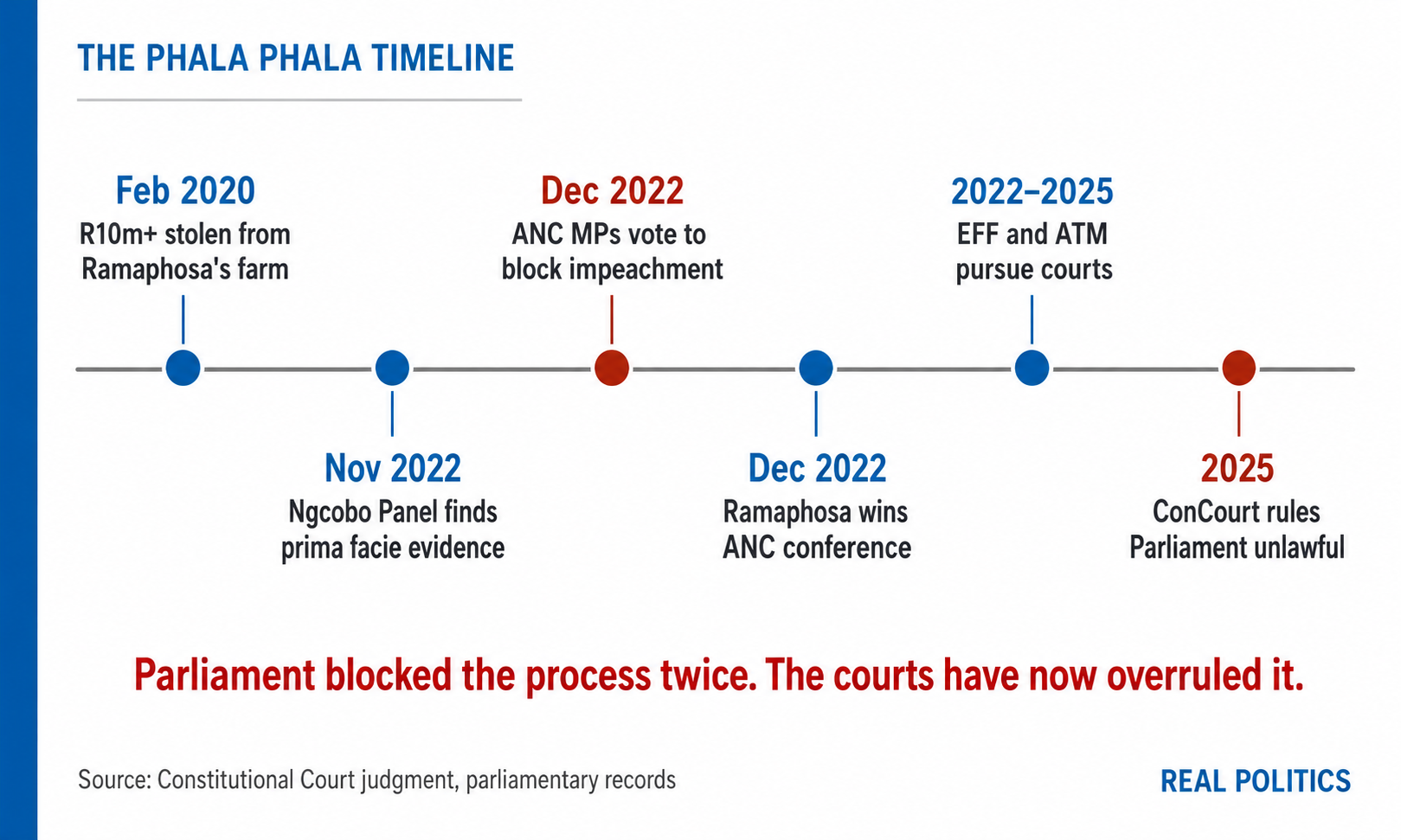
The scandal dates back to February 2020, when more than R10 million hidden in furniture was stolen from Ramaphosa’s Phala Phala farm. An Independent Panel led by former Chief Justice Sandile Ngcobo later found prima facie evidence that Ramaphosa may have breached the Constitution — including possible conflicts of interest, failure to report a crime and potential violations of anti-corruption laws.
The panel did not decide guilt. It only asked whether there was enough evidence to justify a full impeachment inquiry. The answer was yes. Parliament, dominated by ANC MPs, chose to stop the process.
That decision did not go unchallenged.
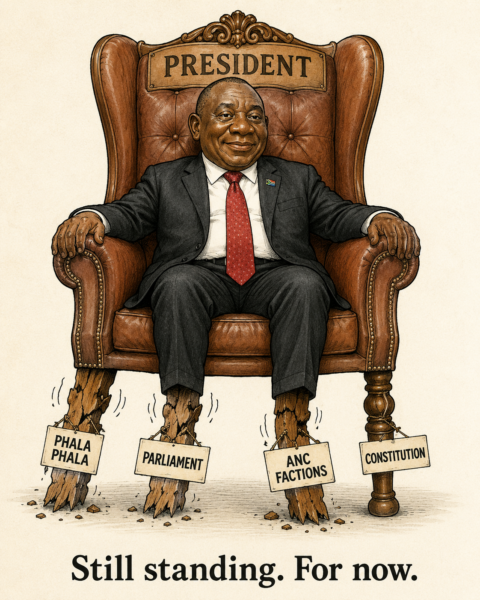
The Economic Freedom Fighters and the African Transformation Movement pursued the matter through the courts for nearly three years. They argued that Parliament had failed its constitutional duty to hold the president accountable. Their persistence has now paid off.
The ruling is not just a technical victory. It is a clear example of how opposition parties, even without numbers in Parliament, can use the courts to enforce accountability. It shows that South Africa’s democratic system still has working checks and balances. Parliament may have the numbers, but it does not have the final say.
The timing of the original parliamentary vote matters.
The Independent Panel released its report on 30 November 2022. Less than two weeks later, ANC MPs voted to block an impeachment inquiry. Days after that, the party gathered at Nasrec for its elective conference, where Ramaphosa faced a serious internal challenge. A full inquiry at that moment could have changed the outcome of that conference. By closing the process early, the ANC removed an immediate political threat.
The Constitutional Court has now rejected that approach. Parliament cannot act as a gatekeeper that shuts down accountability using simple majority power. That warning carries consequences far beyond Phala Phala. It limits how far any governing party can go in shielding its leader, and it strengthens the courts as a counterweight to political power.
Now the pressure shifts back to Parliament.
The National Assembly must establish an impeachment committee, decide its composition and begin hearings. This process could take months, keeping the scandal alive and placing Ramaphosa under sustained scrutiny.
That has direct implications for ANC succession politics. A weakened Ramaphosa weakens his faction, and a weaker faction has less power to shape the choice of the next ANC president. There is already quiet positioning around potential successors. One name that continues to surface is Patrice Motsepe, a Ramaphosa-aligned figure who would appeal to business and coalition partners alike.
But that scenario depends on Ramaphosa remaining strong enough to influence succession. If the impeachment process drags on and erodes his authority, that space opens for rival factions — including those aligned to Mashatile — to assert themselves.
The DA finds itself in a tight position. It has consistently argued for accountability in the Phala Phala matter. But it is also part of a governing arrangement that depends on Ramaphosa’s presidency. Helen Zille has already signalled caution, saying the party would not support removing a president it helped elect. That is the tension between principle and political reality laid bare.
In the end, the biggest winner in this saga may not be any political faction.
It is the constitutional system itself.
Opposition parties used the courts to challenge a parliamentary decision. The highest court ruled against the majority. And now the political system must correct itself.
That is what a functioning democracy looks like.
The Phala Phala scandal is far from over. It is entering a more complex and politically dangerous phase. But the Constitutional Court has made one thing clear.
No majority is above the Constitution.
Listen to Sharp Sharp below where Zukile Majova and Rob Rose go deeper on South African politics every week on Sharp Sharp, the podcast from Scrolla and Currency. This week they discuss the Phala Phala ruling, ANC succession politics and what the Constitutional Court judgment means for the Government of National Unity.
Pictured above: Cyril Ramaphosa.
Image source: @CyrilRamaphosa