
The people of Emfuleni face a simple question when they go to the polls on 4 November 2026: if life has become harder over the past decade, why keep voting the same way? Asks Zukile Majova in Real Politics.
This is not a question about loyalty. It is a question about results.
For years, residents of the Vaal have watched the decline of one of South Africa’s most important industrial regions. Once a symbol of industrial strength and working class opportunity, Emfuleni is now associated with sewage spills, water outages, collapsing infrastructure and rising unemployment. The Vaal Triangle was built on steel, engineering and manufacturing.
Those industries created jobs and sustained families in Vereeniging, Vanderbijlpark, Sebokeng, Evaton, Sharpeville and Boipatong. Today many residents feel trapped between rising costs and shrinking opportunities. Businesses battle unreliable services. Roads deteriorate while infrastructure buckles under years of neglect. Young people search for jobs that no longer exist.

The November election gives voters an opportunity to change that trajectory.
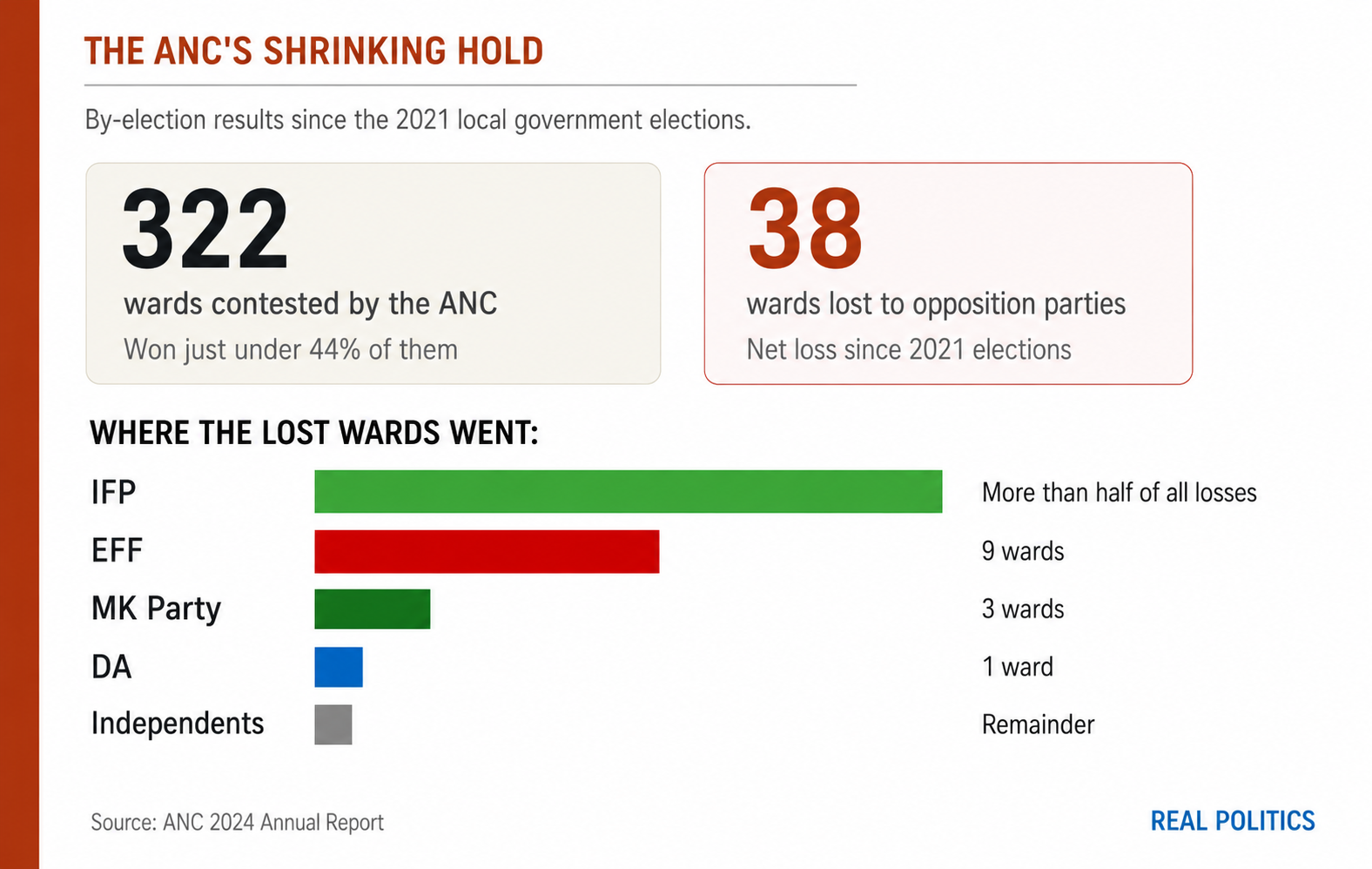
Across South Africa, voters are showing political parties that support can no longer be taken for granted. The ANC’s own 2024 annual report illustrates the shift. In by-elections held since the 2021 local government elections, the party won just under 44% of the 322 wards contested and suffered a net loss of 38 wards to opposition parties. More than half of those losses went to the IFP. Nine went to the EFF, three to the MK Party, one to the DA and the rest to independents and smaller parties.
The significance is not simply that the ANC is losing support. It is that voters are increasingly willing to change their minds.
That trend is now visible in Emfuleni.
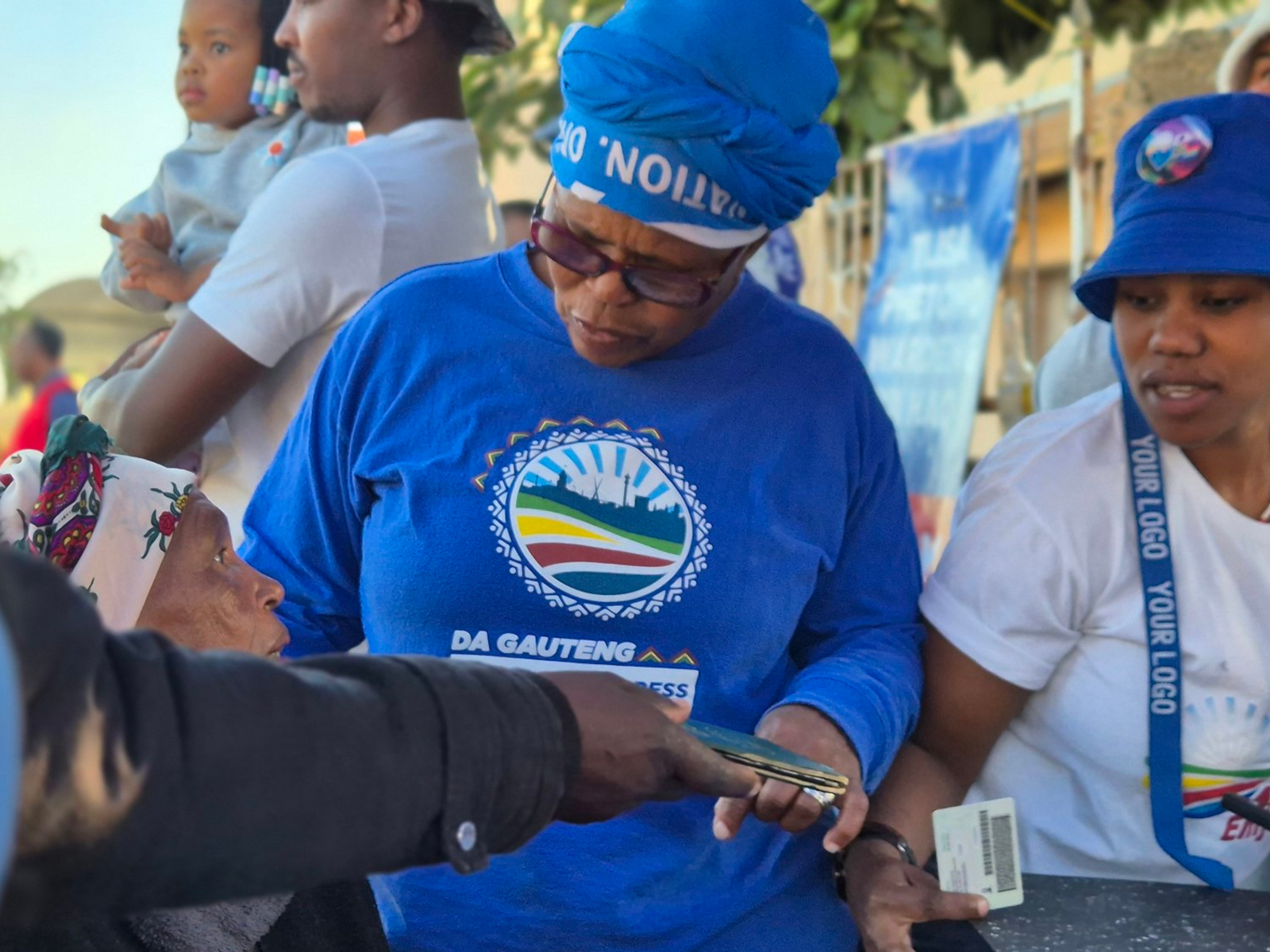
In May, Ward 28 in Evaton West delivered one of the most significant by-election results in Gauteng. Community leader Maki Emily Tshabalala won the ward for the DA by just eight votes.
Eight votes.
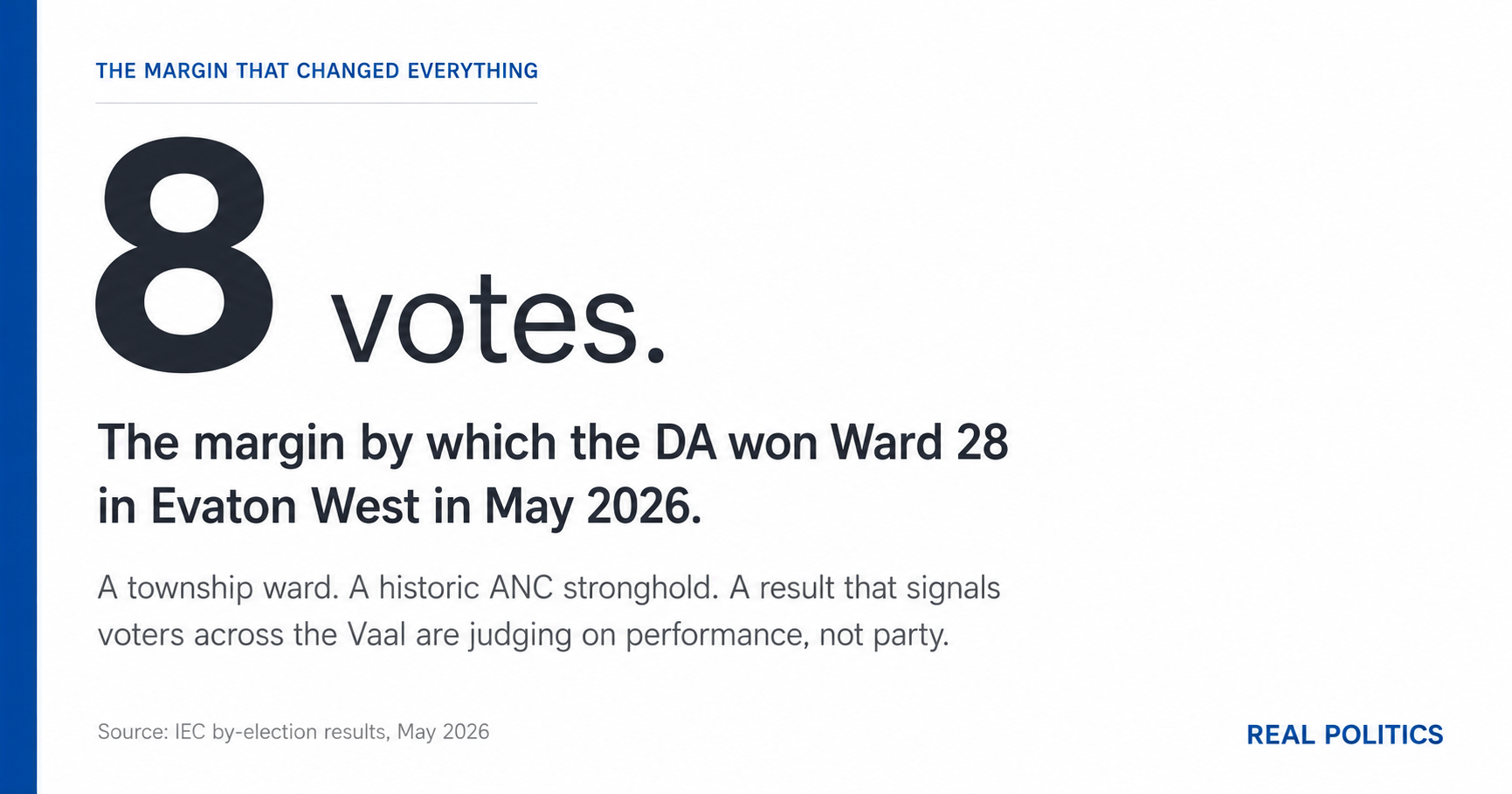
The importance of that result lies not in the margin but in the location. Ward 28 is not a traditional DA stronghold. It is a township ward where the ANC historically enjoyed deep support. For the DA to win, long-standing ANC voters had to decide that something different was worth trying.
Voters are becoming less interested in party labels and more interested in performance. Residents know who attends community meetings. They know who responds when water is cut off. They know who is visible when the local government fails. The Ward 28 result suggests they are beginning to reward local leadership and punish poor performance.
That should concern every political party.
The lesson is not that the DA is guaranteed success. Nor does one by-election mean Emfuleni has suddenly become opposition territory. The lesson is that voters have become more demanding. Communities want councillors they know, trust and can hold accountable. They want competence rather than slogans and delivery rather than excuses.
That conversation is now taking place across the Vaal.
The DA governs Midvaal Municipality, which has long stood apart from many neighbouring municipalities. Whether voters agree with the party nationally or not, Midvaal has become part of a wider conversation about what effective local government looks like.
For decades, liberation history shaped voting behaviour across the Vaal. That history remains important and deserves respect. But history cannot repair a sewage treatment plant. History cannot fix a pothole. History cannot create a job. Only an effective government can do that.
The key question facing voters on 4 November is not which party they have always supported. It is which candidates and parties are most likely to improve life in their communities.
Better governance will not solve every problem overnight. But it creates the conditions for growth. Investors come where infrastructure works. Businesses expand where services are reliable. Jobs appear where municipalities function properly.
The future of the Vaal depends on restoring confidence that Emfuleni can work again.
The Ward 28 result was not simply a victory for one candidate or one party. It was a reminder that voters remain the most powerful force in South African politics. Whether voters ultimately choose the ANC, DA, EFF, ActionSA, the MK Party or independents matters less than the message they send.
That message is simple: performance matters.
The people of Emfuleni have spent years living with the consequences of poor governance. On 4 November, they have an opportunity to demand something different. If enough voters decide that their future matters more than old political habits, this election could mark the moment the people of the Vaal decided to reclaim their municipality — and their future.
Pictured above: Maki Emily Tshabalala talking to voters.
Image source: DA Gauteng