South Africa has spent years regulating political donations. It has done almost nothing to regulate political influence. That blind spot may become the biggest threat to local democracy, writes Zukile Majova in Real Politics.
Voters will go to the polls in November believing they are electing mayors, councils and local governments. But recent experience suggests that election day is no longer when power is decided. It is merely when the next round of negotiations begins.
The real contest increasingly takes place after the votes have been counted. It happens in hotels, boardrooms, private homes and lawyers’ offices, where coalition agreements are negotiated, mayoral candidates selected, executive positions allocated and political futures traded. The people sitting around those tables are often not councillors. Many have never stood for public office. Yet they can determine who governs South Africa’s largest cities.
That should worry every voter.
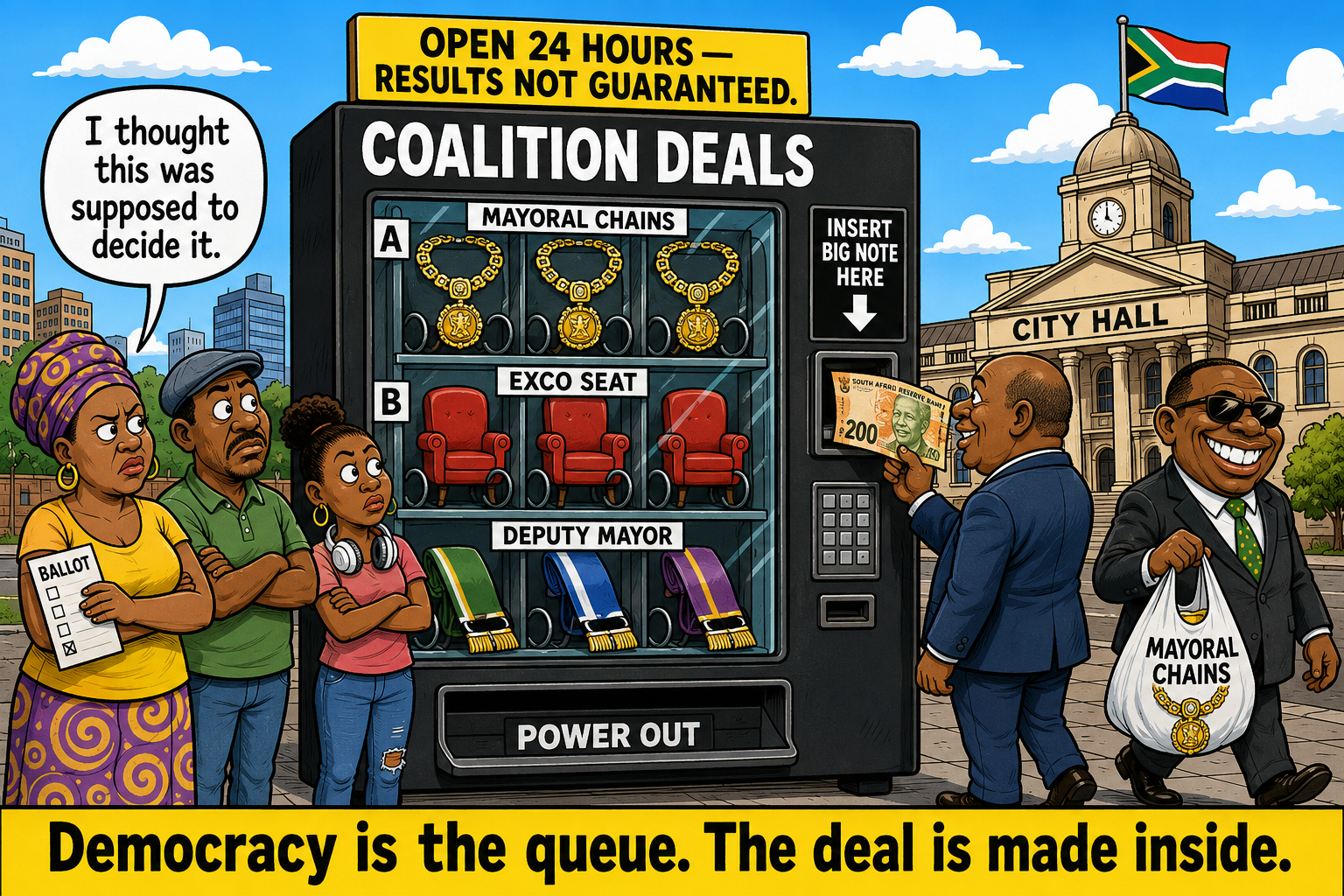
Johannesburg, Nelson Mandela Bay, Tshwane and Ekurhuleni have become synonymous with revolving-door mayors. Since the 2021 local government elections, these cities have cycled through multiple administrations as coalition agreements have collapsed and been rebuilt. The instability has become so familiar that South Africans have started treating it as normal politics. It is not. It is evidence that power is gradually moving away from elected institutions towards informal networks of negotiators, donors, advisers and political intermediaries who operate with almost no public accountability.
There is nothing wrong with lobbying itself. Every functioning democracy allows businesses, trade unions and civil society organisations to advocate for their interests. The problem is invisible influence.
Former politicians can move seamlessly into public affairs and advisory roles while retaining significant political influence. Coalition negotiators can help determine governments without disclosing who they represent beyond the parties in the room. That gap matters because politics has changed.
The watershed moment came with the ANC’s 2017 leadership contest.
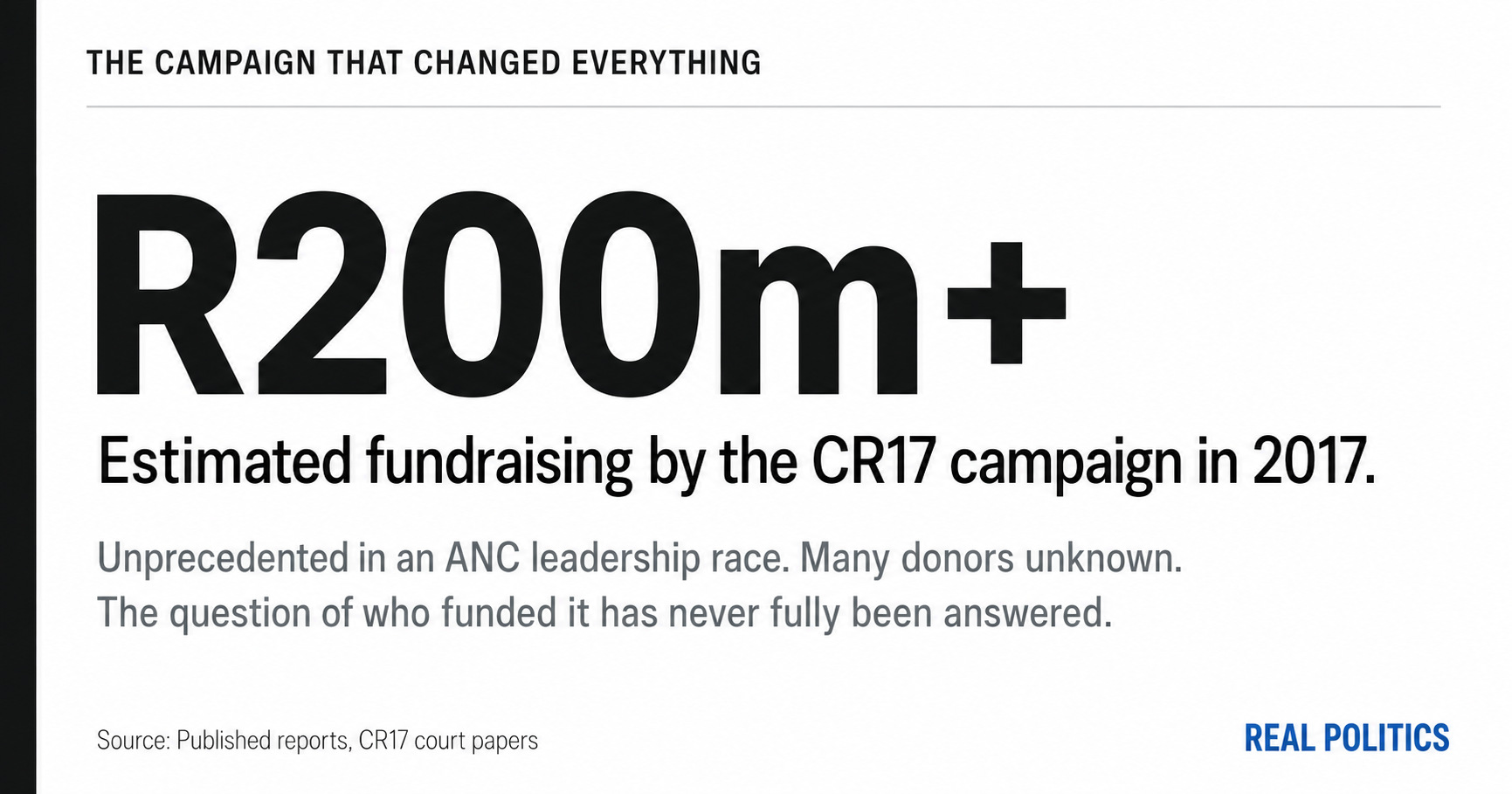
The CR17 campaign fundamentally changed the business model of internal South African politics. Reports at the time placed the campaign’s fundraising at over R200 million — unprecedented in an ANC leadership race. Who assembled that network? Which business leaders encouraged others to contribute? What expectations accompanied those donations? Ramaphosa’s consistent position has been that campaign structures deliberately insulated him from direct knowledge of many donors. That may have been intended to avoid conflicts of interest. But it also illustrates a deeper democratic problem. If a candidate does not know who is financing the campaign that will make him president, who is responsible for ensuring those financiers do not expect privileged access afterwards?
This extends well beyond the ANC.
The Democratic Alliance has built its political identity around transparency and clean governance. Yet it too is confronting uncomfortable questions about informal power. The public disagreement between John Steenhuisen and Geordin Hill-Lewis over an alleged understanding concerning Steenhuisen’s future after the leadership contest is significant not because private political agreements are illegal, but because they raise questions about how leadership decisions are reached. If major political agreements are negotiated privately before delegates vote, how should members know whether leadership contests remain genuinely open?
The debate surrounding former DA leader Tony Leon points to an even broader challenge. Leon remains one of South Africa’s most influential political figures and played an important role in negotiating the DA’s participation in the Government of National Unity. He also chairs a public affairs firm representing commercial clients. Leon has strongly denied any improper conduct and there is no evidence he has acted unlawfully. But the institutional question remains. Should South Africa have clearer rules governing former political leaders who retain political influence while representing private interests seeking government decisions?
These are not questions about individual integrity. They are questions about institutional design.
The problem becomes most acute in coalition politics. Hung councils have created an entirely new political marketplace. Every fractured council produces demand for negotiators, strategists, lawyers and intermediaries capable of bringing parties together or pulling them apart. Business forums seeking procurement influence, politically connected contractors, factional organisers and private advisers all have reasons to remain close to coalition negotiations. Most act entirely within the law. Yet the public seldom knows who participated in discussions that ultimately determine who becomes mayor or who controls billion-rand municipal budgets.
South Africa should not criminalise lobbying. The government benefits from hearing business, labour and civil society perspectives. But transparency must catch up with political reality.
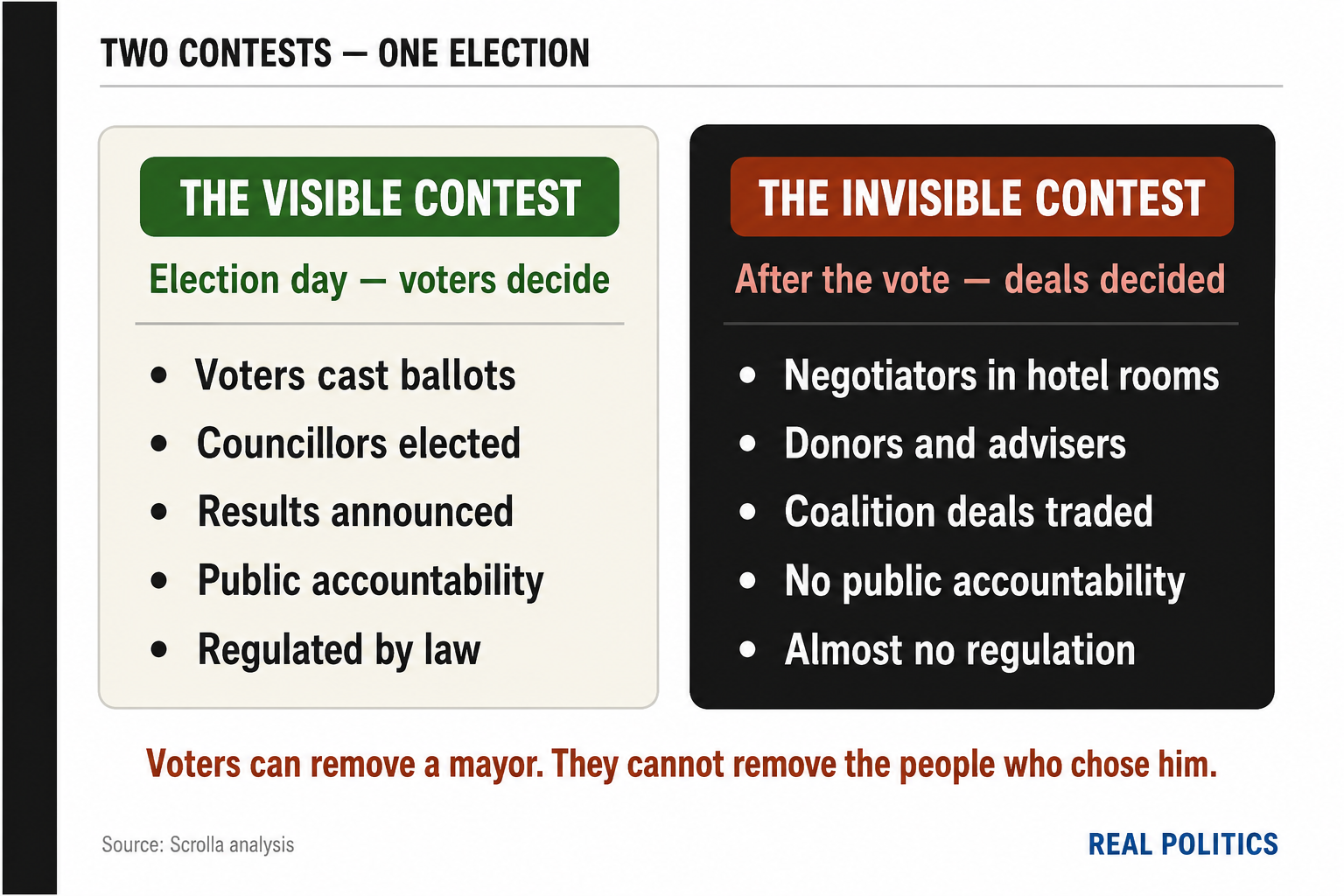
South Africans know how to remove a councillor, a mayor or a Member of Parliament through elections. They have no equivalent mechanism for removing the unelected people who increasingly help decide who occupies those offices.
That is why the local government elections matter far beyond who wins Johannesburg or Tshwane.
The larger question is whether elections still determine who governs or whether they merely begin a second, largely invisible contest in which political influence and private negotiations ultimately outweigh the will of voters.
If that second contest remains unregulated, South Africa risks producing leaders who do not arrive in office captured by private interests after taking power. They may arrive already carrying political obligations accumulated long before the first ballot is cast.
That is not simply a problem for one party. It is becoming one of the defining governance challenges of South African democracy.

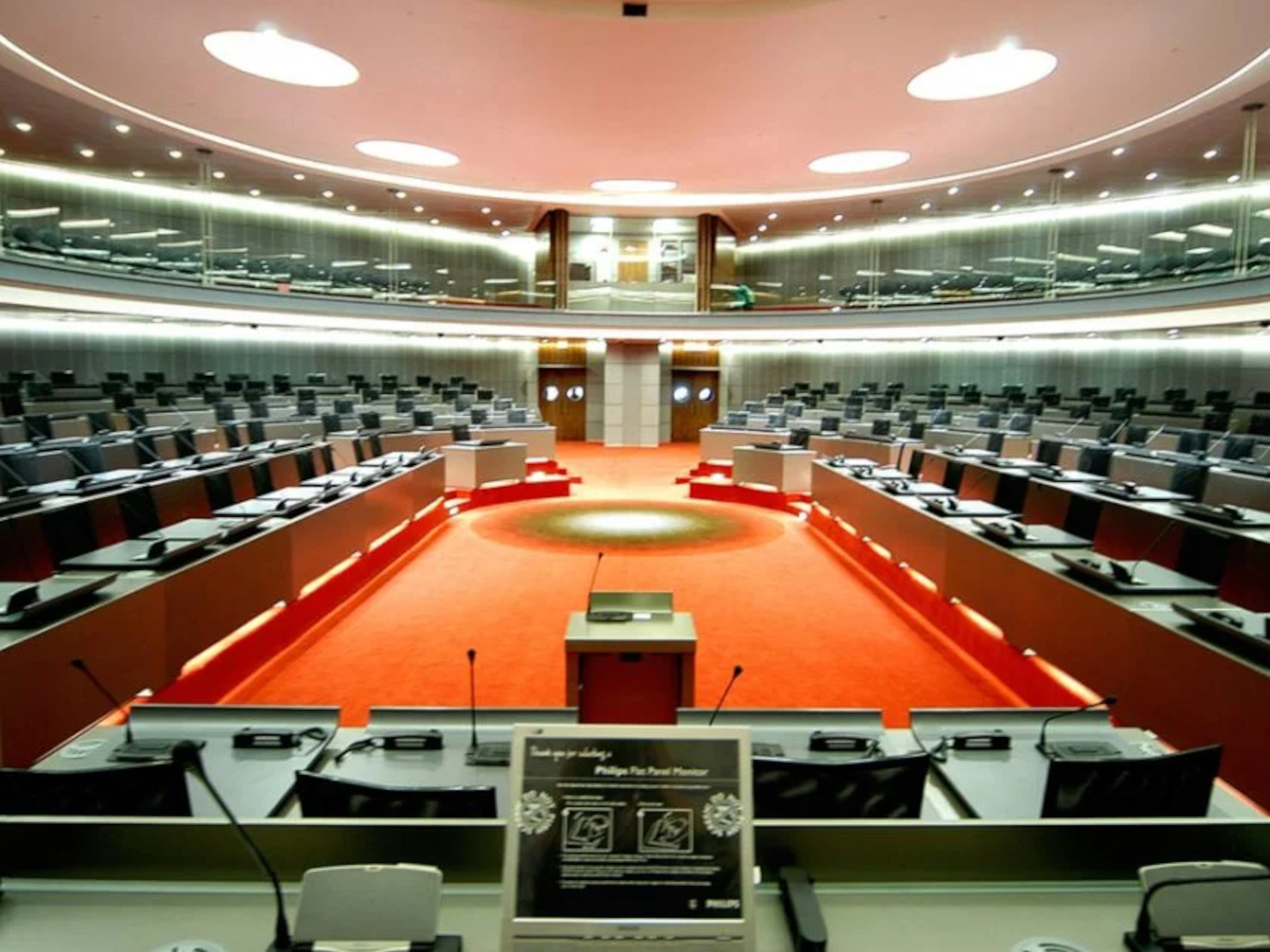
Pictured above: An empty council chamber.
Image source: ActionSA