
- Lerato Molapo, a Johannesburg restaurant worker and mother of two, contributes R1,000 and R2,000 to two separate stokvels every month to save for a tombstone and household appliances.
- She says she cuts back on winter clothes for her children to meet her monthly stokvel payments, because money kept in her own account disappears before she can use it.
Lerato Molapo earns R6,000 a month. Every month, R3,000 of that goes straight into two stokvels before she can touch it. That is half her salary, locked into a collective pot she cannot access until her turn comes around.
She does it on purpose.
“When I save money in my own account, problems come up and I end up using it,” she said.
Molapo works at a restaurant and supports two children on her own. She pays R1,000 into one stokvel and R2,000 into another. Both operate on a rotating system, where members each pay a fixed amount monthly and one person receives the full pot in turn. When her turn comes, she gets a lump sum large enough to cover something she could never save for alone.
The first thing on her list is her father’s tombstone, which she estimates will cost around R10,000. After that, household appliances. Then her children’s needs.
But keeping up with the payments costs her in other ways. With expenses already stretching her salary thin, something has to give every month.
“Living expenses are too much to depend on a basic salary,” she said.
It is usually winter clothes for her children that get cut. Not school clothes, she is clear about that. Those are a necessity and they do not get touched. But the extras, the warm things, the things that are not urgent, those wait.
She has never missed a payment. Missing one, she says, would throw her entire budget off.
“It would delay important things that need to be done,” she said.
The stokvel does what a bank account cannot do for her. It makes the money unreachable. And for a woman raising two children alone on R6,000 a month, unreachable is exactly what she needs it to be.
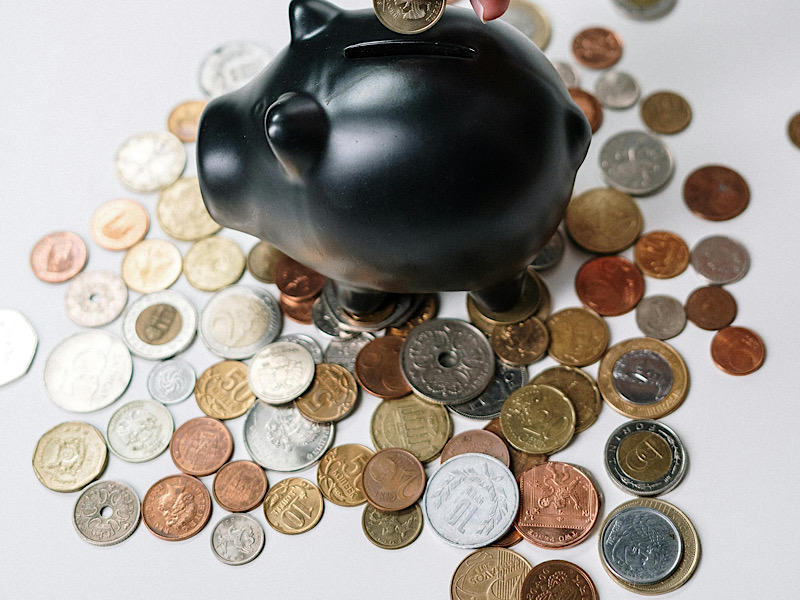
Pictured above: A savings piggy bank.
Image source: Pexels