Listen to this article.
By Dylan Bettencourt
- FlySafair will add a temporary fuel surcharge to all tickets from 12 March for flights leaving by 12 May 2026.
- A Middle East crisis has pushed jet fuel prices at South African coastal airports up roughly 70% in one week.
South Africa’s biggest domestic airline, FlySafair, will add a temporary fuel surcharge to tickets from 12 March 2026. It applies to all flights departing on or before 12 May 2026.
The airline said jet fuel prices at South African coastal airports went up roughly 70% in one week. FlySafair had been covering the extra cost itself since a Middle East crisis broke out on 28 February, but said it could no longer keep doing that.
“FlySafair has absorbed these increases since the crisis began, but this is simply not sustainable without threatening the long-term viability of affordable air travel in South Africa,” the airline said.
The conflict has effectively shut down the Strait of Hormuz, a narrow waterway through which roughly 20% of the world’s oil flows. Tanker traffic has dropped by an estimated 70 to 80%.
Brent crude rose past US$100 per barrel before settling around US$87 to US$91. Jet fuel makes up 50 to 55% of FlySafair’s operating costs, and the crisis is costing it an extra R35,000 per flight hour per Boeing 737-800.
FlySafair Chief Marketing Officer Kirby Gordon said the surcharge will appear as a separate line item on all tickets.
“We will be specifically itemising this temporary dynamic fuel surcharge on all tickets to ensure fairness and transparency to our customers,” Gordon said.
The surcharge will change depending on the route and will be reviewed regularly. It will be reduced or removed once fuel prices drop.
If you booked before 11 March 2026, your fare stays the same. New bookings from 11 March include the surcharge for flights leaving on or before 12 May. If you change to a flight before 12 May, the surcharge applies.
South African Airways (SAA) said it has enough fuel arrangements in place and does not expect immediate disruption to its flights.
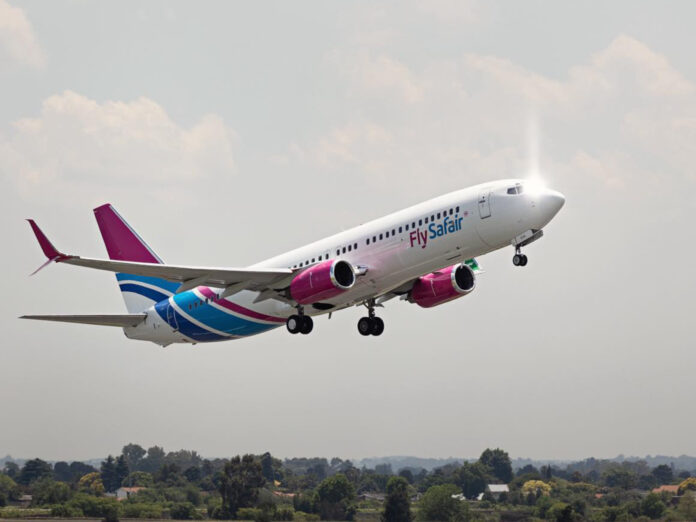
Pictured above: A FlySafair aircraft.
Image source: FlySafair/Facebook