
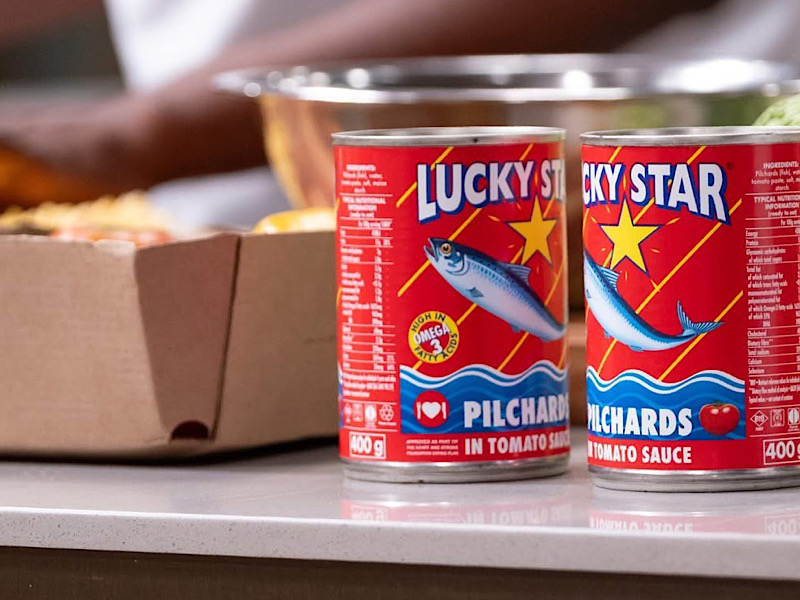
- Lucky Star’s canned fish sales fell 9% as owner Oceana Group could not get enough frozen fish to meet customer demand.
- The Competition Commission has flagged canned pilchards as a food where prices stay high even as producers’ own costs ease.
Lucky Star is struggling to keep enough tins of pilchards on shelves, and when you do find one, it may cost more than before.
Owner Oceana Group said sales of canned fish fell 9% in the 11 months to the end of August, after a shortage of frozen fish left it without enough stock to meet demand. Local canned fish production dropped by 60%.
Making fewer cans also made each one more expensive to produce, since the company still carries many of the same running costs regardless of volume. Oceana said Lucky Star’s profit margins were partly protected by charging higher prices, alongside spending less on transport and storage.
The shortage comes as South Africa’s sardine and anchovy catches have declined over several years, pushing Oceana to import an increasing share of the fish it uses, about 85% of what goes into Lucky Star cans now comes from overseas. It is separate from, though it comes at the same time as, a mass die-off of sardines and pilchards along the South African coast, caused by a virus called pilchard herpesvirus, first detected in late July.
Government has limited sardine catches to 25% of the remaining 2026 quota until 2 October while the die-off is investigated. Oceana has not said how much, if at all, the virus outbreak has affected Lucky Star’s own supply.
The Competition Commission’s Cost of Living Report, released this month, specifically named canned pilchards as an essential, affordable protein for lower income households where prices have stayed high even as some producers’ own costs eased.
Oceana said a better local pilchard catch helped the business, but there was still not enough frozen fish to make up for the drop in production. Overall sales volumes across the group fell 5%.
The company’s African fishmeal and fish oil business was hit harder, with production down 73% and sales down 72%, due to lower landings of the smaller fish used to make it.
Despite these pressures, Oceana said total revenue for the 11 months was about the same as the previous period, and operating profit increased, helped by Lucky Star’s improved margins and stronger canned meat sales.
Oceana is expected to release its full year results on 26 November.
Pictured above: Lucky Star canned fish.
Image source: Lucky Star