
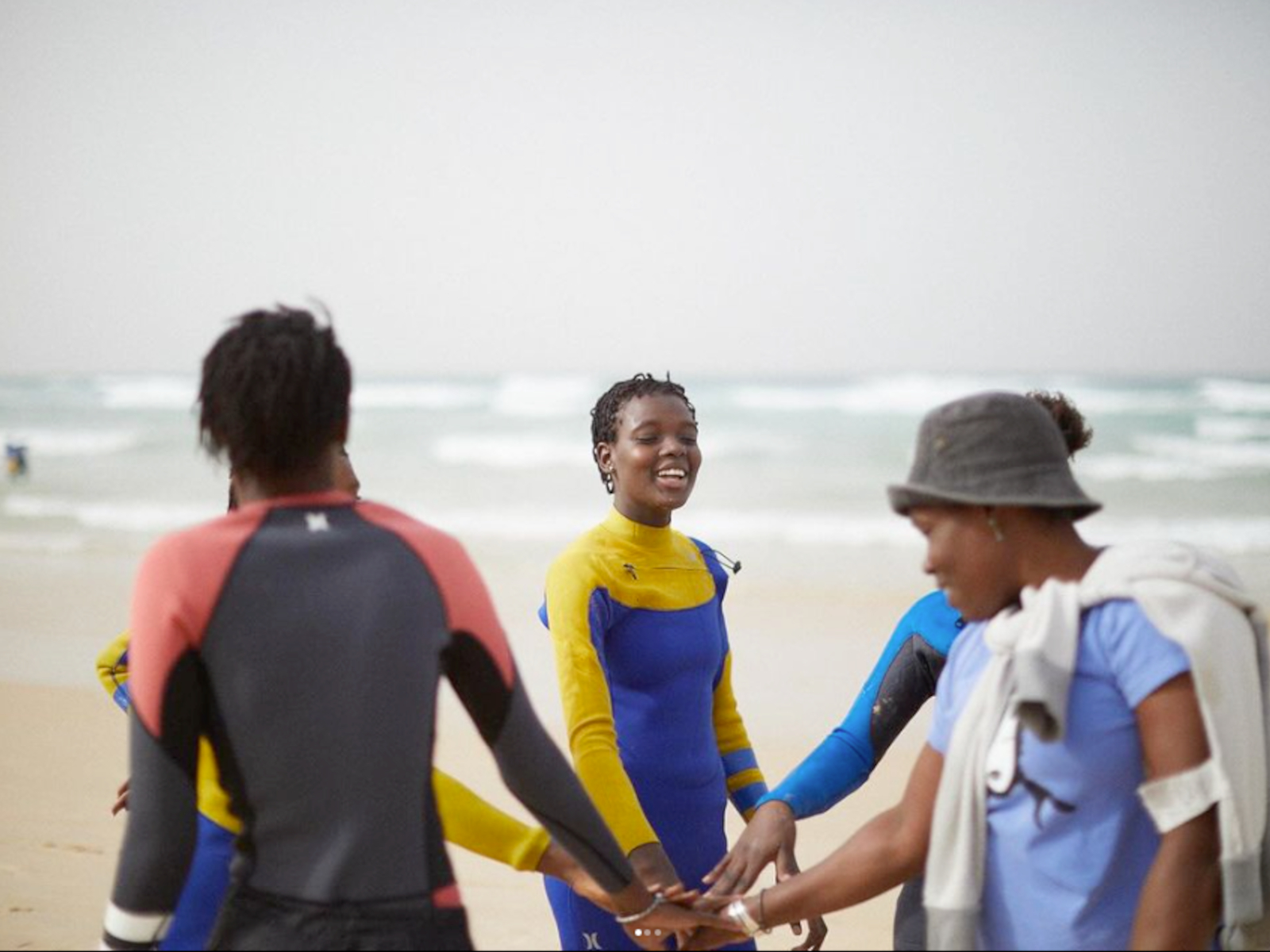
In Busua, a small fishing town on the Atlantic Ocean coast of Ghana, surfing is challenging traditional gender norms and transforming the lives of local girls.
The story, captured by filmmakers Ben Lalande and Sarah Hughen, shows a significant shift in this community.
Traditionally girls were discouraged from enjoying the pleasures of the beach because of the dangers of the sea and traditional expectations from the community.
The surf scene in Busua was male-dominated until recently. But things began to change when Justice Kwofie, who runs a surf school with his brothers, initiated the Black Girls Surf programme.
The programme aims to teach girls to swim and surf, breaking down gender barriers and providing them with a sense of freedom and empowerment, the BBC reported.
Vanessa Turkson, one of the programme’s participants, remembers being previously punished by her mother for surfing but now smiles at the memory.
The programme has not only taught the girls to surf. It has also instilled in them a belief in gender equality and their ability to follow activities traditionally reserved for boys and men.
Surfing has also brought positive social change to Busua. Kwofie reports declining teenage pregnancy rates since the creation of the Obibini Club – Ghana’s only female surf club.
The club offers young women a place to socialise, play and learn, creating a supportive community.
The film and photographs of Busua’s surf scene have received international attention, helping to raise funds for equipment, safety courses and educational programmes.
Sandy Alibo, the founder of Surf Ghana, stresses that surfing’s potential to generate income is key to gaining community acceptance and changing views, particularly regarding the role of women.
Compiled by staff writer
Pictured above: Women surfing in Ghana.
Image source: X