- A minimum wage worker on 15 days a month at five hours a day earns R2,267.25, PMBEJD figures show.
- Transport and electricity for that worker cost R2,621.85 a month, more than the entire wage before any food is bought.
A worker on South Africa’s minimum wage can end up with nothing left for food. It is not what they spend on food that finishes the wage off first. It is transport and electricity.
The National Minimum Wage is R30.23 an hour, R241.84 for an eight-hour day. A worker who does a full 21-day month in June 2026 earns a maximum of R5,078.64.
But not every worker gets a full month. The Pietermaritzburg Economic Justice and Dignity Group looked at what happens to workers doing 15 days a month at five hours a day. That worker earns R2,267.25.
Two taxis a day, there and back, plus prepaid electricity for the month, come to R2,621.85. That is more than the whole wage. The worker is left R354.60 short before buying any food at all.
Even workers who do a full 21-day month are not much better off. Transport and electricity take up 63% of their R5,078.64 wage, leaving R1,880.79. A basic nutritious food basket for a family of four costs R3,836.78. The shortfall on food alone is R1,955.99, a gap of 51%.
Split between four people, the money left over after transport and electricity comes to R470.20 a month each. That is 45% below the National Food Poverty Line of R855 a person, the amount Statistics South Africa says a person needs to meet their minimum daily energy requirements.
The Minister of Employment and Labour increased the National Minimum Wage by 5% in March 2026, from R28.79 to R30.23 an hour. Taxi fares in Pietermaritzburg went up by 20% in June 2026, from R20 to R24 a trip.
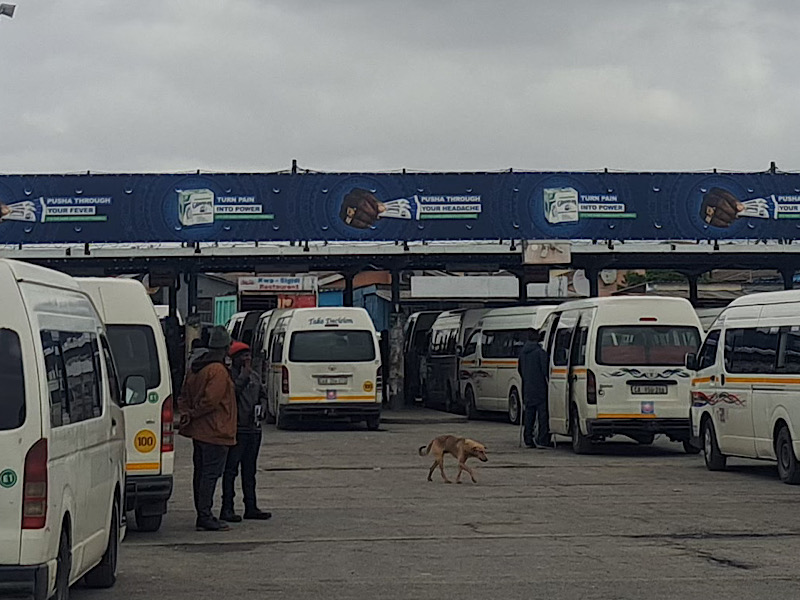
Pictured above: Commuters at a taxi rank.
Image source: File