- Gauteng recorded 414 malaria cases and 11 deaths between January and March 2026, already exceeding last year’s total deaths in just three months.
- Health officials say increased festive season travel to high risk areas has driven infections and urge people to seek treatment quickly if symptoms appear.
The Gauteng Department of Health has raised concern after a sharp increase in malaria cases and deaths in the first three months of 2026.
The province recorded 414 confirmed cases and 11 deaths between January and March.
This is already more deaths than the whole of 2025, when seven people died from 666 cases.
During the same period last year, there were 230 cases and only one death. The latest figures show a strong rise in both infections and deaths.
The department warned that the situation is serious and needs urgent attention.
It said there is a worrying rise in malaria infections and deaths, and stressed the need for early detection and quick treatment to save lives.
Health officials believe the increase is linked to travel during the festive season. Many people visited malaria risk areas and returned home infected.
“This upward trend signals heightened transmission risk, particularly in the early months of the year after the festive season,” the department said.
Malaria is spread through the bite of an infected mosquito and can be deadly if not treated quickly.
Residents have been urged to seek medical help immediately if they show symptoms such as fever, chills, headaches and tiredness, especially after travelling to high risk areas like Limpopo, Mpumalanga and neighbouring countries.
The department also called on people to take steps to prevent infection.
“Preventive measures, including the use of insect repellent and wearing protective clothing, remain essential to reduce the risk of infection,” it said.
With World Malaria Day coming up on 25 April, officials say they are stepping up efforts to control the spread of the disease.
They urged the public not to ignore symptoms, warning that early treatment could save lives.
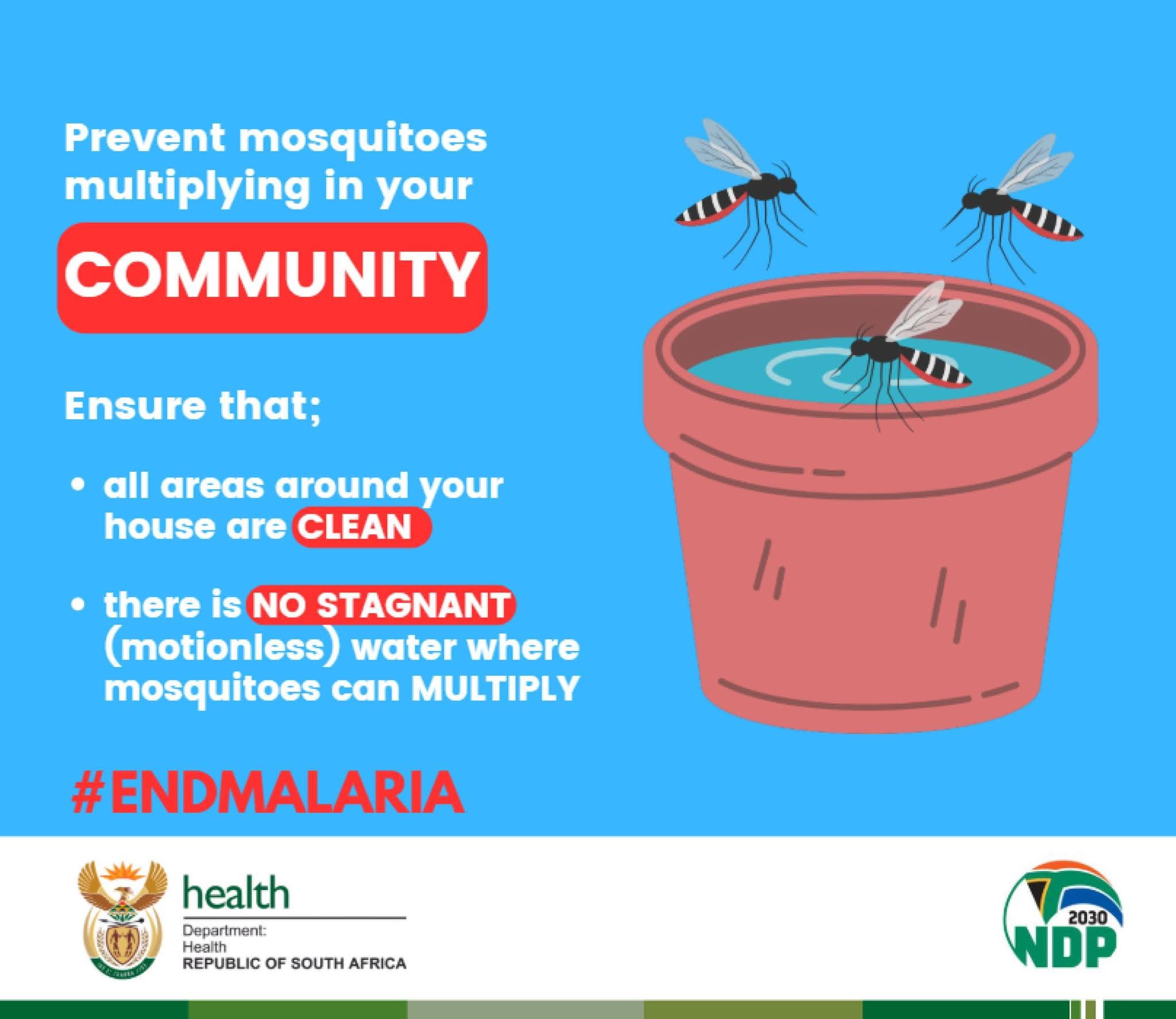
Pictured above: National Department of Health awareness poster
Image source: Sourced