
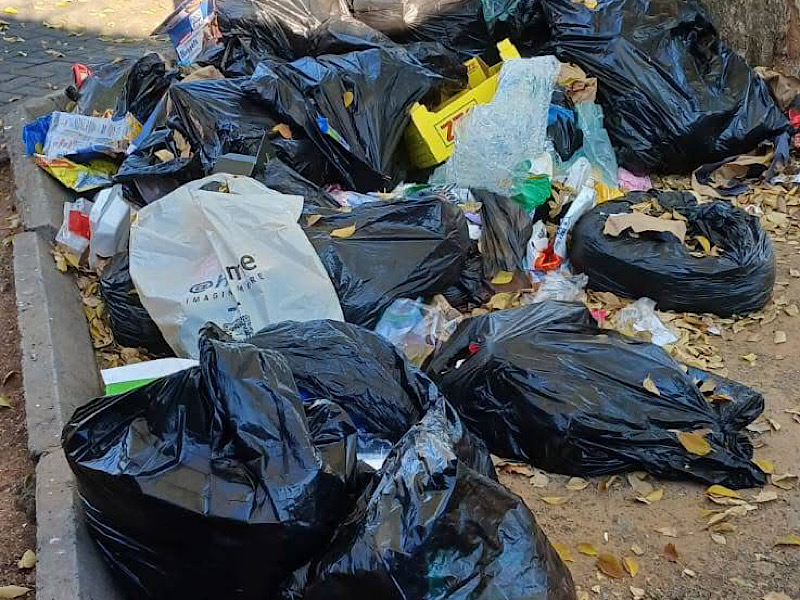
- Pikitup says a strike by casual workers and a shortage of working trucks have left rubbish uncollected in many parts of Johannesburg.
- City officials warn landfill sites are filling up fast while residents dump waste illegally because collection services have failed.
Johannesburg’s rubbish crisis is getting worse.
Residents across the city say garbage has been left uncollected for weeks as piles of rubbish continue to grow outside homes, businesses and on street corners.
Pikitup, the City of Johannesburg’s waste collection company, admitted on 2 July that much of its collection fleet had been taken off the road, leaving many suburbs without regular refuse collection.
The entity blamed the latest disruption on a strike by casual workers employed through service providers.
The workers are demanding permanent jobs.
Although Pikitup said it has introduced emergency plans to deal with the crisis, many residents say collections remain badly delayed.
Democratic Alliance councillor Mark van der Merwe said the strike is only one part of a much bigger problem.
He said Johannesburg’s waste collection system has been struggling for months because of ageing trucks, overflowing landfill sites and financial problems.
“There are landfill sites in the northern suburbs that are full,” said Van der Merwe.
“We’ve seen the result of that. People are dumping openly in the Kya Sands area.”
He said refuse trucks normally collect several loads every day, but many now spend hours travelling across the city because nearby landfill sites can no longer take waste.
Instead of making three collection trips a day, trucks often manage only one or two.
According to Van der Merwe, drivers sometimes wait in queues of up to 80 trucks before they can unload their rubbish.
He also said only 11 of the 23 refuse compactors at the Randburg depot are still working.
That has made the growing backlog even worse.
Van der Merwe warned that if nothing changes, all of Johannesburg’s landfill sites could reach full capacity within the next year.
“That’s why you’re starting to see more and more rubble being dumped on the streets,” he said.
“People aren’t getting the services, so they’re clearing it and dumping the rubble where they can.”
Pikitup’s chief financial officer, Litshani Matsila, admitted the entity has been relying heavily on private service providers because its own fleet is falling apart.
He said Pikitup operates about 300 refuse trucks every day.
But only about 80 belong to the city.
More than 200 trucks are supplied by private contractors because most of Pikitup’s own vehicles are more than 12 years old.
“For quite some time, we as the entity together with the shareholder have not been investing in a new fleet,” Matsila said.
“Most of our own trucks are more than 12 years old. They are no longer productive enough to operate on the ground.”
He also revealed that around 60 city owned trucks are standing in repair workshops and cannot be used.
Matsila said another challenge is Johannesburg’s central cash management system, which decides how money is shared between city departments.
He said Pikitup often has to compete with other urgent expenses.
“Two weeks ago, there was an issue at Eskom that needed to be settled,” he said.
“So, as the entity, we have to compete with that Eskom requirement as well.”
He said electricity payments are sometimes treated as a higher priority than waste collection, making it difficult for Pikitup to pay service providers on time.
Despite the growing crisis, Matsila said he believes Pikitup will clear the backlogs at its Randburg, Marlboro, Roodepoort and Central Camp depots in Soweto by the end of the week.
For many Johannesburg residents, however, the biggest concern is how much longer they will have to live with mountains of uncollected rubbish outside their homes.
Pictured above: Uncollected rubbish continues to pile up in parts of Johannesburg as Pikitup battles truck shortages, financial problems and a workers’ strike.
Image source: File