
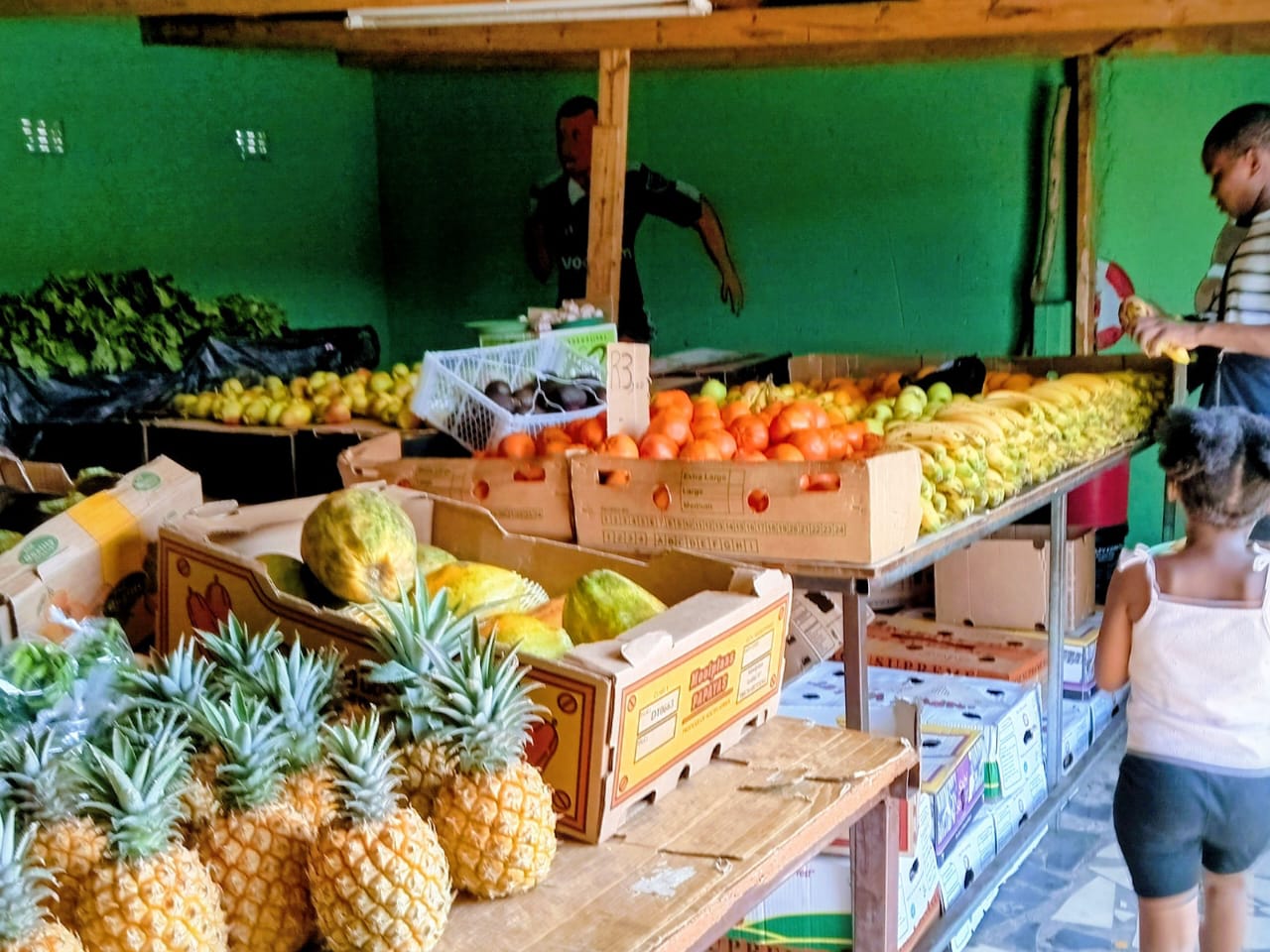
· Titus Mogale started selling veggies with R200 and a borrowed umbrella — now he runs a shop feeding families in Soweto.
· He saved every cent for eight years and helped build his parents a house after they spent years living in a mud hut.
Titus Mogale used to walk the streets of Soweto with a trolley full of vegetables. Now he owns a busy fruit and veg shop serving the community.
The 33-year-old moved to Soweto in 2013 after finishing school in Swaziland. With no job and no money, he decided to try selling vegetables on the street.
“I had R200 and bought potatoes, onions, tomatoes and plastics. My friends said real men don’t sell vegetables, but I had to eat,” said Mogale.
He charged R5 per plastic and sold out on his first day. Encouraged, he bought more ,this time adding carrots, green peppers and beetroot.
But carrying all that by hand was tough. “I went to a scrapyard and got a second-hand trolley for R100. I fixed the wheels and used an umbrella for shade,” he said.
Mogale was robbed twice , once at gunpoint and once with a knife. But he never gave up. On a good day he made R430, and on a slow one R300.
He saved every cent for eight years. He also sent money home to his elderly parents, who built a four-room house and tore down their mud hut.
“I know what hunger feels like,” said Mogale. “My parents would go to funerals in the village just to get a meal with meat and vegetables.”
Now Mogale owns a proper shop where he sells fruit and vegetables at lower prices than big supermarkets.
Research shows South Africa’s fruit and vegetable market is expected to grow by almost 6% for fruit and 4% for vegetables by 2030. That means more families are choosing fresh produce, just like the ones Mogale serves.
Pictured above: Titus Mogale’s fruit and vegetable shop.
Image source: Palesa Matlala