By Palesa Matlala
- The court told the City of Johannesburg to finish verifying and re-registering informal traders by 18 November after their removal led to protests.
- Traders say they’ve lost income and tradition after being forced out, while the city insists all traders must operate legally and be properly registered.
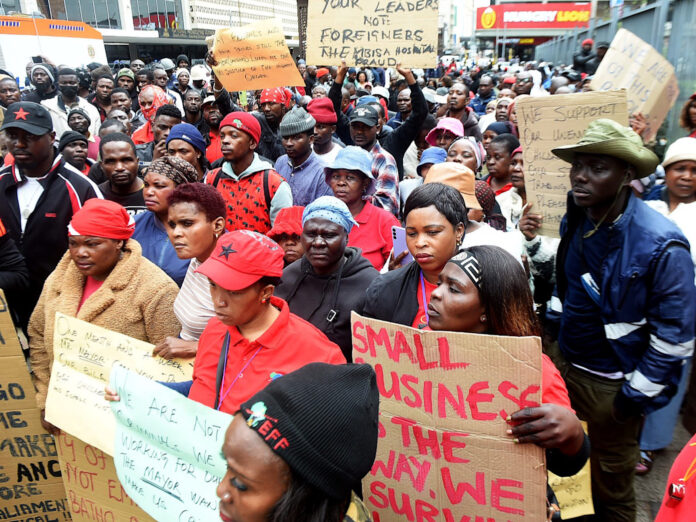
Dozens of informal traders gathered outside the South Gauteng High Court on Monday, continuing their protest against the City of Johannesburg.
The Socio-Economic Rights Institute took the city to court after more than 800 traders were removed from De Villiers Street as part of a clean-up campaign.
Last week’s hearing ended in chaos when talks between the city and traders failed, leading to clashes outside the court.
Judge Brad Wanless ruled that the City of Johannesburg must urgently and transparently verify, register and allocate trading spaces in line with city by-laws.
The process must start on 4 November and be completed by 18 November 2025.
However, the order excludes foreign nationals, angering Economic Freedom Fighters supporters and immigrant traders who joined the protest.
Trader Malerata Chwake, 67, said she has been selling second-hand clothes for 25 years after taking over her mother’s stall. “When they removed us, I knew I had lost a lot of money before Christmas,” she said.
Chwake said registration fees would add to their struggles and destroy the “Dunusa” tradition of informal second-hand trading.
A grandmother watching the protest said she can no longer afford new clothes for her grandsons and depends on second-hand traders during the holidays.
Acting Johannesburg Mayor Eunice Mgcina welcomed the ruling, saying it supports the city’s plan to ensure all traders operate legally and have proper documentation.
Pictured above: Informal traders protest outside the South Gauteng High Court after their removal from De Villiers Street.
Image source: Palesa Matlala