- Reverend Frank Chikane said apartheid police bosses wanted to protect their foot soldiers from jail after nerve agent poisoning nearly killed him in Namibia.
- The Truth and Reconciliation Commission cases inquiry is probing claims that political leaders blocked prosecutions linked to apartheid era murders and torture.
Reverend Frank Chikane has reopened some of Apartheid’s darkest wounds, telling the Truth and Reconciliation Commission cases inquiry that the torture and poisoning he survived still haunt him today.
Chikane described how apartheid operatives tried to kill him by lacing his clothes with deadly poison.
The former Director General in the Presidency and Cabinet secretary said reliving those events has been deeply painful.
“I did meet the scientist who produced those chemicals,” Chikane told the inquiry.
“One of them entered the room and said, ‘You’re damn lucky you are alive because the chemicals we used were meant to kill’.”
The inquiry, led by retired Judge Sisi Khampepe, is investigating why many apartheid era crimes were never prosecuted.
Chikane told the commission that former apartheid Police Minister Adriaan Vlok and former Police Commissioner Johann van der Merwe approached him after the poisoning because they wanted to keep their “foot soldiers” out of prison.
He said he fought hard to uncover the truth about who poisoned him and who gave the orders.
In 1989, Chikane nearly died in Namibia after his clothes were secretly treated with a deadly nerve agent designed to trigger a heart attack.
At the time, he was Secretary General of the South African Council of Churches and one of the most prominent anti apartheid leaders in the country.
“I would have died in Namibia,” said Chikane
“What they didn’t calculate is that we’re going to stop and have breakfast and be delayed.”
He said that simple breakfast stop may have saved his life.
As he dug deeper into the attempted murder, Chikane said it became clear that senior apartheid police officials were more worried about protecting their own men than facing justice.
He also raised concerns about political interference after democracy.
Former prosecutor Anton Ackermann previously told the inquiry he was ready to arrest Vlok and Van der Merwe, but was stopped by then acting prosecutions boss Silas Ramaite.
The order was allegedly linked to senior figures in former president Thabo Mbeki’s administration.
President Cyril Ramaphosa established the inquiry in May after years of pressure from families whose loved ones were killed during Apartheid.
About 24 families are suing the government for R167-million over failures to investigate political murders and torture cases after the Truth and Reconciliation Commission ended.
Some of the families are relatives of the Cradock Four anti apartheid activists Fort Calata, Sparrow Mkhonto and Sicelo Mhlauli.
The inquiry is now examining whether political leaders interfered to block prosecutions in more than 3,000 apartheid era cases handed to the National Prosecuting Authority in 2003.
Retired General Rayman Lalla is expected to return to the inquiry for cross examination on Thursday.
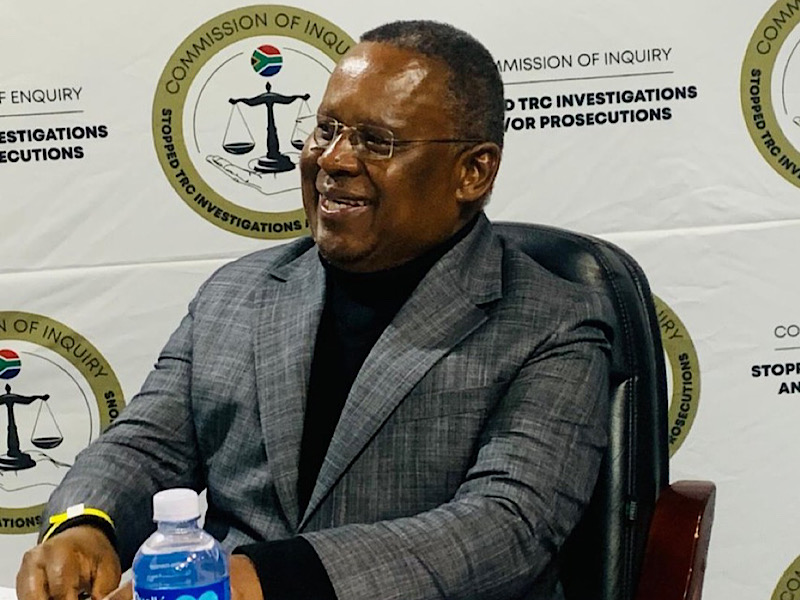
Pictured above: Reverend Frank Chikane told the Truth and Reconciliation Commission inquiry how apartheid operatives tried to kill him with poison.
Image source: @TRC_inquiry/X