
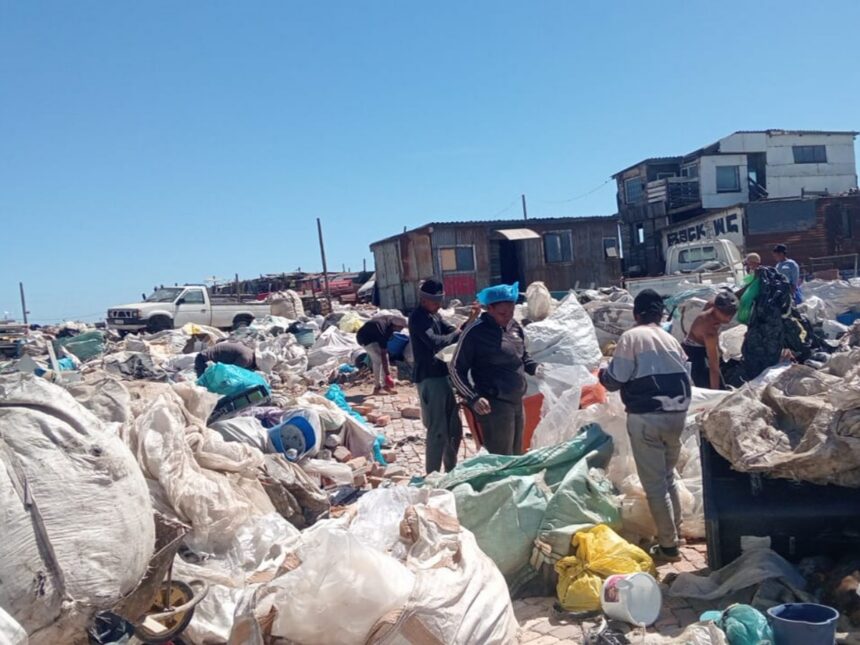
- Mike Khumalo started a recycling business in Vrygrond in 2011 to create jobs and keep unemployed young people away from crime.
- Residents earn money sorting waste at Mikel’s Workshop, where Khumalo brings recyclable materials to the site so workers do not have to collect them.
A Cape Town man is turning rubbish into money and helping struggling families put food on the table.
Mike Khumalo from Vrygrond in Capricorn started Mikel’s Workshop in 2011 after seeing how many people in his community were sitting at home without jobs.
He wanted to give unemployed residents, especially young people, a chance to earn money instead of turning to crime.
“I started this business in 2011 after noticing that most people, especially young people, are not working, and I wanted them to have something keeping them busy so that they don’t end up committing crime,” said Khumalo.
Unlike other recycling businesses, Khumalo does not expect workers to walk around collecting rubbish.
He collects recyclable waste from different areas and brings it to his workshop, where residents sort it and get paid.
He said waste pickers often spend an entire day searching for scrap and return home with little or nothing.
At his workshop, people can arrive whenever they want, sort the waste and leave when they feel tired.
There are no fixed working hours.
“The aim is to help them put food on the table for their families, so jobless people come every day to sort waste and they get paid for the work they do,” he said.
Khumalo spends more than R5,000 a day on recyclable materials for sorters and pickers.
He said he does not make a profit and sees the business as a way of helping his community.
The workshop also teaches residents skills that can help them find jobs at bigger recycling companies.
Khumalo said he started the business after realising that people were throwing away things they could sell.
The land where his workshop now stands was once a dumping site.
“The site I am using used to be a dumping site, and 95% of what they were throwing away is money,” he said.
He believes the business is also helping to keep the community clean.
For Mandla Mgcinana, a 40-year-old father of three, the workshop has brought relief to his family.
Before Khumalo opened the business, Mandla struggled to provide for his children and often depended on handouts.
“I now have less stress because I know I can go there, sort the waste, and get paid, then buy food for my family,” he said.
Another worker, Nondumiso Booi, said the money she earns helps her pay for an insurance policy, electricity and food.
She said workers no longer have to walk through different areas looking for waste to sell.
“He saved us from walking into other areas because it is safe,” she said.
Nondumiso said the workshop has changed their lives because they can now afford basic needs without going to bed hungry.
Khumalo hopes the skills residents gain at his workshop will help them find more work while keeping Vrygrond clean.