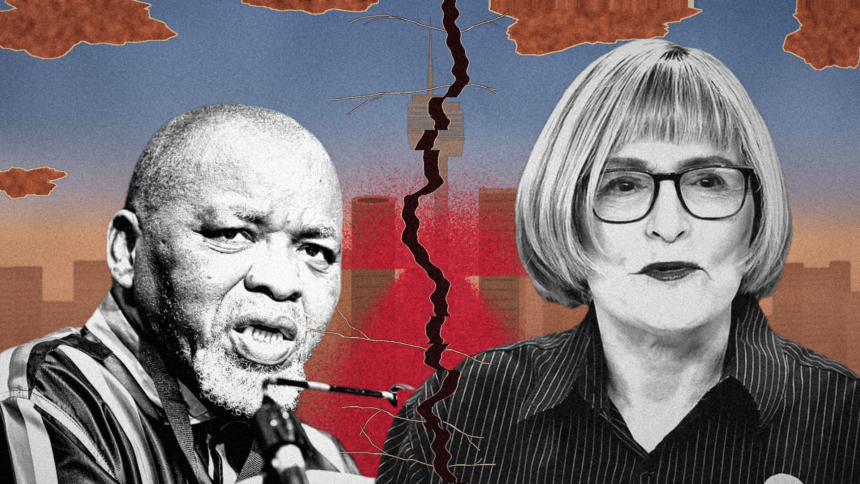
The DA won the most seats in all three Gauteng metros, but rivals are working to keep it out of power, writes Zukile Majova in Real Politics.
The Democratic Alliance (DA) won more seats than any other party in Johannesburg, Tshwane and Ekurhuleni in the 4 November local government elections. But winning the most seats is not the same as winning power. Now that talks have started, much of the energy in other parties is going into one aim: keeping Helen Zille and the DA out of government.
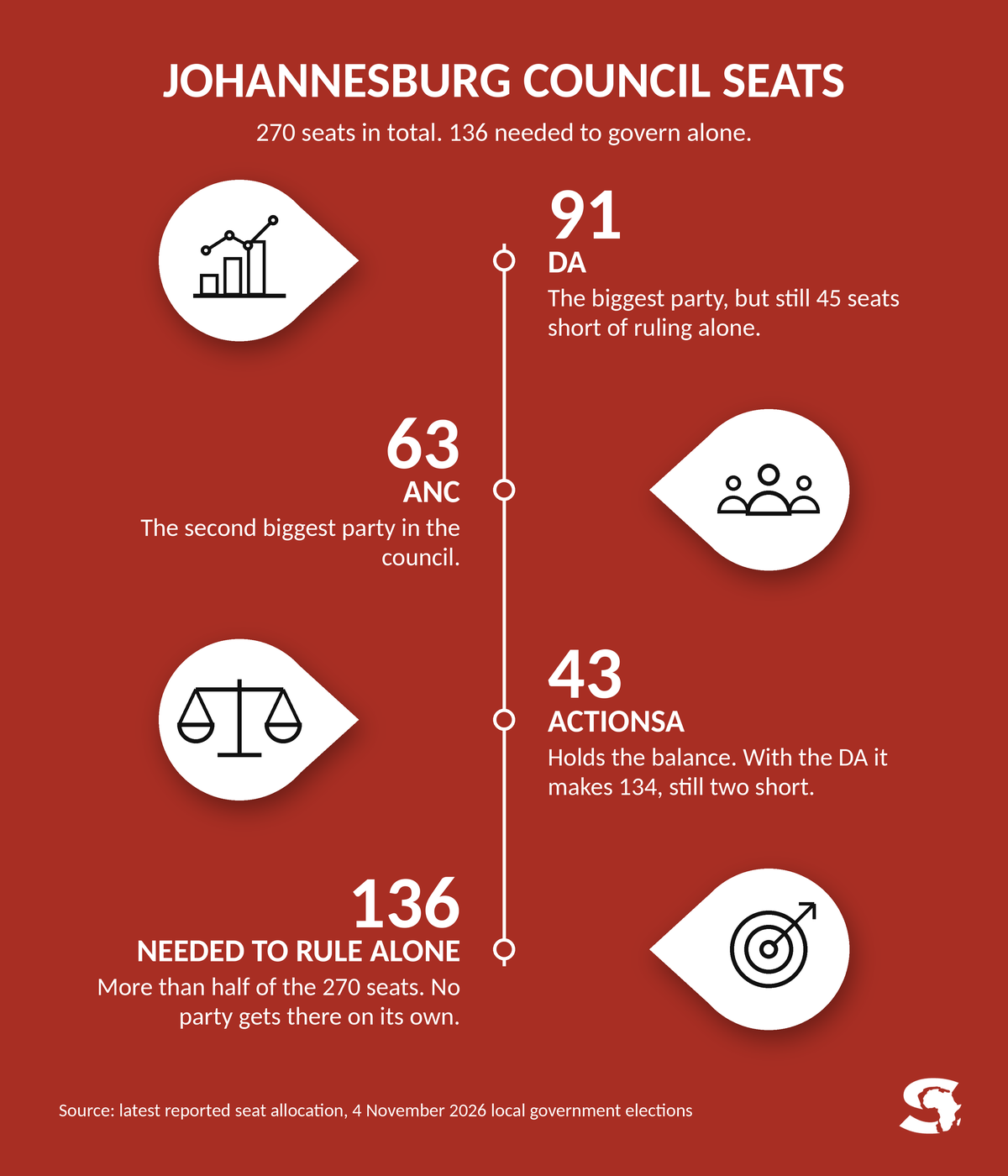
None of the DA’s wins gave it more than half the seats in a council, which it needs to rule alone. So it must team up with other parties in what is called a coalition. That gives smaller parties huge power, because they can tip the vote either way. Johannesburg shows how this works. The DA has 91 seats, the African National Congress (ANC) has 63 and ActionSA has 43. Tshwane and Ekurhuleni could play out in a similar way.
DA leader Geordin Hill-Lewis has moved quickly to talk to parties the DA once avoided. He has met ActionSA leader Herman Mashaba, whose bitter relationship with Zille threatened to close the door on the two parties working together. The meeting was described as frank and productive, with both leaders saying they were willing to put egos aside.
Hill-Lewis has also met Patriotic Alliance leader Gayton McKenzie. He has invited the Economic Freedom Fighters (EFF) and the MK Party to join the talks too. That is a big change, because the DA used to say these parties were not acceptable partners.
MK first deputy president Duduzane Zuma came out of the meeting with the DA saying his party was willing to set aside its differences with the DA. He spoke of building bridges rather than walls. MK deputy president Tony Yengeni said the talks were making progress towards common ground. For a party that had drawn sharp lines between itself and the DA, this was a notable shift. It also shows how quickly coalition politics can redraw old lines.
The ANC is working just as hard. Secretary general Fikile Mbalula and his team had a busy weekend. They met Build One South Africa (BOSA), the Inkatha Freedom Party (IFP), MK, the EFF, the Afrika Mayibuye Movement and ActionSA.
A powerful voice with little interest in getting closer to the DA is shaping the ANC’s approach. Gwede Mantashe was re-elected national chairperson and sits in the party’s top seven leaders. He has been one of the loudest doubters of the Government of National Unity (GNU), the national government in which the ANC shares power with the DA and other parties. The ANC cannot brush him aside when it decides who to approach.
The party’s national executive committee, its top leadership body, agreed to what it called “tactical flexibility” in the city talks. In plain terms, it will pick partners as it sees fit in each city. Many members see the DA as a last resort. That leaves room for local deals, but the mood inside the ANC is clear. Many want other partners, including the EFF, MK and ActionSA.
The ANC’s interest in these parties also has a longer reach. After its terrible election result, the party is asking how to win back black voters. Mantashe has argued that the black vote is split across hundreds of small parties, while the white vote is bunched into a few. MK and the EFF have made similar calls for parties that draw support from former ANC voters to work together.
If these parties group together, it could one day put the DA’s place in the national GNU at risk. The DA now holds six ministers and six deputy ministers. A new alliance of the ANC, MK, the EFF and ActionSA would change who holds power in the national government. No deal to replace the DA has been reached.
But the DA should be careful about playing the victim. It helped set the example that is now being used against it.
In 2024, the DA said it would not join a national government that included the EFF and MK. It helped force the ANC to choose between working with the DA or with those parties. The DA then joined the ANC and the IFP in KwaZulu-Natal to keep MK out of the provincial government, even though MK won the most seats in the legislature.
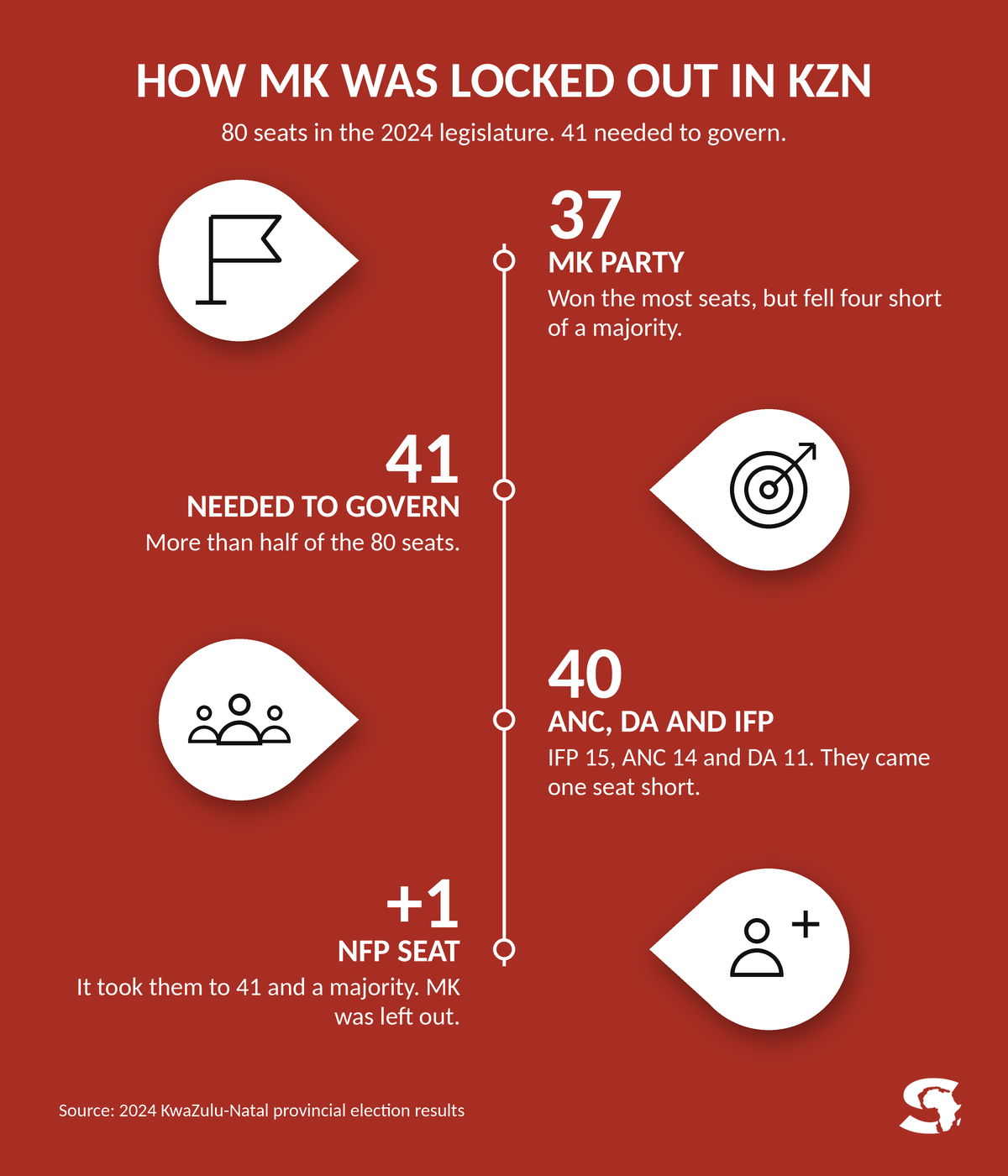
MK won 37 of the 80 seats, just short of the 41 it needed to rule alone. The ANC, DA and IFP together had 40. The single seat held by the National Freedom Party (NFP) gave them the vote they needed to make IFP leader Thami Ntuli premier, the head of the provincial government. The biggest party was left out.
The DA took an active part in that deal. It cannot now complain that others are using the same seat counting to shut it out in Gauteng. Keeping a party out was fine when it suited the DA. It feels worse when the same tactic is aimed at Zille.
Back in Gauteng, the sums are tricky but the problem is clear. ActionSA has huge influence, and Mashaba’s relationship with Zille remains a real hurdle. He has suggested that the DA put forward a different mayoral candidate in Johannesburg. That looks like an attempt to separate the two parties working together from the personal fight between their best known leaders.
Hill-Lewis seems to understand that the DA cannot carry every fight from the Zille years. His willingness to talk to the EFF and MK points to a more practical approach. Whether that can overcome years of distrust remains to be seen.
There is a fair case for parties choosing their partners freely. But the push to keep the DA out of power in Gauteng is about more than city deals. The ANC has lost its grip on the country’s major metros, and it risks becoming a party that mostly runs rural municipalities. Keeping Zille and the DA out has become part of a bigger fight to keep the ANC relevant and to stop its slide in the cities from becoming permanent.