By Buziwe Nocuze
- Luzuko Kamtshe started beekeeping in 2021 after eight months of training and now faces rising costs for transportation, stickers, fencing, and equipment.
- He charges R95 in Port St John’s and R115 to R130 elsewhere, saying raw honey is expensive because of minimal processing and small-scale production.
Luzuko Kamtshe, a beekeeper from Port St John’s in the Eastern Cape, started his business in 2021 after doing research and training in 2017.
“I did training for eight months, bought my first 12 boxes of bee hives, and never looked back,” said Kamtshe.
But honey users have been complaining about the price, which keeps increasing.
“To make honey, we need to collect data on bee-friendly plants to know what is in bloom during the swarming season. We spend a lot of money on transportation, stickers, and fencing for new apiaries. That is why the price keeps increasing,” said Kamtshe.
Honey is used by many people for different purposes, including cooking, health, and skin and beauty.
The process of making honey is also labour-intensive.
“I prepare my hives and put them on higher ground, whether tree tops or roof tops. When I have bees in the hive, I bring them down to an apiary and wait until the brood box is filled. Then I add the honey super box. When that is filled, I take the full capped frames and replace them with empty ones,” said Kamtshe.
“I uncap the combs, put them in an extracting machine, spin it, bottle it, and put on stickers. We are using money for new equipment and opening markets.”
Last month he spent more than R800, and this month he has already spent R4,000.
“Raw honey is usually more expensive than processed honey for several important reasons, such as minimal processing, higher quality standards, and small-scale production,” said Kamtshe.
Raw honey requires careful harvesting by hand, natural comb draining or minimal filtration, and maintaining healthy hives without chemicals.
“All of this increases labor costs. Cheaper honey is often blended or diluted with syrups, while raw honey is pure. The cost reflects its authenticity,” said Kamtshe.
For those buying his honey in Port St John’s, he charges R95. In other places, he charges R115 to R130.
Sinesipho Gwibana, 35, uses honey for health.
“We will buy it because it is helping a lot. I use it every time I am having tea or coffee. I even use it with yogurt and when I am baking. It is one of the things I never leave behind when doing my groceries,” said Gwibana.
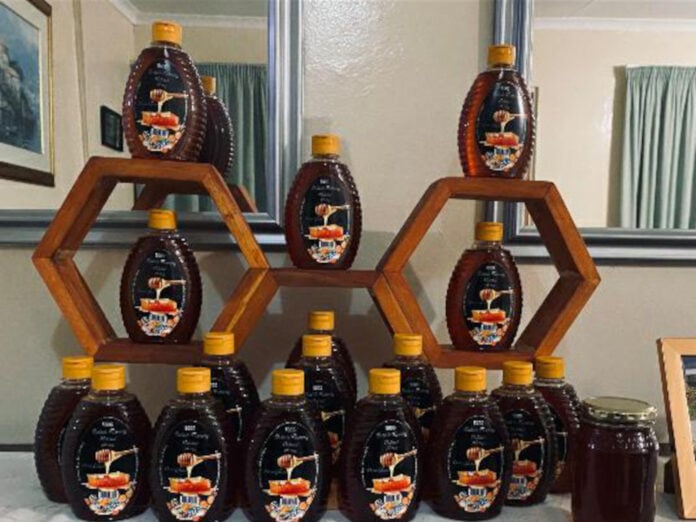
Pictured above: Luzuko Kamtshe, a beekeeper from Port St John’s, says the honey price will keep going up because production requires significant investment.
Image source: Luzuko Kamtshe