Listen to this article.
- Diesel rises by nearly R3 a litre, petrol by R1.34, and paraffin by R2.13 a litre, all from Wednesday, 2 September.
- A family living on minimum wage is already short by almost half on food money, even before this new fuel increase.
From Wednesday, almost every fuel South Africans rely on is going up.
Diesel rises by up to R3.15 a litre. Petrol goes up by R1.34 a litre. Illuminating paraffin, which many families use for cooking, rises by R2.13 a litre. Even LPGas, used for gas stoves and heaters, is going up, by 69 cents a kilogram, or 79 cents in the Western Cape.
This is bad news, because most families don’t have any spare money left to absorb it.
New numbers from the Pietermaritzburg Economic Justice and Dignity Group show just how tight things already are. Someone working full-time on minimum wage earned a maximum of R4,836.80 in August. Once you take away money for taxi fares to and from work, and for electricity, that worker had only R1,653.35 left. That means almost two-thirds of their whole wage was already gone before they even bought a single item of food.
Now imagine that money has to feed a family of four. If every rand left over went straight to food, each person would only get R413.34 for the whole month. The government’s own minimum amount needed to avoid going hungry is R855 per person. That means this family is already 48% short, and that’s before anyone even thinks about eating properly, not just enough to survive.
Here’s why the new fuel prices matter so much.
Taxi fares are already going up because of fuel costs, we saw fares in Pietermaritzburg jump by R4 a trip in June, a 20% increase, after an earlier fuel hike. Other areas saw smaller increases too. Most taxis run on diesel. When diesel and petrol get more expensive, taxi bosses often raise fares again to cover it. If that happens, families will need to find even more money for transport, leaving even less for food than what the numbers already show. And with paraffin and gas also rising, families who cook on these fuels face an extra squeeze on top of everything else.
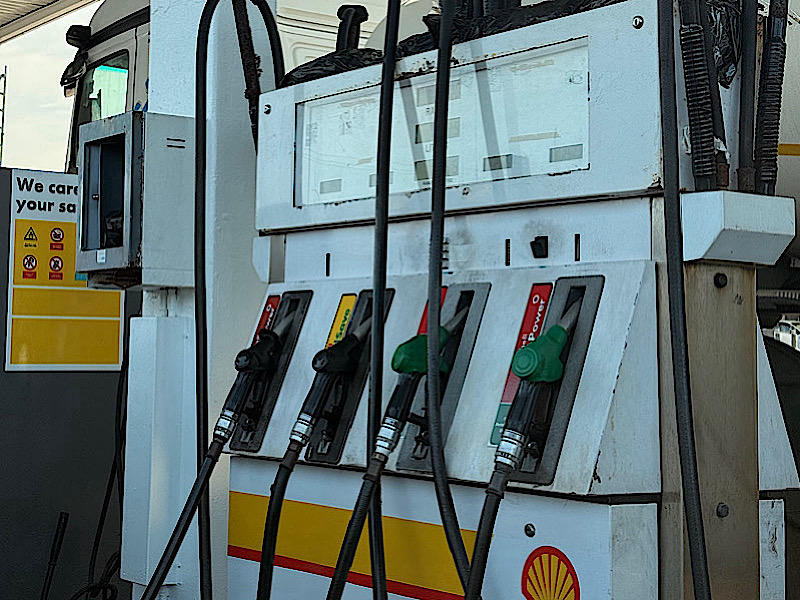
Pictured above: A fuel pump.
Image source:File