- Petrol 95 is showing an expected price jump of roughly 200 cents per litre based on early September 2026 data.
- High global oil prices are also pushing local diesel and paraffin prices up by well over 160 cents per litre.
The latest daily fuel figures show that the price motorists pay at the pumps is lagging far behind what it actually costs to bring fuel into the country. This gap is officially called an “under recovery,” and it means heavy price increases are on the way to make up the difference.
Between late August and 8 September 2026, the average shortfall for Petrol 95 grew to 200.54 cents per litre. For Petrol 93, the gap was 188.47 cents per litre.
Diesel drivers will also feel the pinch. The expected price hike for 0.05% diesel is 166.26 cents per litre, while 0.005% diesel is facing a 198.02 cents per litre increase. Illuminating paraffin is short by an average of 206.20 cents per litre.
The main reason for this pain at the pumps is the rising cost of fuel on global markets. These high international prices added 215.33 cents per litre to the cost of Petrol 95 and 203.01 cents per litre to Petrol 93. Global prices also drove up diesel costs by between 185.03 cents and 217.43 cents per litre.
A slightly stronger rand is the only thing softening the blow. The exchange rate helped shave a few cents off these increases, bringing between 14.53 cents and 19.41 cents per litre in relief across all fuel types. On 8 September 2026, the rand was trading at R16.06 to the US dollar.
Daily snapshots show the situation getting worse. On 8 September 2026 alone, the single-day shortfall reached 256.01 cents per litre for Petrol 95 and 243.05 cents per litre for Petrol 93.
Currently, Gauteng pump prices set on 2 September 2026 sit at R26.92 per litre for Petrol 95 and R26.76 for Petrol 93. Wholesale diesel costs are R29.11 per litre for 0.05% diesel and R29.56 per litre for 0.005% diesel.
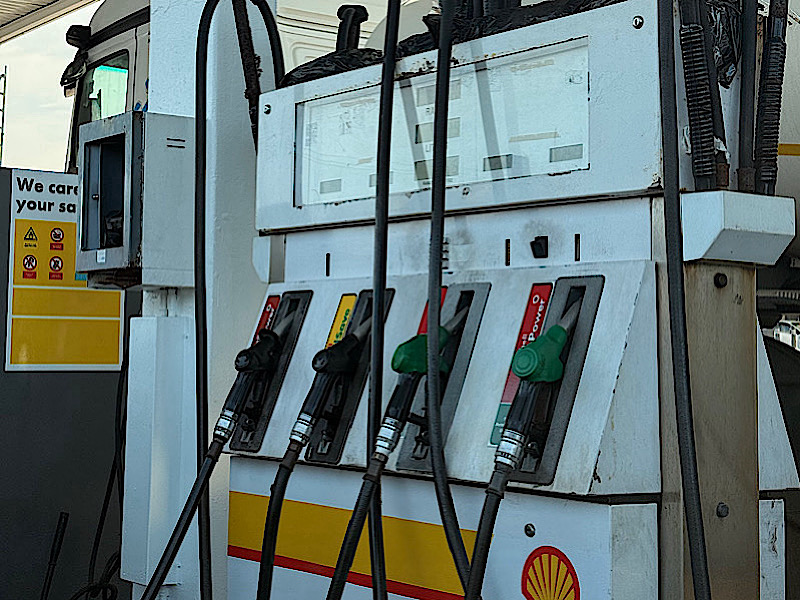
Pictured above: A fuel pump at a petrol station..
Image source: File