- In Nigeria and Kenya, local start-ups are using artificial intelligence to diagnose babies, teach learners and help farmers manage their equipment.
- Tech firms like Nvidia, Google and OpenAI are investing in African AI projects that deliver tools and training without the label of foreign aid.
Foreign aid from the West is no longer flowing the way it used to. Tight budgets and bored donors have slowed the old model. But something else is stepping in, and it’s not money – it’s technology.
Artificial intelligence is now filling the gap left by big aid agencies. In Nigeria, an app made by local company Ubenwa is using AI to diagnose newborns. In Kenya, Somanasi’s AI-powered tutor is helping learners. And Hello Tractor is using smart tools to help farmers manage their tractors.
But these tools are not coming from the United Nations or the United States Agency for International Development. They’re coming from tech giants like OpenAI, Google, Microsoft and Nvidia, the Financial Times reported.
Many of these companies are teaming up with local start-ups. In Johannesburg, Zimbabwean billionaire Strive Masiyiwa is building South Africa’s first “AI factory” with support from Nvidia. In Kenya and Ghana, Google is opening research centres.
These projects don’t carry the name “foreign aid”, but they are bringing skills, knowledge and support where governments are falling behind.
And this shift is part of a bigger plan. A recent policy from the United States calls AI a key part of foreign policy. Its goal is to spread American-made AI and set the rules, especially in Africa, where China is also growing its influence.
But there’s a risk. These tools often rely on expensive hardware, regular updates and foreign licences. That could leave poor countries locked in again, dependent on technology they can’t fully control.
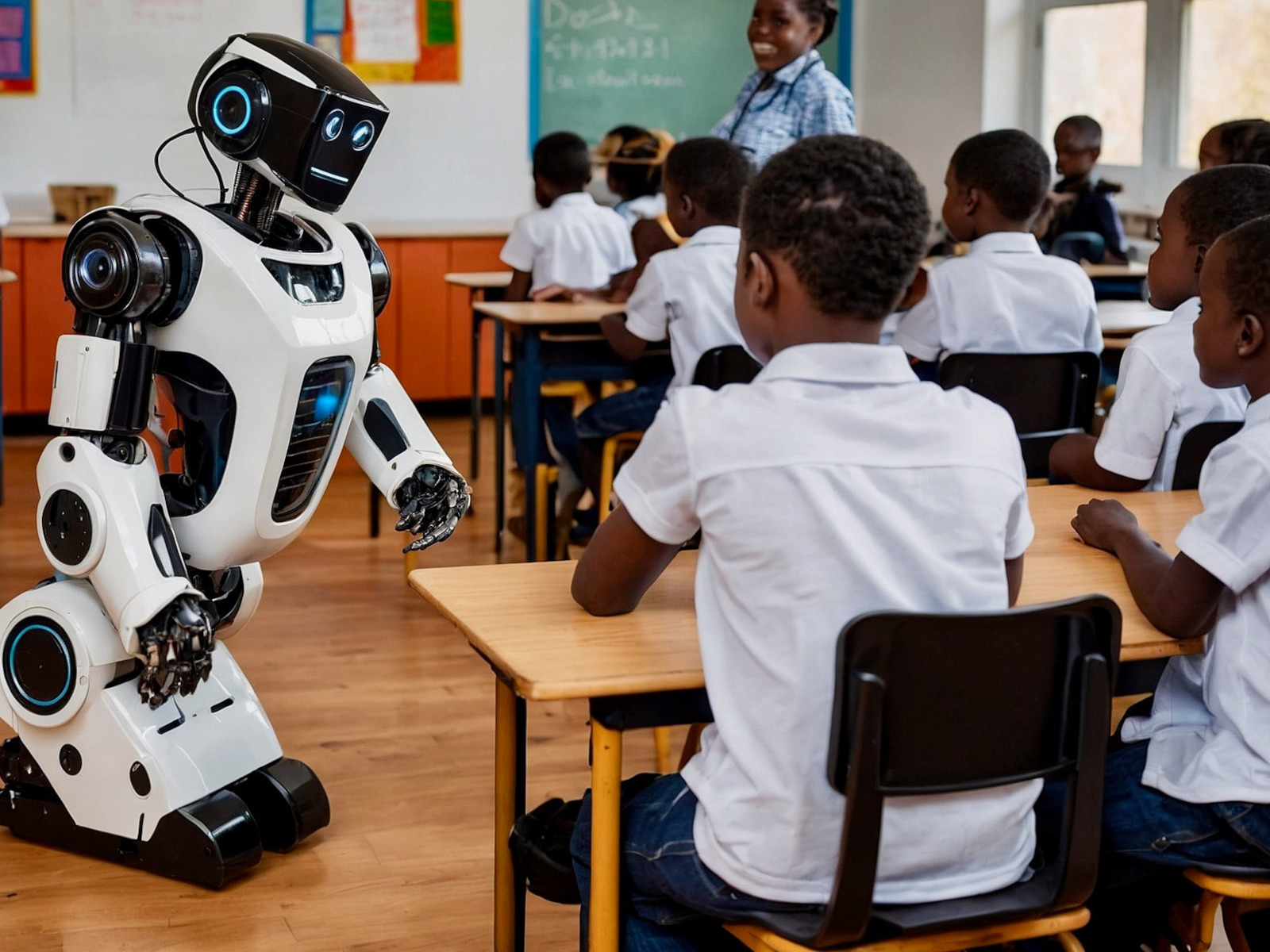
Pictured above: AI-generated image of a robot in a classroom.
Image source: Strive Masiyiwa Facebook