
Listen to this article.
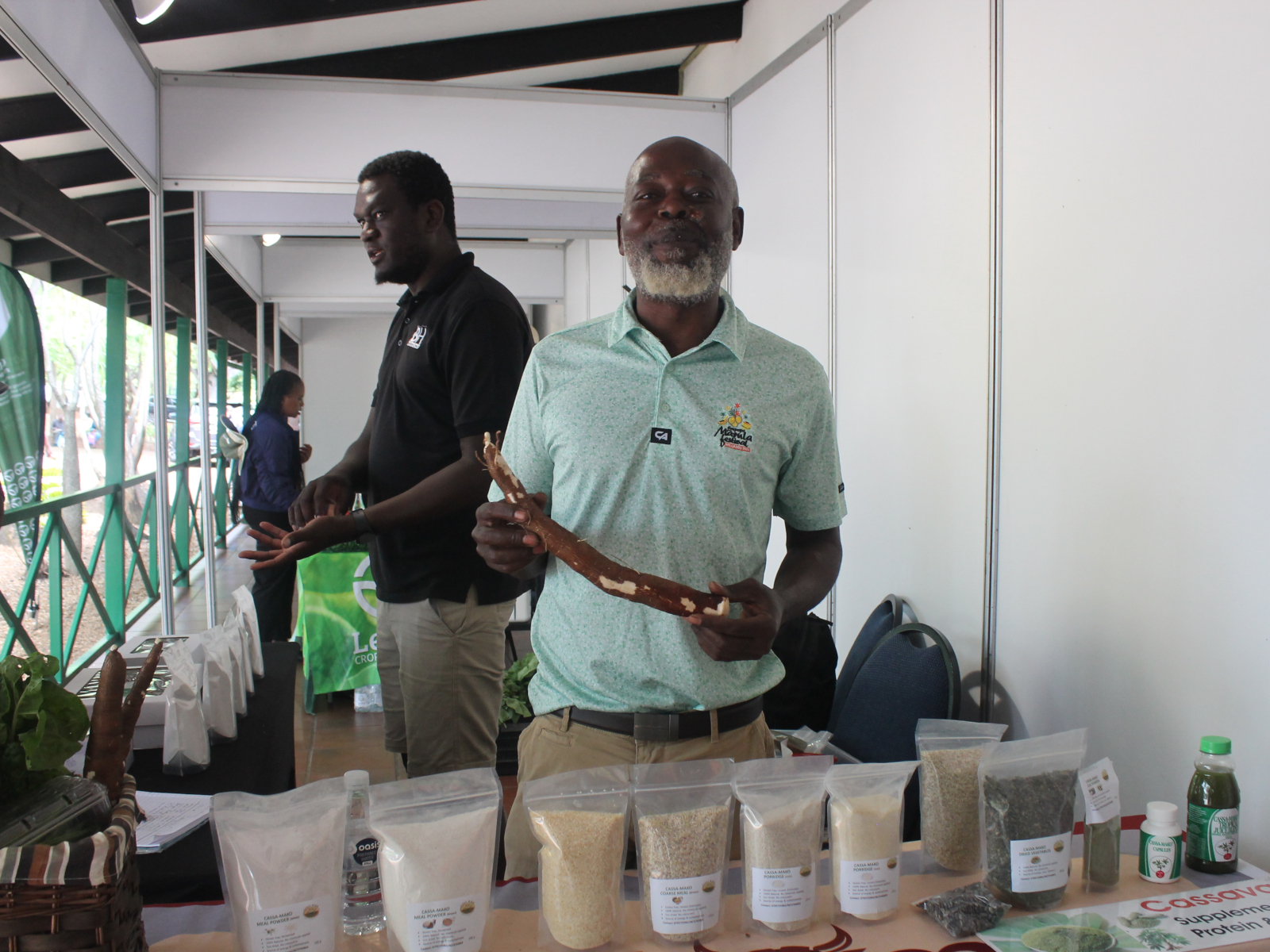
- Changa Mathebula in Tzaneen sells cassava pap powder, flour, porridge, yoghurt and leaf supplements, all made on his Limpopo farm.
- The government is in the final stages of approving cassava for commercial farming after the Agricultural Research Council completed positive trials.
Changa Mathebula grows cassava on his farm in Tzaneen, Limpopo. The government has not yet approved the crop for commercial sale in South Africa, but he has started selling it anyway.
The Agricultural Research Council (ARC) completed a research programme on cassava farming in South Africa and came back with positive findings.
The government says it is in the final stages of a survey before approving the crop commercially. Mathebula, chairperson of Farmers Business Cooperative (FABCO), did not want to wait.
He sells cassava pap powder at R30 per 500g. He also makes flour for baking, porridge powder and yoghurt from the root. The leaves he sells as morogo and as a dried health supplement. All orders go through WhatsApp.
His commercial case is simple. He says one hectare of maize on dry land earns a farmer less than R30,000. The same hectare of cassava, he says, earns more than R100,000.
What the research does support is cassava’s staying power in hard conditions. The crop grows in low-fertility soils under variable rainfall as low as 500mm per year. It needs less water, fewer chemicals and less labour than maize.
The root takes eight to ten months to be ready. The price of R30 per 500g is high because supply is still limited, Mathebula says. He expects it to fall once the crop is fully approved and widely available.
His goal, he says, is to put cassava back where he believes it belongs.
“If the government fully commercialises it it will benefit the economy, as it will be less on the market and even subsistence farmers will not have to spend money buying maize meal,” he said.
Pictured above: Changa Mathebula selling cassava.
Image source: Supplied