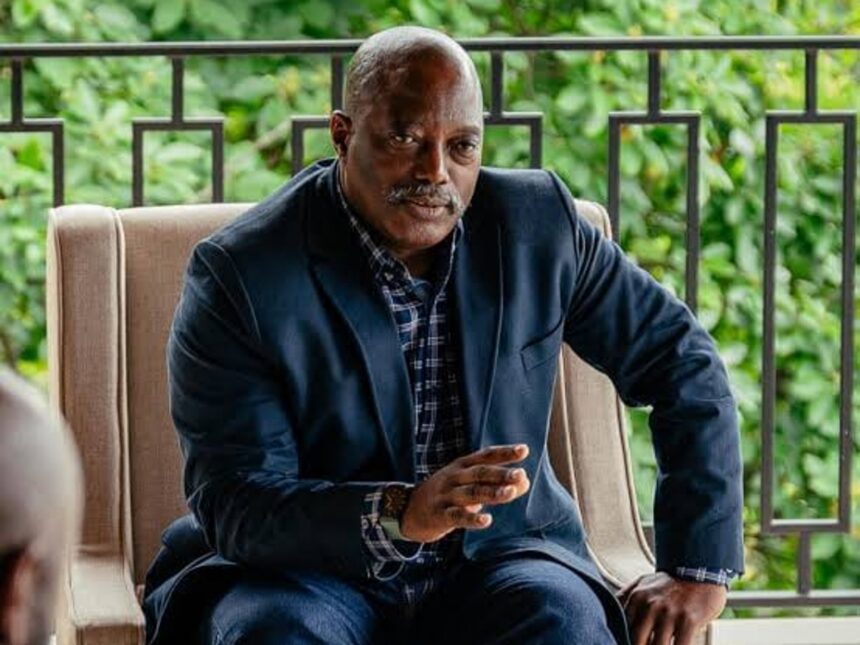
- Prince Simon Sindag Mabhena accuses Joseph Kabila of sharing South African military intelligence with rebels, but the claim remains unproven.
- Fourteen South African soldiers died in eastern Congo in January 2025, while Kabila’s new rebel alliance now threatens ongoing peace negotiations.
Former Congo president Joseph Kabila has been accused of betraying South Africa after joining forces with rebels linked to the deaths of 14 South African soldiers.
Prince Simon Sindag Mabhena, speaking for traditional leadership under the Transvaal Kingdom State of Monarch, claims Kabila shared South African military information with M23 rebels.
The prince says the accusations have reopened painful wounds for families who lost loved ones during fighting in the Democratic Republic of Congo in January 2025.
But there is no verified evidence that Kabila passed South African military intelligence to the rebels or that he caused the soldiers’ deaths.
Mabhena accused African political leaders of taking advantage of South Africa’s support while acting against its interests.
“Kabila is the same with other African leaders who always exploit the kindness of South Africa whilst backstabbing us and killing our army men and women,” said Mabhena.
He also accused Rwandan President Paul Kagame of helping the rebels.
These remain Mabhena’s claims.
The United Nations and Western governments have accused Rwanda of supporting M23, but Rwanda denies the accusations.
Mabhena said the deaths of South African soldiers had left families struggling with grief.
He also criticised what he described as a failure by African leaders to practise the unity they publicly support.
His comments follow Kabila’s decision to openly join the rebellion against his successor, President Félix Tshisekedi.
On 12 October 2026, Kabila, 55, announced that he would lead a new political and military alliance called the Front for the Refoundation of the Nation.
He launched the movement from his home in Goma, a city captured by M23 rebels in January 2025.
The alliance includes former election chief Corneille Nangaa, M23 political leader Bertrand Bisimwa and rebel commander Sultani Makenga.
Coalition spokesperson Claude Ibalanky said the movement was prepared to use force to remove what it called tyranny.
For years, Congo’s government accused Kabila of supporting M23.
Kabila previously denied those accusations.
His new role confirms that he now openly leads an alliance involving the rebels, but it does not prove the earlier claims about sharing military secrets.
Kabila became president in 2001 after his father, Laurent Kabila, was assassinated.
He ruled until 2019, when Tshisekedi took office following the 2018 elections.
The two initially worked together, but their relationship collapsed when Tshisekedi removed Kabila’s allies from government.
In September 2025, a military court sentenced Kabila to death in his absence for treason and other crimes linked to the rebellion.
Kabila rejected the charges.
The United States imposed sanctions on him in April 2026 over claims that he supported armed groups.
His new alliance has now raised fresh fears about Congo’s peace talks.
On 3 November, Kabila met United Nations peacekeeping chief James Swan in Goma.
The meeting focused on the fighting, protecting civilians and efforts to end the war.
But Kabila’s alliance warned that plans to change Congo’s constitution could destroy negotiations taking place in Doha, Qatar.
The warning comes amid concerns that Tshisekedi could seek a third term.
Congo’s constitution allows presidents only two five-year terms. Tshisekedi’s second term ends in 2028.
The rebels say changing the constitution could undermine earlier peace agreements.
They have not yet withdrawn from the talks.
The conflict has already cost South Africa dearly.
In January 2025, 14 South African soldiers died during fighting around Goma and Sake.
They were serving in regional and United Nations peacekeeping missions.
In March 2025, regional leaders decided to end the Southern African Development Community military mission in Congo.
South Africa has a long history of trying to bring peace to the country.
Under former President Thabo Mbeki, South Africa helped broker the 2002 Pretoria peace agreement.
Mbeki has continued calling for talks involving all sides in the conflict, including M23.
His foundation hosted peace discussions in Pretoria in September 2025.
Mbeki defended the decision to include rebel representatives, saying peace could not be discussed without them.
The second story also attributes claims about Kabila sharing military information to Mbeki.
However, those claims could not be independently confirmed.
M23 says it fights for minority communities, including Congolese Tutsis.
The group controls Goma and Bukavu, two major cities in eastern Congo.
The region is rich in gold and coltan, a mineral used in electronic devices.
Armed groups can earn money by controlling mines, roads and trade routes.
But ordinary families continue to suffer.
Millions have fled their homes, while fighting has disrupted farming, businesses and schools.
Mabhena believes African leaders should respect the countries that support them.
For the families of South Africa’s fallen soldiers, the conflict remains deeply personal.
And for Congolese families, peace means being able to return home without fearing another attack.