- Government says contaminated water from the Bronkhorstspruit Water Treatment Works caused 408 cases of stomach illness between 7 and 18 October.
- Residents must not drink tap water or use it for cooking, washing or bathing, and may only flush toilets with it.
Residents of Bronkhorstspruit and nearby areas in Tshwane have been told not to drink tap water, cook with it, wash with it or bathe in it, after 408 people, most of them children under four, fell ill with diarrhoea and stomach cramps between 7 and 18 October.
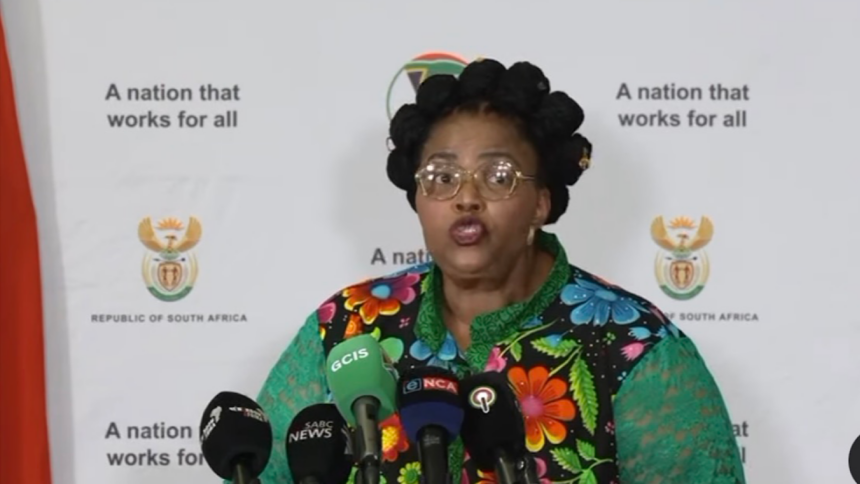
Water and Sanitation Minister Pemmy Majodina said at a joint media briefing in Pretoria on Monday, that tests link the illness to contaminated water from the City of Tshwane’s Bronkhorstspruit Water Treatment Works, which was not chlorinated from 24 September to 14 October.
Health Minister Aaron Motsoaledi, Gauteng Premier Panyaza Lesufi and Tshwane Mayor Nasiphi Moya joined Majodina at the briefing.
She said a response team from the national and Gauteng health departments and the City of Tshwane has been on site since Tuesday, 13 October, after Bronkhorstspruit Hospital reported an unusually high number of patients with stomach cramps and diarrhoea.
Majodina said a team that included Moya and technical staff from all the departments was sent “to go and find out exactly what is happening in that water treatment works” and to visit the hospital.
Patients from Zithobeni, Bronkhorstspruit, Dark City, Rethabiseng and Sokhulumi in Tshwane’s Region 7 have been treated at the hospital and local clinics. Those areas are largely supplied by the treatment works.
“Laboratory test results from stool specimens from infected patients by the [National Institute for Communicable Diseases] coupled with the tests of water emanating from the Bronkhorstspruit Water Treatment Works, indicated that illness has been caused by residents being exposed to contaminated water from this water treatment plant,” Majodina said.
She said preliminary tests on 14 October found extremely high levels of E. coli in water from the plant. The National Institute for Communicable Diseases found norovirus, Campylobacter and Shigella in three of four patient samples. Majodina said tests found no cholera.
The plant takes its water from the Bronkhorstspruit River. The joint statement says the river is badly polluted by sewage from dysfunctional wastewater works in Victor Khanye Municipality and from faulty sewage pump stations run by the City of Tshwane.
Majodina said the City of Tshwane did not warn residents that the water had not been chlorinated and was not safe to drink. She said the plant ran short of chlorine because of problems with its supplier.
This is not the first time water has made Tshwane residents ill. Scrolla reported in February that Hammanskraal, north of Pretoria, has had contaminated and unreliable water since 2004, when the Rooiwal wastewater plant began polluting the Apies River and the water treatment works that depends on it. In May 2023 that crisis led to a cholera outbreak.
The Gauteng Department of Health confirmed it on 21 May 2023, after patients arrived at Jubilee District Hospital with diarrhoea, stomach cramps and nausea. Scrolla reported on 5 June 2023 that the cholera death toll had reached 26, with the newest victim from Hammanskraal, the outbreak’s centre.
The Department of Water and Sanitation said at the time that the Rooiwal works, upstream of Hammanskraal, had affected the Leeukraal Dam, where the Temba Water Treatment Works takes its drinking water.
The government has sent water tankers carrying safe drinking water from the Cullinan water treatment works. Health teams are running campaigns on storing water safely, hygiene and disinfecting containers.
The Department of Water and Sanitation, the National Institute for Communicable Diseases and the Water Research Commission are investigating further. A report is due by 28 October.