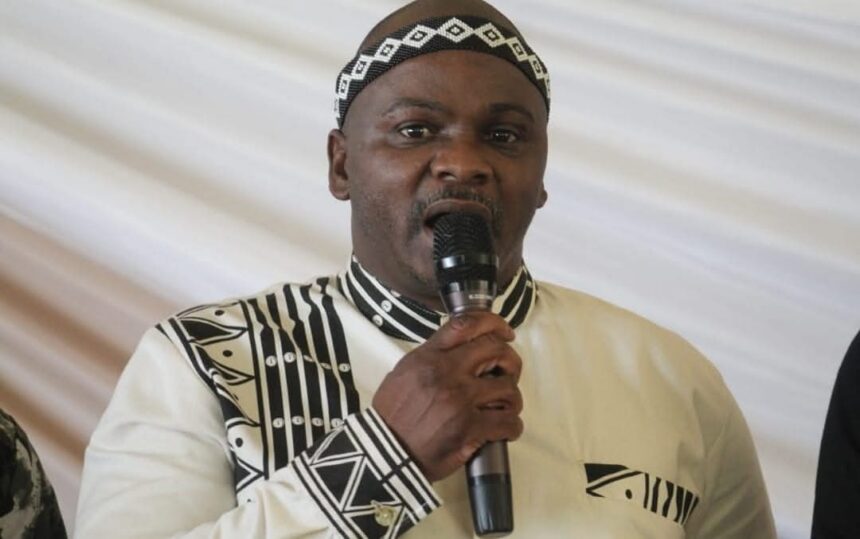
- Inkosi Jongumhlaba Ramseni has accused Gwede Mantashe of sidelining traditional leaders in discussions about rising petrol prices and South Africa’s mineral wealth.
- Gwede Mantashe walked out of the Cosatu congress over speaking arrangements, angering union delegates and prompting calls for an apology.
An Eastern Cape traditional leader has lashed out at Gwede Mantashe, accusing him of ignoring rural communities struggling with rising fuel prices while fighting political battles with workers.
Inkosi Jongumhlaba Ramseni of the AmaNgxongo Royal House says the Minister of Mineral and Petroleum Resources should be discussing fuel costs and mineral wealth with traditional leaders instead of clashing with trade unions.
Ramseni, who leads the Madotyeni Traditional Council, spoke out after Mantashe walked out of the Congress of South African Trade Unions (Cosatu) elective congress following a dispute over speaking arrangements.
The African National Congress national chairperson was unhappy that his party had been scheduled to deliver its message before the South African Communist Party.
Mantashe insisted that the African National Congress should speak last, but Cosatu refused to change its programme.
“You can’t wake up one day and change the alliance,” Mantashe told reporters.
His departure angered delegates, with some accusing the African National Congress of behaving as though it was superior to its alliance partners.
But Ramseni said the bigger concern was Mantashe’s failure to engage traditional leaders about rising fuel costs and the country’s mineral resources.
“We ask ourselves why he is running away from talking about the minerals and the issue of petrol especially with us as traditional leaders because he has not done so ever since,” said Ramseni.
He said traditional leaders had repeatedly been left out of important discussions about resources found on land under their leadership.
Ramseni questioned why government ministers responsible for minerals had not approached traditional leaders to discuss how those resources could help communities during difficult economic times.
He believes traditional leaders should have a say in discussions about mineral exports and possible ways to ease the burden of rising petrol prices.
Ramseni also accused politicians of looking down on traditional leaders and treating them as people who do not understand the economy.
“The biggest problem here is that all politicians have the same mentality of thinking that traditional leaders are uneducated,” he said.
He pointed to King Misuzulu kaZwelithini and King Buyelekhaya Dalindyebo as examples of traditional leaders who understand economic matters.
Ramseni said many younger traditional leaders were educated and capable of contributing to discussions about the country’s economy.
He questioned why the government continued making decisions without seeking their views.
His biggest concern is the effect of rising fuel prices on poor rural households.
He warned that higher petrol prices were widening the gap between rich and poor, leaving struggling families with even less money to survive.
Ramseni believes traditional leaders and government should work together to find ways of reducing the financial pressure on communities.
His concerns follow a similar call by Chief Mandla Mandela of Mvezo, who urged the Congress of Traditional Leaders of South Africa to engage the government over fuel prices.
Mandela wants traditional leaders to help find solutions for rural residents, particularly those who depend on social grants.
Meanwhile, Mantashe’s walkout has caused anger within Cosatu.
Delegates from the South African Municipal Workers Union accused the African National Congress of trying to dictate how the federation should run its congress.
The National Education, Health and Allied Workers Union also criticised Mantashe’s conduct.
Its general secretary, Zola Saphetha, expressed disappointment, particularly because Mantashe previously served as general secretary of the National Union of Mineworkers.
Delegates argued that the African National Congress was an alliance partner and had no right to control Cosatu’s programme.
Cosatu general secretary Zingiswa Losi said the federation was unhappy with Mantashe and expected an apology from the African National Congress.
“We are not happy with the behavior of the National Chair because he was sent here to come and speak,” said Losi.
She said delegates had made it clear that Mantashe’s conduct should not be seen as the position of the entire party.
Losi said Cosatu would continue working with the African National Congress despite the disagreement.
She also said affiliates had been asked to write to the party’s secretary general to express their dissatisfaction.
Mantashe later said he had refused to speak because he wanted to protect President Cyril Ramaphosa from what he described as a factional attack within the alliance.
But Ramseni believes the political dispute should not overshadow the struggles facing ordinary South Africans.
He wants Mantashe to engage traditional leaders on the country’s mineral wealth and explore how those resources could help communities facing rising living costs.
For Ramseni, the issue is not simply about who speaks first or last at a political gathering.
It is about whether the government is listening to traditional leaders and rural communities who are struggling to put food on the table.