
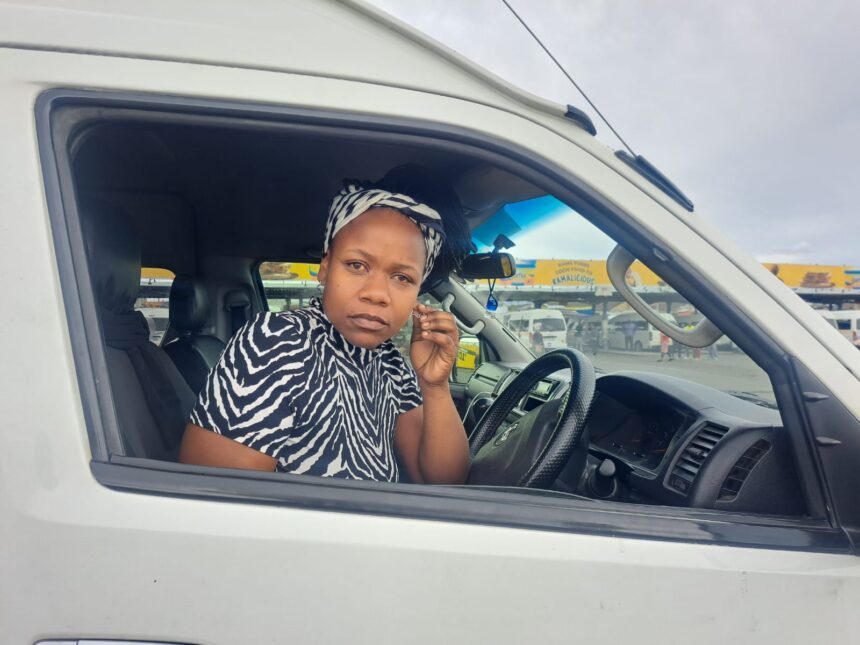
- Khayelitsha taxi driver Hlela Mdatyulwa, 24, says rising petrol costs have reduced her daily earnings and made saving money difficult.
- The young taxi driver dreams of rebuilding her father’s taxi business and hopes more women will join the industry.
Rising petrol costs are making life difficult for a 24-year-old Khayelitsha taxi driver who dreams of bringing back her family’s taxi business.
Hlela Mdatyulwa has been driving passengers between Site C in Khayelitsha and Mowbray since 2022.
She entered the taxi industry after losing her job when her contract ended.
“I was working for a certain company, my contract ended, so I stayed at home. One day I vented to my dad about being tired of sitting at home and doing nothing,” she said.
Her father, who owned taxis at the time, decided to give her a chance.
One morning, he woke her at 4am and told her to get ready for work.
“He told me to get ready to go to work with him. We did two loads together, and he left me to do the third one alone. He said he was going to a meeting, and since that day I have never looked back,” she said.
Although her father later sold his taxis, Hlela continued driving and now works for another taxi owner.
She starts her day at 4am and returns home around 6pm.
But rising petrol costs are eating into her earnings.
“I used to take home R700–R800 driving a 13-seater minibus taxi, but now I take home less because of the petrol price, which keeps increasing,” she said.
She said drivers now spend R800 or more on petrol each day.
Her biggest dream is to rebuild the family taxi business, but saving money has become harder.
“It makes it difficult to save money, but I will push and work harder because I won’t back down until I fulfil that dream,” she said.
Hlela also wants more women to enter the taxi industry.
She said some passengers still question whether women can drive taxis, while others welcome them.
Passenger Siseko Ngcanga, 45, admitted he initially doubted her driving skills.
“At first I was hesitant to use her taxi because I kept asking myself if she was really good at driving,” he said.
But after hearing positive comments from other passengers, he gave her a chance and was impressed.
Pamela Diko, 39, believes more women should become taxi drivers.
“I believe if we had more women driving taxis, we would have fewer accidents,” she said.
Codeta chairman Nceba Enge said the association welcomes both male and female drivers.
“Things have changed. We don’t only have male drivers in our association; we also have female drivers because we believe in giving everyone an opportunity,” he said.
Despite the rising costs and long working hours, Hlela refuses to give up on her dream of owning taxis again.