- Amahlubi community members called for King Langalibalele I to be commemorated every 24 September, for resisting British colonial rule.
- The call was made by Bryce Mthimkhulu, a self-proclaimed “King Mthimkhulu III,” whose kingship title is not recognised by government or by Amahlubi traditional leadership.
Publish time: 2026-09-28 16:45
Members of the Amahlubi nation have called for the annual commemoration of King Langalibalele I, the 19th-century leader who resisted British colonial rule and later died under house arrest.
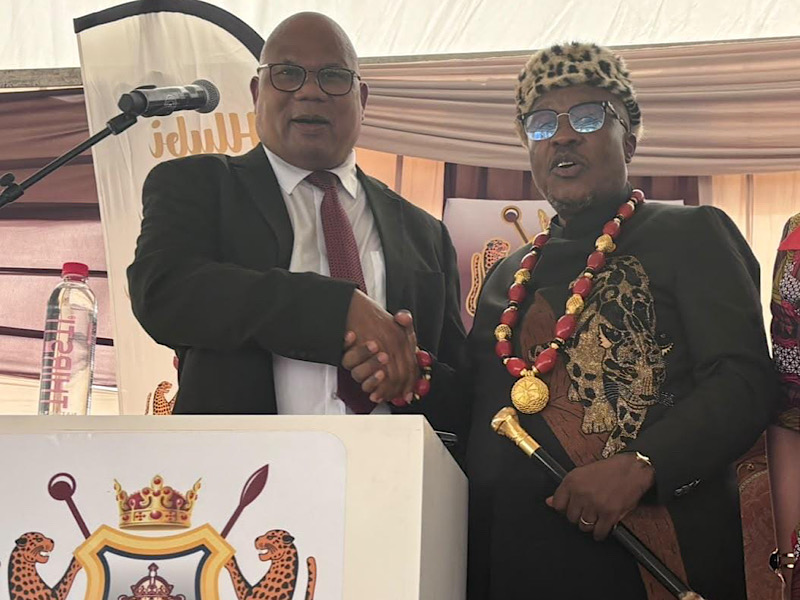
The call was made during a commemoration event at the eMadlangeni Royal Palace in eShowe, northern KwaZulu-Natal, addressed by Bryce Mthimkhulu, who calls himself “King Mthimkhulu III” of the Amahlubi nation, a title not recognised by the South African government or by the Amahlubi’s own traditional leadership.
Addressing those gathered, Mthimkhulu said King Langalibalele had clashed with British colonial authorities in the 1870s over firearms his men had received as payment for working the diamond mines in Kimberley. When colonial authorities later demanded the guns be registered and handed over, Langalibalele refused, a stand-off that escalated into violence at Bushman’s River Pass, where several colonial troops were killed.
“The British later changed their minds and made demands to King Langalibalele to bring back those guns, but he refused, and the matter turned into serious violence between him and the British. They then arrested him, and he later died under house arrest. We demand that he be commemorated every 24 September for his role in fighting colonists who were very brutal in taking the land of amakhosi at that time, while detaining and killing them and their people,” Mthimkhulu said.
Hundreds of people identifying as members of the Amahlubi nation, from across South Africa and Eswatini, gathered at the palace for the commemoration.
Historically, the Amahlubi arrived in what is now KwaZulu-Natal around the 17th century, settling in areas including Dundee and eMadlangeni, near Newcastle, later renamed Utrecht amid land disputes with white settlers.
King Langalibalele fled into Basutoland, now Lesotho, after the Bushman’s River Pass clash, where he was captured and put on trial in proceedings widely regarded as a sham. He was sentenced to life imprisonment on Robben Island, one of the earliest Black leaders imprisoned there, nearly a century before figures like Nelson Mandela, but was released after about two years following intervention by the British government. He spent time under house arrest on a farm in the Western Cape before eventually returning to KwaZulu-Natal, where he died in 1889.
Mthimkhulu’s own kingship claim has been disputed for close to a decade. In 2016, KZN’s provincial government publicly warned him to stop presenting himself as king, and he has since faced High Court action over the claim. He is also the leader of a registered political party, the African Renaissance Unity Party.
This is separate from a genuine, ongoing legal battle involving the actual Amahlubi traditional leadership, who have a case before the North Gauteng High Court challenging the 2010 Nhlapo Commission’s finding that KwaZulu-Natal recognises only one monarchy, the Zulu King.