
By Thabo Molelekwa for Oxpeckers
Across South Africa, municipal and other public land is being leased to renewable energy developers under long-term agreements. How these deals are structured, and who ultimately benefits, remains unclear. Questions about transparency, revenue allocation and community
benefit persist, particularly when municipalities are involved.
Using the Promotion of Access to Information Act (PAIA), over the past nine months the Oxpeckers #PowerTracker project requested lease agreements and related documents from renewable energy developments nationwide.
The purpose of these inquiries, sent to Eskom and private companies, was to determine how much public land is being used in South Africa’s renewable energy rollout, and whether municipalities and communities are receiving fair returns from the deals.
The #PowerTracker team also approached several municipalities for information about the land deals; some provided full cooperation, while others delayed responses or ignored the inquiries.
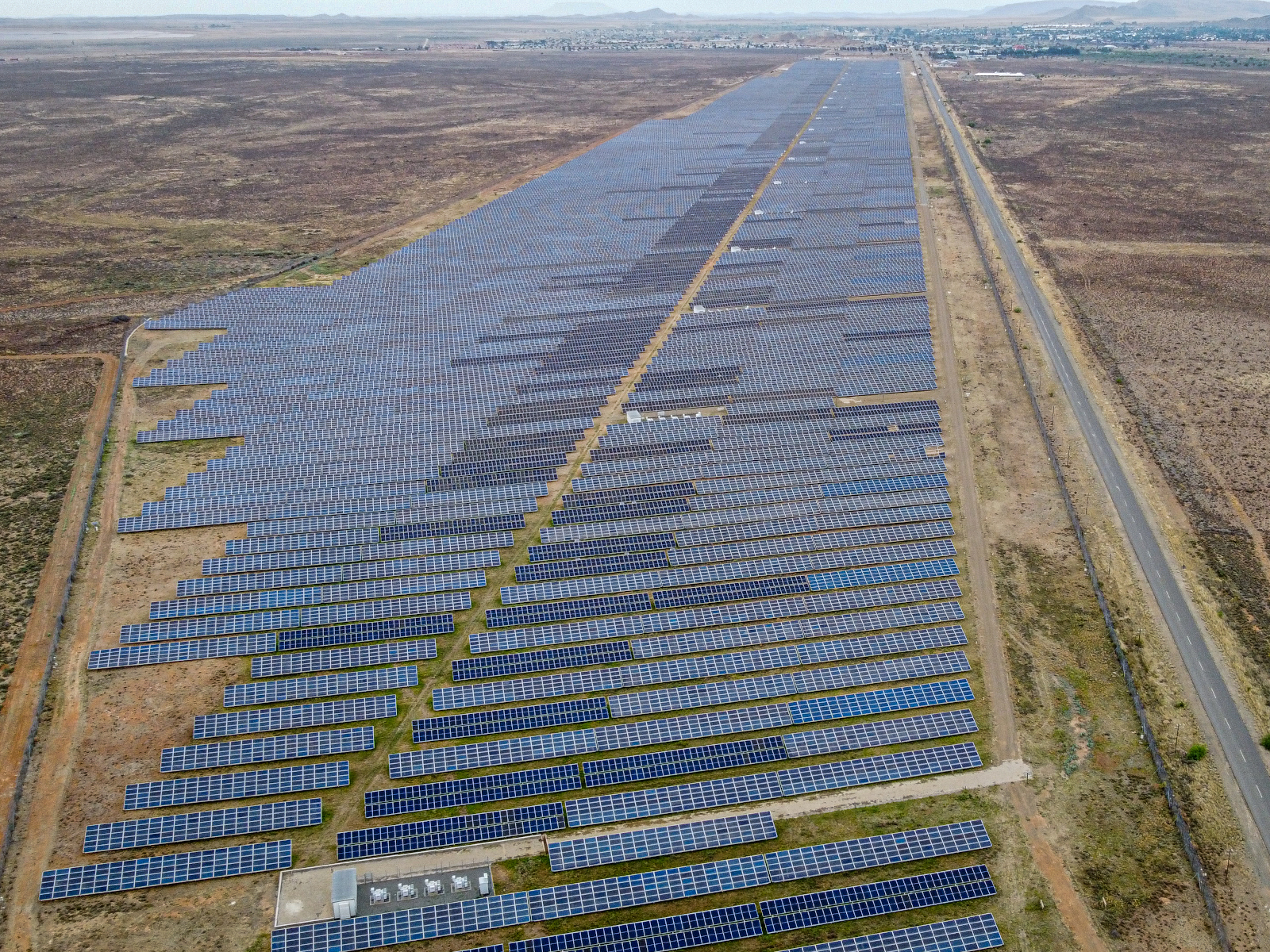
The Emthanjeni Municipality in De Aar, a small town in the Northern Cape, agreed to cooperate by demonstrating how these lease arrangements work and what they mean for local residents. The municipality has leased land to Globeleq, an international renewable energy company, for solar power projects.
How land gets allocated
During a recent visit by the #PowerTracker team, Humphrey Joka, senior manager for community services at Emthanjeni Municipality, explained the procedure for renewable energy companies seeking municipal land: “Companies send their application to the municipal manager, which then goes through exco and the council for approval. Public participation kicks in before service-level agreements are signed, to ensure the community is informed and consulted.”
Council resolutions and legislative compliance are central to approvals, he said. “The council adopts a resolution to agree in principle to the lease, subject to legislative conditions. Once these are met, we grant permission. Even if it’s not our land but within our jurisdiction, we consult all relevant stakeholders before approval.”
“Public participation and environmental compliance follow the signing of the service-level agreement and memorandum of understanding,” he added.
Joka said municipal engagement extends beyond final approvals: “Through ward meetings and council engagement sessions, we involve communities before granting any approvals. We integrate developments into our Integrated Development Plan to align them with broader economic strategies.”
“Land is a sensitive issue; any use of municipal land must ultimately benefit all residents,” he added.
This story was produced by Oxpeckers Investigative Environmental Journalism and shared with Scrolla.Africa as part of a content partnership. Read the full investigation here.
Pictured above: De Aar Solar Farm.
Image source: Supplied